Asia
Butter Chicken (Murgh Makhani): Creamy Tomato Chicken Curry
Yogurt-marinated chicken, broiled until charred at the edges, then simmered in a smooth tomato sauce finished with butter, cream and dried fenugreek.
By Lavin Food Editorial · Published
- Prep
- 30 min
- Cook
- 50 min
- Total
- 1 hr 20 min
- Yield
- 4 servings
About this dish
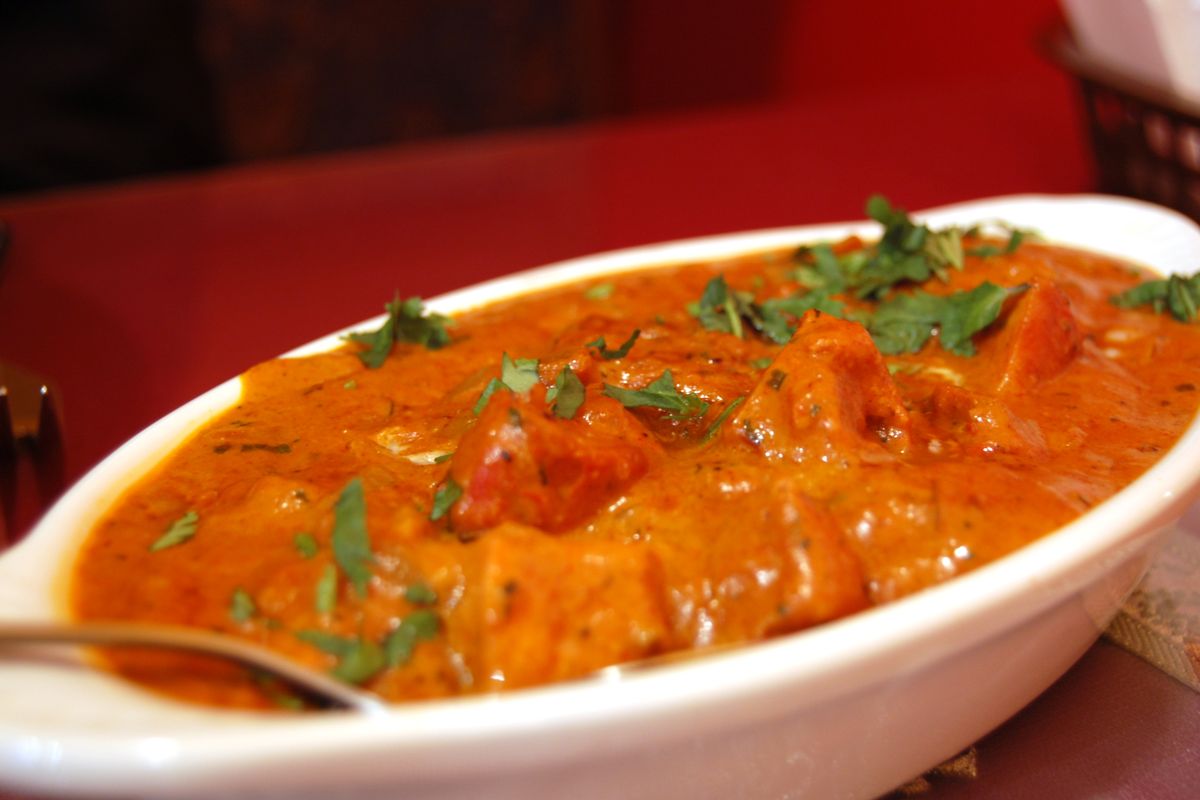
Butter chicken, or murgh makhani, is a curry of chicken in a spiced tomato gravy rich with butter. Makhani refers to butter. Wikipedia describes the gravy as creamy and mild, and notes that the dish is often confused with chicken tikka masala. It is common across India, Bangladesh and Pakistan and wherever South Asian communities live.
Its origin is disputed. Wikipedia reports that it is associated with Kundan Lal Gujral and Kundan Lal Jaggi and the Moti Mahal restaurant in Daryaganj, Old Delhi, which popularized it in the 1950s. The usual story says it began by chance, when leftover tandoori chicken met a buttery tomato sauce. Other accounts place it earlier, in Peshawar, and a descendant of one founder has said so in a dispute with the rival family's restaurant. The sources do not settle it, so this page does not either.
Traditionally the yogurt-marinated chicken is cooked in a tandoor, a clay oven heated with charcoal or wood, then served in the sauce. This version uses a home broiler. It gives good browning and charred spots, but it cannot match a tandoor's intense heat or smoke, so the flavor is cleaner and less smoky. The sauce is simmered, blended until velvety, and finished with butter, cream and crushed dried fenugreek leaves.
Ingredients and substitutions
Quantities are for 4 servings.
For the chicken and marinade
- 2 pounds (900 g) boneless, skinless chicken thighs, cut into 1 1/2-inch (4 cm) pieces
- ½ cup (120 g) plain whole-milk yogurt
- 1 tablespoon (15 ml) lemon juice
- 1 tablespoon (15 ml) neutral oil
- 1 tablespoon (6 g) fresh ginger, finely grated
- 3 cloves garlic, grated
- 2 teaspoons (4 g) Kashmiri chili powder, or see substitutions
- 1 teaspoon (2 g) ground cumin
- 1 teaspoon (2 g) garam masala
- 1 teaspoon (6 g) fine salt
For the sauce
- 3 tablespoons (43 g) unsalted butter
- 1 tablespoon (15 ml) neutral oil
- 1 medium (200 g) yellow onion, finely chopped
- 4 cloves garlic, minced
- 1 tablespoon (6 g) fresh ginger, finely grated
- 1 teaspoon (2 g) Kashmiri chili powder
- 1 teaspoon (2 g) ground coriander
- 1½ cups (360 ml) tomato puree or plain passata, smooth, not seasoned
- ½ cup (120 ml) water
- ¾ teaspoon (4 g) fine salt
- 1 teaspoon (4 g) sugar, optional, only if the tomatoes taste sharp
To finish
- ½ cup (120 ml) heavy cream
- 2 tablespoons (28 g) unsalted butter
- 1 tablespoon (2 g) kasuri methi, dried fenugreek leaves
- ½ teaspoon (1 g) garam masala
- ¼ cup (15 g) fresh cilantro, chopped
- basmati rice or naan, for serving
Choosing your ingredients
Boneless thighs are the best choice. They have more fat than breasts, so they stay tender under the broiler and again in the sauce. Cut them into even pieces about 1 1/2 inches (4 cm) wide, which char well without drying out.
Kashmiri chili powder gives the sauce its deep red color and a gentle heat, milder than cayenne. It is sold in Indian grocery stores and online. Use whole-milk yogurt for the marinade, because thin, reduced-fat yogurt turns watery and slides off the chicken.
Kasuri methi is dried fenugreek leaf. Wikipedia lists it among the spices used in the sauce. Crush it between your palms before adding it, since friction releases its aroma. For the smoothest sauce, use plain tomato puree or passata rather than chunky tomatoes.
Use a deep pan or Dutch oven, about 11 to 12 inches (28 to 30 cm) wide. For the broiler, a rimmed baking sheet with a wire rack lets heat reach all sides of the chicken.
Possible substitutions
- Kashmiri chili powder: For each 2 teaspoons, use 1 tablespoon sweet paprika plus 1/4 teaspoon cayenne.
- Kasuri methi: Leave it out. The curry is still good, only less aromatic. Do not use fenugreek seeds, which are bitter and far stronger.
- Heavy cream: Full-fat coconut milk for a dairy-free finish, or half-and-half for a thinner sauce.
- Chicken thighs: Boneless breasts, cut the same size. Broil 2 to 3 minutes less and watch the thermometer, because breast meat dries out fast.
- Tomato puree: One 14-ounce (400 g) can of crushed tomatoes, blended well.
Step-by-step method
- Marinate the chicken. In a large bowl, stir together the yogurt, lemon juice, oil, ginger, garlic, chili powder, cumin, garam masala and salt. Add the chicken and turn until every piece is coated and orange-red. Cover and refrigerate for 2 to 24 hours. Keep it cold the whole time, never on the counter.
- Broil the chicken. Set a rack 5 to 6 inches (13 to 15 cm) from the broiler and heat it to high. Put a wire rack on a foil-lined baking sheet. Lift the chicken from the bowl, let the extra marinade drip off, and lay the pieces in one layer. Broil 8 to 12 minutes, turning once, until the edges are browned with dark spots. The centers finish in the sauce. Discard the marinade left in the bowl.
- Cook the onion and aromatics. Melt the sauce butter with the oil in a large, deep skillet over medium heat. Add the onion and cook 8 to 10 minutes, stirring often, until soft and golden at the edges, not dark brown. Add the garlic and ginger and stir for 1 minute, until the smell turns sweet rather than raw.
- Simmer the tomato sauce. Stir in the chili powder and coriander for 30 seconds. Add the tomato puree, water, salt and the sugar if needed. Simmer over medium-low heat, uncovered, for 15 to 20 minutes, stirring now and then. The sauce is ready when it turns a deep brick red, thickens, and beads of orange butter show at the edges.
- Blend until smooth. Take the pan off the heat and cool the sauce for 5 minutes. Blend until velvety with an immersion blender. With a countertop blender, work in batches, fill it no more than half, remove the lid's center cap and cover the opening with a folded towel. Start on low, because hot liquid expands and can blow the lid off. The sauce should look glossy, with no flecks of onion.
- Finish the chicken in the sauce. Return the sauce to the pan over medium-low heat and add the chicken with any juices from the baking sheet. Simmer gently, partly covered, for 8 to 12 minutes. The chicken is done when the thickest piece reads 165°F (74°C) on an instant-read thermometer and is white throughout. Add a splash of water if the sauce gets too thick.
- Add cream, butter and fenugreek. Lower the heat. Stir in the cream, the remaining butter and the garam masala, crushing the kasuri methi between your palms as it goes in. Warm for 2 to 3 minutes without boiling hard, until the sauce turns a lighter, creamy orange and coats a spoon. Adjust the salt, add the cilantro and serve with rice or naan.
Variations
Wikipedia notes that spicing varies widely: cardamom, cloves, cinnamon and black pepper all appear, and some cooks thicken the sauce with cashew paste. To try it, soak 1/4 cup (35 g) raw cashews in hot water for 20 minutes, drain, and blend them into the sauce in step 5.
For more heat, add a slit green chili with the garlic. For a hint of tandoor smoke, add 1/2 teaspoon smoked paprika to the marinade. The same marinade and method also work for paneer cubes, or for chicken cooked on a hot grill instead of under the broiler.
Storage and reheating
Refrigerate the curry within two hours of cooking, or within one hour if the room is above 90°F (32°C). Store it in a shallow, airtight container for 3 to 4 days. The sauce thickens as it chills, which is normal.
Reheat on the stove over medium-low heat with a splash of water, stirring, until steaming hot and 165°F (74°C) throughout. Do not boil hard, or the cream may split. It freezes for about 3 months for best quality; thaw it overnight in the refrigerator.
Common mistakes
- Reusing the marinade. It has touched raw chicken. Throw away what is left in the bowl, and never simmer it into the sauce.
- Skipping the thermometer. Color alone does not prove chicken is safe. Check the thickest piece for 165°F (74°C) before adding the cream.
- Marinating too long. Acid and yogurt soften chicken. Past 24 hours the surface can turn mushy.
- Browning the onion too far. Dark onion makes the sauce bitter and brownish. Cook it only until soft and golden.
- Blending hot sauce in a sealed blender. Steam builds pressure and can burst the lid. Cool the sauce, vent the lid and use a towel.
Frequently asked questions
Is butter chicken the same as chicken tikka masala?
They are similar but not the same. Wikipedia describes butter chicken as milder and creamier, and notes that the two dishes are often confused.
Can I make it without a tandoor?
Yes. A hot broiler or grill browns the marinated chicken well. You lose some smoke and the extreme heat, so the flavor is milder. A little smoked paprika in the marinade makes up part of the difference.
What should I serve with it?
Basmati rice or naan, since both soak up the sauce. Sliced raw onion with lemon, or a cucumber salad, adds crunch.
Why is my sauce not smooth?
Usually it was not blended long enough. Blend for a full minute, or press the sauce through a sieve. Wikipedia notes that traditional sauces are sieved for a velvety finish.