Middle East & Africa
Chicken Shawarma at Home: Skillet or Oven Method
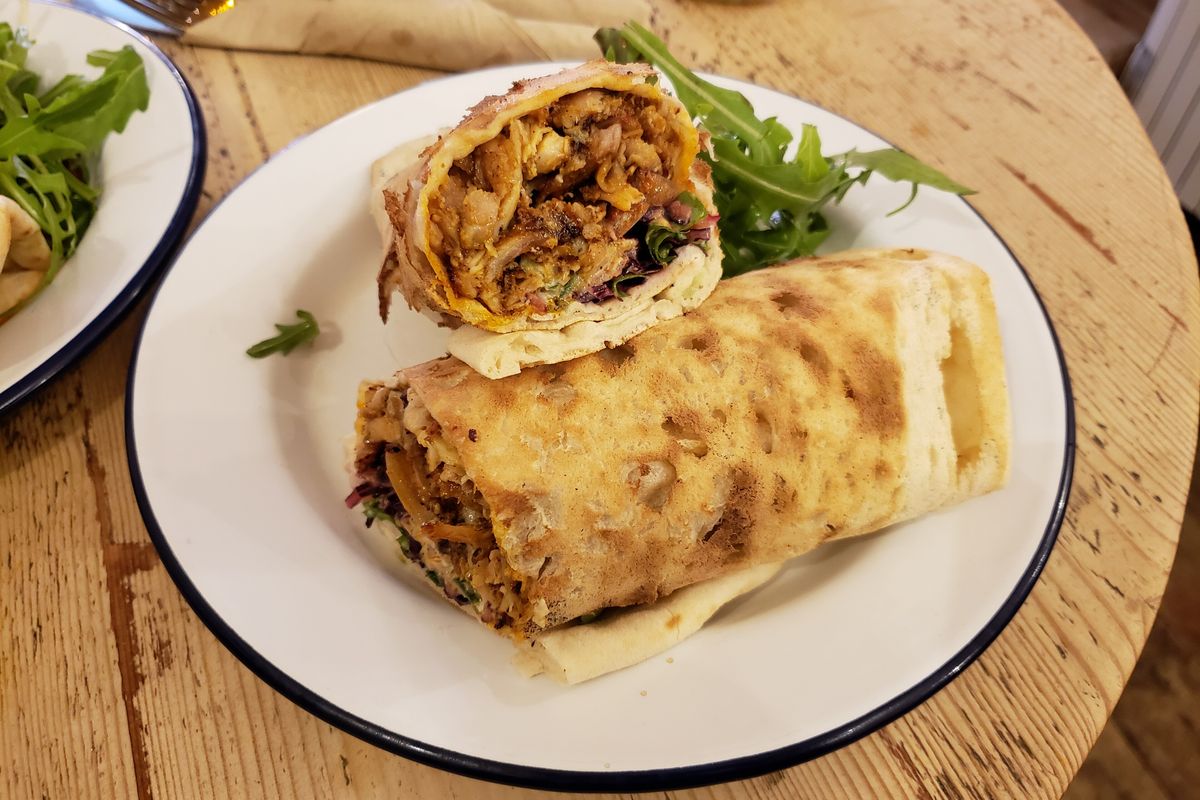
Chicken thighs marinated in yogurt, lemon, garlic and warm spices, charred in a skillet or oven, sliced thin and tucked into pita.
By Lavin Food Editorial · Published
- Prep
- 30 min
- Cook
- 25 min
- Total
- 55 min
- Yield
- 4 servings
About this dish
Shawarma is a Middle Eastern dish of thin slices of seasoned, marinated meat, stacked into an upside-down cone and roasted on a slowly turning vertical spit. The outside of the stack is shaved off as it cooks and is served in flatbread such as pita, with sauce, pickles and salad. Lamb and mutton are the traditional meats, but chicken, turkey, beef and veal are all used.
Wikipedia describes shawarma as originating in the Levant during the Ottoman Empire. The cooking method is said to have appeared in the 19th century in the form of döner kebab, from which both the Greek gyros and Levantine shawarma are derived. Encyclopedia Britannica is cited there as crediting a Turkish butcher named Iskender in Bursa with the idea, though origin stories for popular street food are rarely settled. The Arabic name is described as a rendering of the Turkish word çevirme, meaning "turning." The sources used for this page are listed at the end.
This recipe is a home version, and it is honest to say what that means. A shop spit holds a tall stack of meat, about 60 cm (24 in) high, that turns in front of a heat source while the outer layer roasts and is shaved away. A home kitchen cannot copy that. What a hot skillet or a very hot oven can do is give you marinated thigh meat with a browned, lightly charred crust, which you then slice thin so that every piece has edge and flavor. The result is a close cousin of spit-roasted shawarma, not a twin, and it is a very good dinner.
Ingredients and substitutions
Quantities are for 4 servings.
For the chicken and marinade
- 2 pounds (900 g) boneless, skinless chicken thighs
- ½ cup (125 g) plain whole-milk yogurt
- 3 tablespoons (45 ml) fresh lemon juice
- 2 tablespoons (30 ml) olive oil
- 6 cloves garlic, grated or minced
- 2 teaspoons (4 g) ground cumin
- 2 teaspoons (4 g) ground coriander
- 1 tablespoon (7 g) sweet paprika
- 1 teaspoon (3 g) ground turmeric
- ½ teaspoon (1 g) ground cinnamon
- ¼ teaspoon (0.5 g) ground cardamom
- ½ teaspoon (1 g) freshly ground black pepper
- 1½ teaspoons (9 g) fine salt
- 1 tablespoon (15 ml) neutral oil, for the skillet method only
For the garlic sauce
- 1 cup (245 g) plain whole-milk yogurt
- 1 clove garlic, grated to a paste
- 1 tablespoon (15 ml) fresh lemon juice
- ¼ teaspoon (1.5 g) fine salt
To serve
- 4 large pita breads, warmed
- 2 medium (300 g) tomatoes, sliced
- 4 small (240 g) mini cucumbers, sliced
- ½ cup (70 g) dill pickles or pickled turnips, sliced
- 1 small (80 g) red onion, thinly sliced
- ¼ cup (8 g) fresh parsley, chopped
Choosing your ingredients
Boneless, skinless thighs are the best fit for this method. Thigh meat has more fat than breast, so it stays tender under the high heat that gives shawarma its browned edges, and it forgives a minute or two of extra cooking. Buy thighs of similar size so they finish together, and trim only the thick lumps of fat. A little fat left on the meat is what makes the edges crisp.
Use plain, unsweetened, whole-milk yogurt. Greek-style yogurt works if you thin it with a spoonful of water; very thick yogurt can sit on the chicken in clumps and burn. Fresh lemon juice matters too, because bottled juice tastes flat. The yogurt and lemon together soften the surface of the meat, which is why the marinating window has an upper limit.
The spice mix leans on cumin, coriander, paprika, turmeric, cinnamon and cardamom, which are among the spices commonly named for shawarma. Cinnamon and cardamom are strong, so the amounts are small. Ground spices fade, so use jars that smell fragrant when you open them. Turmeric stains plastic and light countertops, so mix the marinade in a glass or stainless bowl.
The garlic sauce here is a yogurt version that needs no raw egg. Grate the garlic on a fine grater so it dissolves into the yogurt instead of leaving sharp chunks. Pita can be the pocket type or a soft flatbread; either works as long as you warm it first, because cold pita cracks when you roll it.
Possible substitutions
- Chicken thighs: Boneless chicken breasts, sliced in half horizontally so each piece is about 1/2 inch (1.25 cm) thick. Breast cooks faster and dries out sooner, so check the temperature at the early end of the time range.
- Cumin, coriander, cinnamon and cardamom: 1 tablespoon (about 6 g) baharat, a spice blend that is used for shawarma in some areas. Keep the paprika, turmeric and pepper.
- Yogurt in the marinade: 3 tablespoons (45 ml) extra olive oil and an extra tablespoon of lemon juice. You lose some tenderness and the thick coating, but the flavor stays close.
- Garlic yogurt sauce: A tahini sauce: 1/4 cup (60 g) tahini, 3 tablespoons (45 ml) lemon juice, 1 grated garlic clove, a pinch of salt and enough cold water to make it pourable. Whisk until smooth.
- Lemon juice: Lime juice in the same amount, or 2 tablespoons (30 ml) white wine vinegar in the marinade. Use less vinegar than lemon because it is sharper.
- Pita: Laffa, lavash or naan for wraps, or serve the chicken over rice or a chopped salad for a plate instead of a sandwich.
Step-by-step method
- Mix the marinade. Whisk the yogurt, lemon juice, olive oil, garlic, all the spices and the salt in a large glass or stainless bowl for about 1 minute. The mixture should look thick, smooth and evenly golden orange, with no streaks of dry spice. Taste a small spoonful while it is still free of raw chicken. It should taste salty and tangy, so adjust it now.
- Trim and flatten the chicken. Pat the thighs dry with paper towels. Trim thick lumps of fat and any gristle, then lay each thigh flat and press or pound it to an even thickness of about 1/2 inch (1.25 cm). Even pieces cook at the same speed. This takes 5 to 8 minutes. Do not rinse the chicken, because rinsing splashes raw juices around the sink. Wash your hands, the board and the knife with hot soapy water afterward.
- Marinate in the refrigerator. Add the chicken to the bowl or a zip-top bag and turn the pieces until each one is coated. Cover and refrigerate for at least 4 hours and up to 24 hours, never longer. After a day the yogurt and lemon begin to turn the surface of the meat mushy. The chicken is ready when the marinade has darkened a little and clings in a thick, even coat.
- Make the sauce and prep the toppings. While the chicken is still marinating, or about 20 to 30 minutes before you cook, stir together the sauce ingredients and refrigerate. The sharp raw-garlic bite softens as it rests. Slice the tomatoes, cucumbers, onion and pickles, and chop the parsley. The sauce should look thick and creamy, and it should smell bright and garlicky, not harsh.
- Cook in a skillet (method one). Heat a large cast-iron or heavy skillet over medium-high heat for 2 to 3 minutes, then add a thin film of oil. Lift the thighs from the marinade, scrape off the excess with the back of a spoon and lay them in the pan without crowding, in batches if needed. Cook 5 to 7 minutes per side without moving them, until the underside is deep brown with dark charred spots. Lower the heat if the coating turns black.
- Or roast on a sheet pan (method two). Heat the oven to 450°F (230°C) with a rack in the upper third. Line a rimmed baking sheet with foil. Scrape off the excess marinade and lay the thighs in a single layer with space between them. Roast 18 to 22 minutes, flipping once halfway. For char, broil 2 to 4 minutes at the end, watching closely, until the edges are dark brown and blistered in spots.
- Check the temperature and rest. Push an instant-read thermometer into the thickest part of the thickest thigh. It must read 165°F (74°C) or higher. If it does not, return the chicken to the heat for 2 to 3 minutes and check again. Move the chicken to a clean cutting board, tent it loosely with foil and rest it for 5 minutes, so the juices settle. Throw away any leftover marinade; it has touched raw chicken.
- Slice thin and serve. Slice the thighs across the grain into thin strips, about 1/4 inch (6 mm) wide. For crisp edges like shaved spit meat, toss the strips in the hot skillet for 1 to 2 minutes, until the edges crackle and darken. Spread garlic sauce on warm pita, pile on chicken, tomato, cucumber, onion, pickles and parsley, then roll tightly. Serve right away, while the meat is hot.
Variations
Shawarma changes from place to place. Wikipedia notes that in Armenia and Georgia the meat is traditionally marinated overnight in spices such as coriander, cumin, cardamom, paprika, garlic, lemon juice and olive oil, which is close to this recipe. In Israel most shawarma is made with dark-meat turkey and is often served with tahini sauce. Nigerian-style shawarma is described as using shredded cabbage and sometimes carrots instead of tomatoes and onions, with a creamy mayonnaise-based sauce.
At home, you can use the same chicken in other ways. Pile it over rice with the tomato and cucumber for a plate, or fold it into a chopped salad with lettuce and a squeeze of lemon. For a smokier flavor, grill the flattened thighs over medium-high heat for 5 to 6 minutes per side and finish them with the same 165°F (74°C) check. A teaspoon of ground sumac sprinkled over the sliced chicken adds a tart, fruity note.
Storage and reheating
Cool leftover chicken quickly and refrigerate it within 2 hours of cooking. Store the sliced meat in a shallow, covered container for 3 to 4 days. Keep the garlic sauce in a separate covered container and use it within 3 days. Raw chicken sitting in marinade should stay in the refrigerator the whole time and be cooked within 24 hours.
Reheat leftover chicken in a hot skillet for 2 to 3 minutes, or in a 350°F (175°C) oven for about 10 minutes, until it is steaming hot and reaches 165°F (74°C) all the way through. Cooked chicken can also be frozen for about 3 months. Thaw it in the refrigerator, not on the counter. Warm pita is best made fresh, so wrap and heat only as many pitas as you need.
Common mistakes
- Marinating for too long. More time is not better here. Past 24 hours, the yogurt and lemon break down the surface and the chicken turns soft and pasty. Cook it within the 4 to 24 hour window.
- Leaving thick marinade on the meat. A heavy coat of yogurt scorches before the chicken is cooked. Scrape off the excess so only a thin layer remains, and the spices will brown instead of burning.
- Crowding the pan. Too many thighs in a skillet or sheet pan lets steam build up, and the meat turns gray instead of brown. Cook in batches, or leave space between the pieces.
- Guessing instead of checking the temperature. Turmeric and paprika color the meat, so you cannot judge doneness by color. Use a thermometer and look for 165°F (74°C) in the thickest part.
- Slicing with the grain or too thick. Thick or lengthwise slices feel chewy. Cut across the grain into thin strips, and the sandwich is easier to bite and the edges crisp better.
- Reusing the marinade. Marinade that touched raw chicken can carry bacteria. Do not brush it on cooked meat or serve it as sauce. Make a separate batch of sauce, as in the recipe.
Frequently asked questions
How is this different from shawarma cooked on a spit?
A shop spit turns a tall stack of layered meat in front of a heat source, and the cook shaves off the cooked outer layer. A skillet or oven cooks separate pieces, so the texture and the stacked-meat crust are not identical. Slicing thin and re-crisping the strips in a hot pan gets you close.
Can I use chicken breast?
Yes, but slice the breasts horizontally into thinner cutlets and cook them for less time. Breast has less fat and dries out faster, so check the temperature early and remove the pieces at 165°F (74°C).
Why can't I marinate for more than 24 hours?
The acid in lemon juice and yogurt starts to break down the surface of the meat over time. After about a day the texture becomes soft and mealy. Four to 24 hours gives flavor without that problem.
Do I have to use a thermometer?
It is the safest way to know the chicken is done. Poultry is considered safe at 165°F (74°C), and the spices hide the color cues you would normally rely on. Cutting into the thickest piece to look is a backup, not a replacement.
Can I make it ahead?
You can marinate the chicken a day ahead and cook it when needed. You can also cook it ahead, store it in the refrigerator, and reheat it in a hot skillet. Slice and assemble the sandwiches just before serving.