Middle East & Africa
Classic Hummus with Tahini and Lemon
Silky chickpea dip made with very soft chickpeas, whipped tahini, lemon and garlic, finished with olive oil. About 2 hours plus soaking.
By Lavin Food Editorial · Published
- Prep
- 20 min
- Cook
- 1 hr 30 min
- Total
- 1 hr 50 min
- Yield
- 6 servings
About this dish
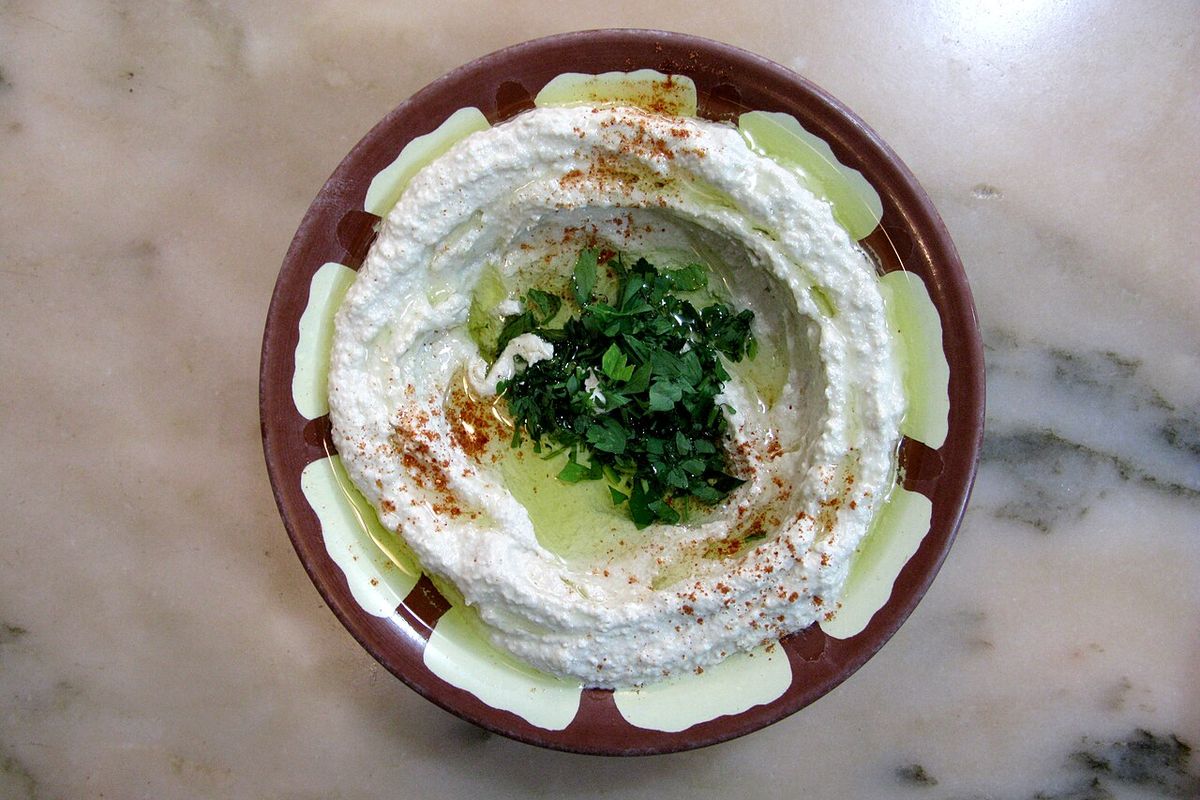
Hummus is a Levantine dip, spread or savory dish made from cooked, mashed chickpeas blended with tahini, lemon juice and garlic. The Arabic word ḥummuṣ simply means "chickpeas," and the full name of the dish, ḥummuṣ bi ṭaḥīna, means chickpeas with tahini. It is usually scooped up with flatbread such as pita, and it also appears on meze tables beside falafel, grilled meat, fish or eggplant. The usual garnish is olive oil, a few whole chickpeas, parsley and paprika.
Where hummus began is not settled. Wikipedia notes that several places in the Middle East have claimed it, and that the evidence is not enough to name one location or date. The earliest written mention of a similar dish is often said to be a 13th-century cookbook attributed to Ibn al-Adim, from Aleppo in present-day Syria. That recipe, a chickpea dish called kisāʾ, used chickpeas, lemon, sesame and olive oil but no garlic. Cairo cookbooks from the 14th century describe related purées, some made with vinegar instead of lemon. Sources also disagree on who "owns" the dish today, and the question stays a sensitive one in the region.
This version aims for the texture you find in a good hummus shop: smooth, pale, light and spoonable, with a clear taste of sesame and lemon rather than a heavy raw garlic bite. The method starts with dried chickpeas, cooked until they are very soft, and whips the tahini with ice water before the chickpeas go in. A food processor does the work. Canned chickpeas also work, and the substitutions section explains how to get them soft enough.
Ingredients and substitutions
Quantities are for 6 servings.
For the chickpeas
- 1 cup (200 g) dried chickpeas, sorted and rinsed
- 1 teaspoon (5 g) baking soda
- water, for soaking and cooking
For the hummus
- ½ cup (120 g) tahini, stirred well before measuring
- ¼ cup (60 ml) fresh lemon juice, from about 2 lemons
- 2 cloves garlic, peeled
- 1 teaspoon (6 g) fine salt
- ½ teaspoon (1 g) ground cumin, optional
- ¼ cup (60 ml) ice water, plus more as needed
To serve
- 2 tablespoons (30 ml) extra virgin olive oil
- 2 tablespoons (20 g) whole cooked chickpeas, set aside from the batch
- ¼ teaspoon (0.5 g) sweet paprika
- 2 tablespoons (4 g) fresh parsley, finely chopped
- warm pita, raw vegetables or crackers, for serving
Choosing your ingredients
Dried chickpeas give the best texture, and they are the base of this recipe. One cup (200 g) of dry chickpeas swells to about 3 cups (roughly 500 g) once soaked and cooked, which is more than the recipe needs. The extra is useful: set some aside for the garnish and use the rest in a salad or soup. Canned chickpeas are faster. They are already cooked, but the skins stay tougher, so they need a short extra simmer with baking soda before blending.
Soft chickpeas matter more than any other step. A chickpea that still has a little bite leaves tiny grainy bits in the dip, and no amount of blending removes all of them. Cook them until they are mushy, past the point you would stop for a salad. Baking soda raises the pH of the cooking water, which helps the skins break down so the purée turns out smoother. Peeling each chickpea is a lot of work and is not needed when they are cooked this soft.
Tahini is ground sesame paste, and its quality shows. Good tahini tastes nutty and mild, with only a little bitterness. Old or poor tahini tastes harsh and bitter, and hummus will taste the same. Oil separates in the jar, so stir the paste thoroughly before you measure it. Brands made from hulled sesame seeds are usually paler and milder than whole-seed paste.
Use fresh lemon juice, not the bottled kind, which tastes flat. Raw garlic is strong and gets stronger as it sits, so start with two cloves. For a softer bite, let the garlic sit in the lemon juice for 5 to 10 minutes before blending. The acid mellows it. Ice water is the quiet ingredient here: it turns the tahini into a pale, fluffy cream, and it keeps the dip light instead of heavy.
Possible substitutions
- Dried chickpeas: Two 15-ounce (425 g) cans, drained and rinsed. Simmer them in water with 1 teaspoon baking soda for about 20 minutes, until the skins slip off and the chickpeas crush easily. Drain before blending.
- Tahini: There is no true replacement, since tahini defines the flavor. In an emergency, grind toasted sesame seeds with a little neutral oil into a paste, but expect a grainier dip.
- Fresh lemon juice: Lime juice works in the same amount. Start with a little less and taste, because lime can be sharper.
- Garlic: One small clove for a very mild dip, or a quarter teaspoon of garlic powder. Fresh garlic gives a cleaner flavor.
- Ground cumin: Leave it out for a more traditional Levantine taste, or use the same amount of ground coriander.
- Ice water: Cold chickpea cooking liquid, strained, in the same amount. The dip tastes a little more of chickpea and slightly less airy.
Step-by-step method
- Soak the chickpeas. Rinse the dried chickpeas and pick out any stones or broken pieces. Cover them with plenty of cold water, at least three times their volume, and soak for 8 to 12 hours at room temperature or in the refrigerator. They are ready when they have roughly doubled in size and look plump and smooth. Drain and rinse them before cooking.
- Cook until very soft. Put the soaked chickpeas in a large pot with the baking soda and cold water to cover by 2 inches (5 cm). Bring to a boil, skim off the foam, then lower to a steady simmer. Cook for 60 to 90 minutes, topping up with hot water if needed. They are done when they collapse easily when pressed between two fingers, and many skins float loose.
- Drain and save some liquid. Scoop out a cup (240 ml) of the cooking liquid, then drain the chickpeas. Set aside a small handful of the best-looking whole chickpeas for the garnish. Do not rinse the rest. Warm chickpeas blend into a smoother, silkier purée than cold ones, so go straight to the next steps while they are still hot to the touch.
- Whip the tahini and lemon. Combine the tahini and lemon juice in a food processor and process for 1 to 2 minutes. The mixture first turns thick and stiff, which is normal. With the motor running, add the ice water gradually. Within about a minute the paste should loosen, turn pale and fluffy and look like thick whipped cream. Scrape the sides once.
- Add garlic and seasonings. Add the garlic, salt and cumin if using. Process for about 30 seconds, until the garlic is fully broken down and there are no visible pieces. Let the mixture sit for a minute or two if you want a milder garlic taste, since the lemon softens it. The mixture should still look smooth, light and spreadable.
- Blend the chickpeas. Add the warm drained chickpeas to the processor. Blend for 3 to 4 minutes, stopping to scrape down the bowl every minute. The dip is ready when it looks pale, glossy and completely smooth, with no flecks of skin you can feel on your tongue. If it seems stiff, add ice water or reserved cooking liquid a spoonful at a time while it runs.
- Rest, taste and serve. Taste the hummus and adjust the salt and lemon. Let it rest for 10 minutes, since the flavors settle and the texture firms slightly. Spread it in a shallow bowl and press a spoon into the center to make a well. Fill the well with olive oil, then top with the whole chickpeas, paprika and parsley. Serve at room temperature with warm pita or vegetables.
Variations
Hummus is eaten in many forms around the Levant and beyond. In Egypt it is often flavored with cumin and other spices. In the Levant it is commonly served warm for breakfast, lunch or dinner, with bread. Garnishes vary too: olive oil, mint, paprika and parsley are all common. The Wikipedia article also mentions a version made by Iraqi Jews, with fried eggplant and boiled eggs on top, and notes that Israeli versions often use a lot of tahini for a creamier texture.
At home, you can change the dip itself. For roasted garlic hummus, bake a whole head of garlic at 400°F (200°C) for 35 to 40 minutes and blend in 3 cloves of the soft pulp in place of the raw garlic. For a brighter dip, add a teaspoon of lemon zest. For a smoky version, stir in half a teaspoon of smoked paprika. For a bolder version, blend in a tablespoon of harissa with the tahini and lemon, then taste before adding more salt.
Storage and reheating
Store hummus in an airtight container in the refrigerator. Cool it and refrigerate it within two hours of making it, and eat it within 3 to 4 days. Smooth the surface and pour a thin layer of olive oil on top, which keeps it from drying out and forming a crust. If a batch has been sitting out at a party for more than two hours, throw it away.
Hummus also freezes for up to about 3 months. Freeze it in small containers, leaving a little room at the top, and thaw it overnight in the refrigerator. It may look slightly separated after thawing. Stir it hard, then loosen it with a spoonful of cold water and a little lemon juice, and refresh it with new olive oil. Take it out of the refrigerator 20 to 30 minutes before serving, because cold hummus tastes muted and feels stiff.
Common mistakes
- Undercooked chickpeas. Chickpeas that are only just tender leave grainy bits in the finished dip. Cook them until they fall apart when pressed. Dried beans must always be cooked fully, so keep simmering until they are soft right through.
- Using cold chickpeas. Cold chickpeas make a thicker, less silky purée that is harder for the blades to break down. Blend them while they are still warm, straight from the drained pot.
- Skipping the ice water. Adding the tahini straight to the chickpeas gives a heavy, pasty dip. Whipping tahini and lemon with ice water first creates a light cream that carries the chickpeas.
- Too much raw garlic. Raw garlic grows sharper as the hummus rests, and a heavy hand can take over the dip. Start with two cloves, or soak the garlic in lemon juice for a few minutes first.
- Rushing the blending. Thirty seconds in the processor is not enough. Blend for several minutes, scrape the bowl, and add small amounts of ice water until the texture looks glossy and smooth.
Frequently asked questions
Can I use canned chickpeas?
Yes. Drain and rinse two 15-ounce (425 g) cans, then simmer them with baking soda for about 20 minutes so they soften further. The hummus will be a little less smooth than the dried version, but it will still be creamy if you blend it long enough.
Why is my hummus bitter?
The most common cause is old or low-quality tahini. Taste the tahini on its own before you start. Too much garlic or lemon pith can also add bitterness. If the batch is already blended, a pinch of salt, a little more lemon juice and a spoonful of olive oil can soften the edge.
Do I need to peel the chickpeas?
No. If the chickpeas are cooked until very soft, with baking soda in the pot and enough blending time, the skins break down and the dip turns out smooth without peeling. Peeling can help if you used canned chickpeas and want an extra-fine finish.
Why does my hummus seem too thick?
Hummus firms up as it cools and rests. Blend in ice water, one spoonful at a time, until it is loose enough to spread. Stir in a little water before serving if it was stored in the refrigerator.
What do I serve with hummus?
Warm pita is the classic partner. Raw vegetables such as cucumber, carrots and radishes work well, as do crackers and falafel. It is also good spread inside sandwiches or under roasted vegetables and grilled meat.