Middle East & Africa
Falafel from Dried Chickpeas: Crisp Outside, Green Inside
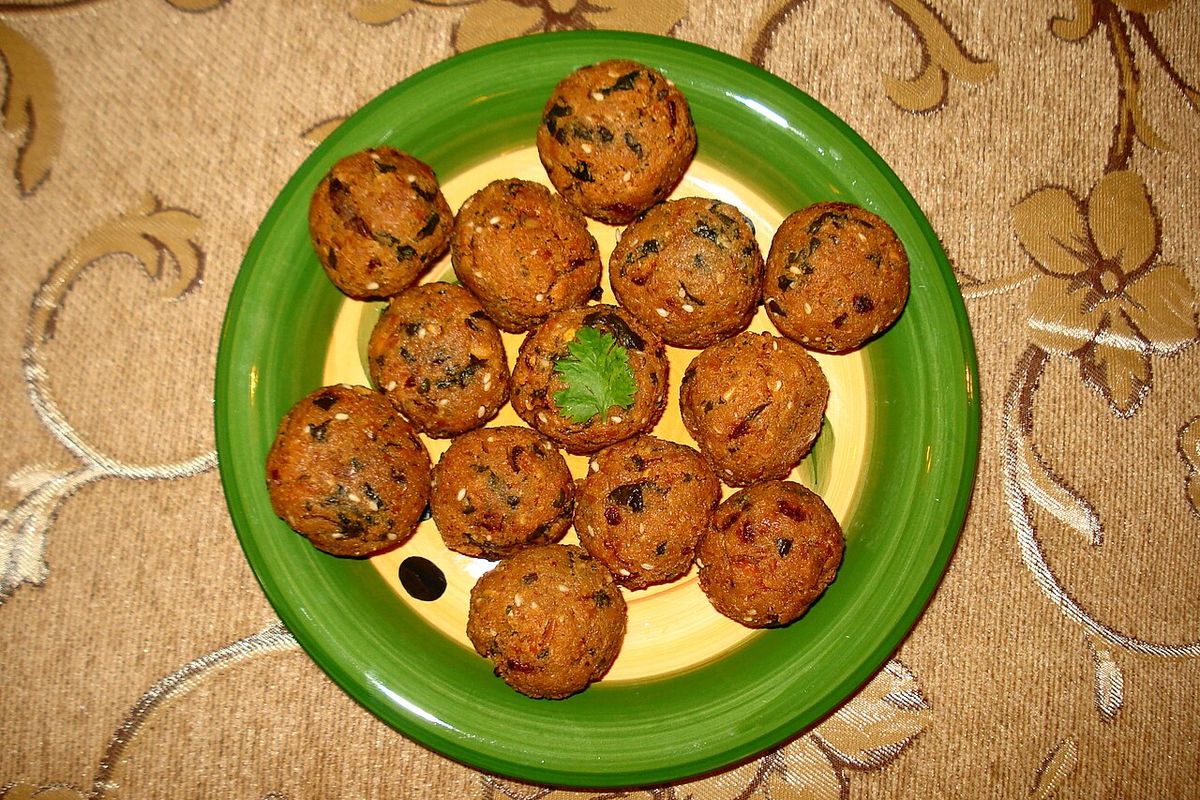
Falafel made from soaked dried chickpeas, parsley, cumin and coriander, fried at 350°F (175°C) and served in pita with tahini sauce.
By Lavin Food Editorial · Published
- Prep
- 35 min
- Cook
- 30 min
- Total
- 1 hr 5 min
- Yield
- 6 servings
About this dish
Falafel is a fried fritter made from ground legumes, herbs and spices, shaped into balls or small patties. It is eaten as street food across the Middle East, tucked into pita, set out as part of a meze spread, or served on a plate with salad and sauce. The word is the Arabic plural falafil, which is generally traced to filfil, meaning pepper, although sources give more than one possible root.
Where falafel began is not settled. Wikipedia says it most likely began in Egypt, where it is called ta'amiyya and is usually made from fava beans. Some people have suggested a link to ancient Egypt, but the earliest written Egyptian references date from the 19th century, and sources disagree about older claims. A second theory, supported only by circumstantial evidence, ties it to British soldiers in Egypt who wanted a substitute for Indian food. Wikipedia reports that the dish spread beyond Egypt after World War I, that a falafel shop was open in Beirut by 1933, and that in the Levant chickpeas took the place of fava beans. Historian Gil Marks is cited as saying that the pita sandwich became popular in Israel in the 1950s. Who owns the dish is still argued today.
This recipe follows the chickpea style. The chickpeas are soaked but never cooked first, because cooked chickpeas turn the mix to paste and the balls fall apart in the oil. The goal is a crackling brown crust, a moist green center that crumbles a little, and a clear taste of parsley, cumin and coriander. Soaking takes 12 to 18 hours and chilling takes one hour. The prep time listed is active work only.
Ingredients and substitutions
Quantities are for 6 servings.
For the falafel
- 2 cups (400 g) dried chickpeas, soaked, never canned
- 1 medium (150 g) yellow onion, peeled and quartered
- 5 cloves garlic, peeled
- 1 cup (30 g) fresh flat-leaf parsley, leaves and tender stems, loosely packed
- ½ cup (15 g) fresh cilantro, leaves and tender stems, loosely packed
- 2 teaspoons (4 g) ground cumin
- 2 teaspoons (4 g) ground coriander
- 1½ teaspoons (9 g) fine salt
- ½ teaspoon (1 g) freshly ground black pepper
- ¼ teaspoon (0.5 g) cayenne pepper, optional
- ½ teaspoon (2 g) baking soda
- 2 tablespoons (15 g) chickpea flour, only if the mix will not hold together
For frying or baking
- 4 cups (960 ml) neutral frying oil, peanut, canola or sunflower; for deep-frying, about 2 inches (5 cm) deep in a heavy pot
- 3 tablespoons (45 ml) olive oil, only for the baked version
For the tahini sauce
- ½ cup (120 g) tahini
- ¼ cup (60 ml) fresh lemon juice
- ¼ cup (60 ml) cold water, plus more to thin
- 1 clove garlic, grated
- ¼ teaspoon (1.5 g) fine salt
To serve
- 6 rounds pita bread
- 3 medium (400 g) ripe tomatoes, sliced
- 1 medium (200 g) cucumber, sliced
- pickled turnips or pickled cucumbers, optional
Choosing your ingredients
Use dried chickpeas, and only dried ones. Canned or pre-cooked chickpeas are already soft and full of water, so the mix turns to a wet paste that will not hold a shape. Dried chickpeas that have only been soaked stay firm and starchy, and that starch is what binds the balls. Soak them in a large bowl with cold water at least three times their volume, for 12 to 18 hours. In a warm kitchen, soak them in the refrigerator so they do not start to ferment. They are ready when they have swollen to about double their size and a chickpea split in half is the same pale color all the way through.
The green color and fresh taste come from the herbs, so use plenty and keep them dry. Wet herbs add water to the mix and make the balls looser. Wash them, spin them or pat them very dry, and use the tender stems along with the leaves, because the stems carry a lot of flavor. Parsley is the base. Cilantro adds a brighter, slightly citrus note, and the recipe works with parsley alone if you prefer.
Grind your own cumin and coriander if you can, or buy small jars of ground spice and use them within a year. Baking soda is optional but useful. It lightens the inside a little and helps the crust brown. Chickpea flour is a rescue, not a standard ingredient. Most mixes hold together without it when the chickpeas are ground coarsely and chilled. Add it a tablespoon at a time only if a test ball falls apart.
For frying, choose an oil with a high smoke point and a mild taste, such as peanut, canola or sunflower. Use a heavy, deep pot or Dutch oven and a deep-fry or candy thermometer. A thermometer matters here. Oil that is too cool makes greasy falafel, and oil that is too hot browns the outside before the inside is cooked.
Possible substitutions
- Cilantro: Use more parsley, for a total of 1.5 cups (45 g). The falafel will taste greener and a little milder.
- Yellow onion: Six scallions, white and green parts, roughly chopped. Squeeze out any extra moisture before they go into the grinder.
- Chickpea flour: Leave it out unless needed. If the mix will not hold, chill it for another 30 minutes first, because cold often fixes the problem without any flour.
- Part of the chickpeas: Peeled dried fava beans, soaked the same way, can replace up to half of the chickpeas for a version closer to Egyptian ta'amiyya.
- Tahini sauce: Plain yogurt stirred with lemon juice, grated garlic and salt, for a tangy sauce with a different feel.
- Pita bread: Any soft flatbread, such as lavash or laffa, or serve the falafel over salad in a bowl.
Step-by-step method
- Soak the dried chickpeas. Rinse the chickpeas, then cover them with at least three times their volume of cold water and soak for 12 to 18 hours. Use a refrigerator if your kitchen is warm. They are ready when they have roughly doubled in size and one split in half looks evenly pale with no dry, chalky core. Drain well and let them sit in a colander for 15 minutes so they are not dripping.
- Prepare the onion, garlic and herbs. Quarter the onion and peel the garlic. Wash the parsley and cilantro, then dry them thoroughly in a salad spinner or between clean towels, since wet herbs loosen the mix. Roughly chop the herbs with their tender stems so the grinder can pull them in. This takes about 10 minutes of active work, and the herbs should feel dry and squeaky when you finish.
- Grind coarsely. Working in two or three batches, pulse the chickpeas, onion, garlic and herbs in a food processor with short, one-second pulses. Scrape down the sides between rounds. Stop after about 10 to 15 pulses, when the mix looks like coarse sand with flecks of green. Squeeze a handful in your fist. It should clump and hold without feeling smooth or pasty. If it looks like hummus, you went too far.
- Season and chill. Move the mix to a bowl and stir in the cumin, coriander, salt, black pepper, cayenne and baking soda with a fork. Cover and refrigerate for at least 1 hour and up to 24 hours. Chilling lets the starch firm up and makes shaping easier. The mix is ready when it feels cold, slightly damp and holds together when pressed. Judge the salt from the fried test ball in step 6, not from the raw mix.
- Shape the falafel. With damp hands, press the mix firmly into balls about the size of a walnut, roughly 1.5 inches (4 cm) across, or into patties about half an inch (1.25 cm) thick for pan-frying. Squeeze each one tightly so there are no loose cracks. Set them on a tray as you go. The recipe makes a little over two dozen pieces, and each shaped falafel should feel compact, not crumbly.
- Heat the oil safely. Pour the oil into a heavy pot to a depth of about 2 inches (5 cm), and never fill the pot more than halfway. Heat over medium heat until a thermometer reads 350 to 360°F (175 to 180°C), about 8 to 10 minutes. Keep a lid nearby and keep water away from the pot. Fry one test ball first. It should sizzle at once, rise within a few seconds and hold its shape. If it breaks up, stir a tablespoon of chickpea flour into the mix.
- Fry in small batches. Lower 5 or 6 falafel into the oil with a slotted spoon or spider, so the surface of the oil stays busy but not crowded. Fry for 3 to 4 minutes, turning once or twice, until they are deep golden brown and crisp. Lift them onto a rack set over a tray. Wait 1 to 2 minutes for the oil to return to temperature before the next batch. Break one open: the center should be moist, green and cooked, not pasty.
- Make the sauce and serve. While the falafel fry, whisk the tahini, lemon juice, garlic and salt in a bowl. It will thicken and look chalky at first. Whisk in the cold water a little at a time until the sauce is smooth, pale and pourable like thick cream. Split the pitas, tuck in warm falafel, tomato and cucumber, and drizzle with the sauce. Serve within 15 minutes, while the crust is still crisp.
Variations
To pan-fry, shape the mix into flat patties and use a wide skillet with about half an inch (1.25 cm) of oil, heated to the same 350 to 360°F (175 to 180°C). Fry for 3 to 4 minutes per side, until deep golden. The crust is slightly less even than in a deep pot, but the oil is easier to manage and you use less of it. Keep a lid close and never leave the pan unattended.
To bake, heat the oven to 425°F (220°C) and toss the shaped balls with 3 tablespoons of olive oil on a lined baking sheet. Bake for 25 to 30 minutes, turning them over halfway, until the outsides are browned and firm. Baked falafel are drier and less crackly than fried ones. Wikipedia notes that baking is an accepted alternative, and a generous drizzle of tahini sauce makes up for the missing richness.
Other regional versions exist. Egyptian ta'amiyya is usually made with fava beans. The inside can be green from herbs or tan. Some cooks press sesame seeds onto the balls before frying, and Palestinian cooks make a version stuffed with sumac and onions. For extra heat, add a minced fresh chile to the grinder, or stir a little ground sumac into the tahini sauce.
Storage and reheating
Cool cooked falafel on a rack and refrigerate them within 2 hours of cooking. Store them in a covered container for up to 3 or 4 days. The crust softens in the fridge, which is normal. You can keep the raw mix covered in the refrigerator for up to 24 hours before shaping and frying. Store the tahini sauce in a jar for up to 3 days and whisk in a splash of water before using, since it thickens as it chills.
To reheat, spread falafel on a baking sheet and warm them in a 375°F (190°C) oven for 10 to 12 minutes, until hot all the way through and crisp again. Do not use a microwave for the crust, which turns soft and tough. Cooked falafel also freeze well for about 2 months. Reheat them from frozen at 375°F (190°C) for 15 to 18 minutes. Let used frying oil cool completely, strain it and store it in a sealed container, or throw it out with the household trash. Never pour it down the drain.
Common mistakes
- Using canned chickpeas. Canned chickpeas are cooked and soft, so the mix becomes a wet paste that falls apart in the oil. Start with dried chickpeas that have been soaked only.
- Grinding the mix to a paste. A smooth mix makes dense, heavy falafel with no crumb. Pulse in short bursts and stop when the mix looks like coarse sand with green flecks.
- Skipping the chill. A warm, loose mix is harder to shape and more likely to break apart when it hits the oil. Give it at least 1 hour in the refrigerator.
- Frying at the wrong temperature. Oil below 350°F (175°C) soaks into the falafel and makes them greasy. Oil far above 360°F (180°C) burns the crust before the middle is cooked. Use a thermometer and adjust the heat between batches.
- Crowding the pot. Too many cold falafel lower the oil temperature at once and raise the risk of splatter. Fry 5 or 6 at a time and give the oil a minute or two to recover.
- Ignoring fire safety. Never fill the pot more than halfway, and never leave hot oil alone. Dry the falafel before they go in. If oil catches fire, turn off the heat, slide a lid over the pot and leave it closed. Never use water on a grease fire.
Frequently asked questions
Can I use canned chickpeas for falafel?
No. Canned chickpeas are already cooked and hold too much water, so the mix will not bind and the balls break apart. The texture of good falafel depends on dried chickpeas that were soaked but not cooked.
Why did my falafel fall apart in the oil?
The usual causes are a mix that is too wet, ground too fine, or not chilled, and oil that is below 350°F (175°C). Dry the herbs, chill the mix for an hour, test one ball, and add a tablespoon of chickpea flour only if the test ball still breaks.
Do I have to deep-fry them?
No. You can pan-fry them as patties in about half an inch (1.25 cm) of oil, or bake them at 425°F (220°C) for 25 to 30 minutes. Fried falafel have the crispest crust, and baked ones are drier but easier to make.
Why are the falafel dry or raw in the middle?
Dry falafel are usually ground too fine or fried too long. A pasty, raw center means the oil was too hot and browned the outside too fast. Keep the oil at 350 to 360°F (175 to 180°C), and break open the first test ball to check.
Can I make the mix ahead?
Yes. The raw mix keeps in a covered bowl in the refrigerator for up to 24 hours. Shape and fry it straight from the cold. You can also fry the falafel earlier in the day and reheat them in a 375°F (190°C) oven for 10 to 12 minutes.