Middle East & Africa
Moroccan Chicken Tagine with Olives and Preserved Lemon
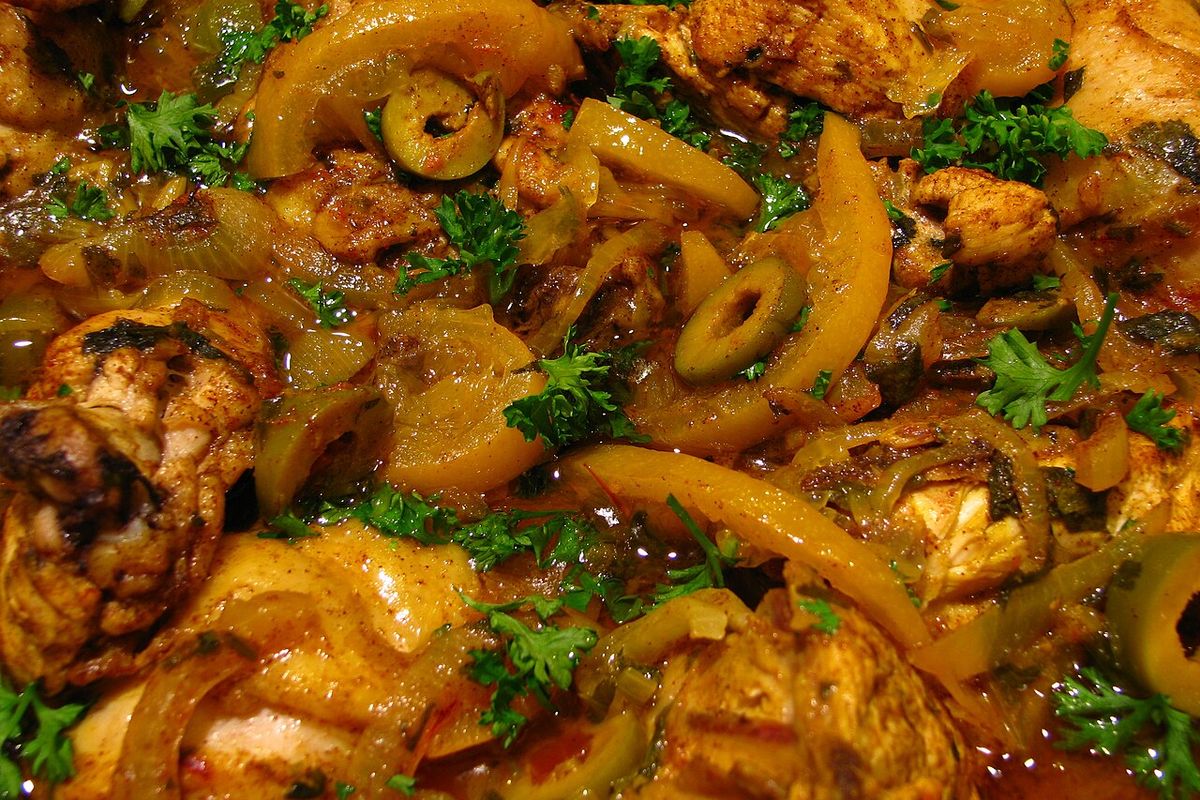
Bone-in chicken thighs braised with onion, ginger, saffron and warm spices, then finished with green olives and preserved lemon in a Dutch oven.
By Lavin Food Editorial · Published
- Prep
- 25 min
- Cook
- 1 hr 30 min
- Total
- 1 hr 55 min
- Yield
- 4 servings
About this dish
A tagine is two things at once: a North African stew and the pot it is cooked in. The pot has a shallow, round base and a tall cone or dome for a lid. According to Wikipedia, the lid catches steam and returns the condensation to the food, so the stew braises with very little added water. The word itself is said to come from an ancient Greek word for a clay frying pan, and the cone-lidded pot is often traced to Tafraout, in Morocco.
Algerian and Moroccan tagines are slow-cooked stews of meat, poultry or fish with vegetables or fruit. Common spices include ginger, cumin, turmeric, cinnamon and saffron, and sweet and sour pairings are a regular theme. Tagines are generally served with bread, and Wikipedia notes that Sephardic Shabbat dinners often serve tagine with couscous. Chicken with preserved lemon and olives is one classic pairing. Preserved lemon is described as a key ingredient in many Moroccan dishes, and it is often paired with olives and chicken.
This version does not use a clay tagine. It uses a heavy Dutch oven, which most home kitchens already have. The Dutch oven does not recirculate steam the way a cone does, and it has no unglazed clay to absorb liquid, so the method adds a little more broth and finishes with a short boil to thicken the sauce. The result is close to a traditional tagine in flavor, but the texture of the sauce is slightly different, and this page does not claim otherwise. A deep lidded skillet works too.
Ingredients and substitutions
Quantities are for 4 servings.
For the chicken
- 3 pounds (1.36 kg) bone-in, skin-on chicken thighs, about 8 thighs, or a mix of thighs and drumsticks
- 1 teaspoon (6 g) fine salt
- ½ teaspoon (1 g) freshly ground black pepper
- 3 tablespoons (45 ml) olive oil
For the sauce
- 2 medium (320 g) yellow onions, grated or very finely chopped
- 4 cloves garlic, minced
- 1 teaspoon (2 g) ground ginger
- 1 teaspoon (3 g) ground turmeric
- 1 teaspoon (2 g) ground cumin
- 1 teaspoon (2.5 g) sweet paprika
- ¼ teaspoon (0.5 g) ground cinnamon
- ¼ teaspoon saffron threads, a generous pinch
- 1 cup (240 ml) chicken broth, or water, warm
To finish and serve
- 1 medium (70 g) preserved lemon, rinsed, pulp scraped off, rind sliced
- 1 cup (150 g) green olives, pitted, whole or halved
- 1 tablespoon (15 ml) fresh lemon juice
- ½ cup (15 g) fresh cilantro and parsley, chopped together
- 1½ cups (260 g) quick-cook couscous, or warm crusty bread, for serving
Choosing your ingredients
Choose bone-in, skin-on thighs. The bone and the connective tissue in dark meat give the sauce body, and the meat stays juicy through a long braise. Skinless or boneless pieces work, but the sauce will be thinner and the meat can turn stringy. Chicken breast is a poor fit here because it dries out long before the sauce develops flavor.
Preserved lemon is lemon that has been packed in salt or brine and left for weeks. Wikipedia notes that the peel is the most valued part, and that the flavor is mildly tart but intensely lemony. Rinse each piece under cold water to wash off surface salt, scrape out the pulp, and use only the rind. Keep the pulp for a salad dressing or a sauce, but taste it first, because it is very salty.
Green olives hold their shape better than black ones in a long braise. Look for plain pitted green olives such as Castelvetrano or similar mild, buttery types. Olives packed in brine are already salty, so drain them and taste one. If they are very sharp, soak them in cold water for 10 minutes before they go in the pot.
Saffron gives the sauce a floral, slightly honeyed aroma and a deep golden color. Crumble the threads into warm broth and let them steep before adding them, so the color spreads evenly. Turmeric in the spice base adds color and an earthy note, but it does not smell like saffron, and the two are not interchangeable in taste.
Possible substitutions
- Preserved lemon: Fresh lemon zest, taken from one lemon in wide strips and added with the olives, plus an extra pinch of salt at the end. This tastes bright and clean, but it lacks the fermented, almost savory depth of preserved lemon, so the dish will taste different, not identical. Indian-style lemon pickle also works in small amounts, but many jars contain chile and oil, which change the flavor.
- Green olives: Kalamata or other black olives. They add a darker, fruitier, winey note and can color the sauce. Add them in the last 5 minutes so they do not turn mushy.
- Saffron threads: Leave it out and use a little more turmeric, about 1/2 teaspoon extra. The color is close, but the floral aroma is missing.
- Chicken thighs: Drumsticks or a cut-up whole chicken. Cook breast pieces for a shorter time, about 25 minutes of braising, and expect a drier texture.
- Chicken broth: Plain water. The sauce will taste lighter, so add a pinch more salt near the end.
- Cilantro and parsley: Use all parsley, or all cilantro, or a little chopped fresh mint on top.
Step-by-step method
- Season the chicken. Pat the chicken thighs very dry with paper towels. Sprinkle all sides with the salt and pepper and leave them for about 15 minutes while you prepare the rest. Grate the onions, mince the garlic and rinse the preserved lemon under cold water. Dry skin browns well, while wet skin steams and stays pale.
- Brown the chicken. Heat half the olive oil in a 5- to 6-quart Dutch oven over medium-high heat until it shimmers. Place the thighs skin-side down, in batches if they crowd the pot. Cook for 6 to 8 minutes, until the skin is deep golden and lifts easily. Turn and brown the other side for 2 to 3 minutes. Move the chicken to a plate and pour off all but a thin film of fat.
- Cook the onions and spices. Lower the heat to medium and add the remaining oil. Add the onions with a pinch of salt and cook for 8 to 10 minutes, stirring often, until soft, translucent and lightly golden. Stir in the garlic, ginger, turmeric, cumin, paprika and cinnamon. Cook for 30 to 60 seconds, until the spices smell toasted, and add a splash of broth if anything sticks.
- Add the saffron and broth. Crumble the saffron into the warm broth and let it steep for 5 minutes, until the liquid turns deep orange. Pour it into the pot and scrape up the browned bits. Return the chicken, skin-side up, with any juices from the plate. The liquid should come about one-third of the way up the thighs. Bring it to a gentle simmer.
- Braise until tender. Cover the pot and lower the heat until the liquid just trembles. Braise for 35 to 45 minutes, turning the pieces once. You can also braise in a 325°F (160°C) oven. The chicken is ready when the meat pulls from the bone with little resistance. A thermometer in the thickest part, away from the bone, should read 175 to 185°F (80 to 85°C). The safe minimum is 165°F (74°C).
- Add the olives and preserved lemon. Slice the scraped preserved lemon rind into thin strips. Add the strips and the olives to the pot, then simmer uncovered for 10 to 12 minutes. Spoon the sauce over the chicken now and then. The olives should look plump, and the sauce should smell sharply of lemon. Hold off on more salt, because the lemon and olives already carry plenty.
- Reduce the sauce. Move the chicken to a warm plate and cover it loosely with foil. Boil the sauce over medium-high heat for 5 to 8 minutes, stirring, until it has reduced by about a third and coats the back of a spoon. Small golden beads of oil should gather on top. Stir in the lemon juice, then taste and add salt or pepper only if needed.
- Finish and serve. Return the chicken to the pot and spoon the sauce over it. Warm everything for 1 to 2 minutes, then scatter the cilantro and parsley on top. Serve from the pot with couscous prepared as the package directs, which takes about 5 minutes, or with warm bread for mopping up the sauce. Let the chicken rest a few minutes before serving.
Variations
A sweeter, more layered version is common in Moroccan Jewish cooking, which Wikipedia says often uses dried fruit in tagines. Add a handful of pitted prunes or dried apricots with the olives, about 1/2 cup (80 g), and leave out the fresh lemon juice at the end if the sauce already tastes bright. The fruit softens and thickens the sauce slightly.
For a heartier pot, add 1 pound (450 g) of waxy potatoes, cut into thick slices, about 25 minutes before the chicken is done. For a vegetable-forward version, stir in one 15-ounce (425 g) can of drained chickpeas with the olives. For a charred top, a technique Wikipedia describes for some tagines, slide the finished pot under a hot broiler for 3 to 4 minutes. Check that the lid knob and handles are ovenproof first.
Storage and reheating
Cool the tagine quickly and refrigerate it within 2 hours of cooking. Store it in a covered container for up to 3 to 4 days. The flavors settle and get deeper by the next day, which makes this a good make-ahead dish. Cooked chicken also freezes well for about 3 months in a sealed container, though the olives soften a bit after thawing.
Reheat the tagine in a covered pot over medium-low heat, adding a splash of water if the sauce has thickened. Heat it until it is steaming and the chicken reaches 165°F (74°C) in the center. Do not reheat the couscous in the sauce, because it turns heavy. Cook fresh couscous or warm the bread when you are ready to eat.
Common mistakes
- Skipping the browning. Browned skin and the fond stuck to the pot give the sauce much of its flavor. Pale chicken makes a flat, thin sauce. Dry the thighs well and give them room in the pan.
- Boiling instead of simmering. A hard boil toughens the meat and dries it out. During the braise the liquid should only tremble at the edges. If it bubbles hard, lower the heat.
- Not rinsing the preserved lemon. Jarred lemon is packed in salt. Unrinsed, it can make the whole pot too salty. Rinse it, use the rind, and taste before you add any more salt.
- Stopping at 165°F (74°C). Chicken is safe at 165°F (74°C), but thighs at that point are still firm and chewy near the bone. Keep braising until the meat pulls away easily, around 175 to 185°F (80 to 85°C).
- Leaving the sauce thin. Without a clay lid to absorb liquid, a Dutch oven keeps all the juices in. Take the chicken out and boil the sauce briefly until it coats a spoon.
Frequently asked questions
Do I need a clay tagine to make this?
No. A heavy Dutch oven or a deep skillet with a tight lid works well. A clay tagine returns steam through its cone and absorbs a little liquid, which gives a slightly different sauce. The Dutch oven method here makes up for that with a short, final reduction.
Can I use boneless chicken breasts?
You can, but they are easy to overcook. Brown them, braise for about 25 minutes, and check that they reach 165°F (74°C). Expect a leaner, drier result than with bone-in thighs.
Where do I find preserved lemons?
Many large supermarkets, Middle Eastern grocery stores and online shops sell them in jars, often near the olives or pickles. Check the label for lemon, salt and water, and rinse well before use.
The chicken looks pink near the bone. Is it done?
Color near the bone is not a reliable sign. Use a thermometer. The meat should be at least 165°F (74°C), and braised thighs taste best at 175 to 185°F (80 to 85°C), when the meat pulls easily from the bone.
Can I make it a day ahead?
Yes. Cool it within 2 hours, refrigerate it, and reheat it gently until steaming hot. The sauce often tastes better the next day.