Middle East & Africa
Jollof Rice: Tomato and Pepper Rice, West African Style
West African jollof rice: parboiled rice cooked in a fried tomato, red pepper and onion base, then steamed to a lightly smoky finish.
By Lavin Food Editorial · Published
- Prep
- 25 min
- Cook
- 1 hr 25 min
- Total
- 1 hr 50 min
- Yield
- 6 servings
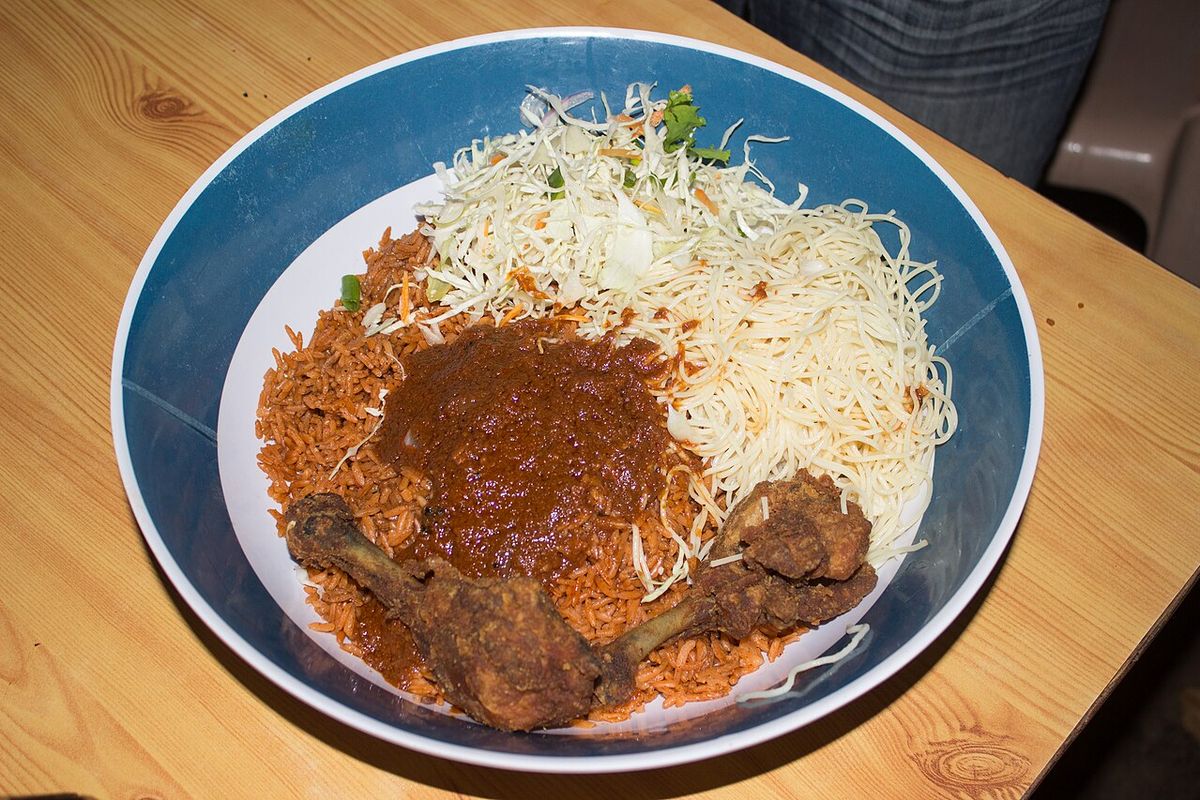
About this dish
Jollof rice is a West African one-pot dish of long-grain rice cooked in a sauce of tomatoes, chilies, onions and spices. The name is generally linked to the Wolof people, and the dish goes by other names too, including ceebu jën or benachin in Wolof and riz au gras in French-speaking West Africa. Cooks add meat, fish or vegetables, and the details shift from country to country and from kitchen to kitchen.
Where it began is debated. The food historian Fran Osseo-Asare traces it to the area of the old Jolof, or Wolof, Empire in present-day Senegal, where a dish of rice, fish and vegetables called thieboudienne is named as the original. Other scholars see it differently. James C. McCann has argued that it spread with the Mali Empire and its traders, while Marc Dufumier has proposed a much more recent start, tied to imported broken rice during the colonial peanut boom. Tomatoes, tomato paste, peppers and curry powder all came to the region from elsewhere, which may place the current form no earlier than the 19th century. Sources disagree, so each of these is best read as a theory.
Today jollof is a centerpiece of parties and celebrations across West Africa. A saying quoted in many places holds that a party without jollof is just a meeting. Several countries, most visibly Nigeria and Ghana, enjoy a friendly rivalry over whose version is better, nicknamed the jollof wars. This page takes no side. The recipe follows the profile commonly described for Nigerian-style jollof: parboiled long-grain rice, a blended tomato, red pepper and onion base fried until the oil separates, stock, thyme, bay leaf and curry powder, with scotch bonnet for heat.
The method matters more than any single ingredient. The base is cooked down for a long time before the rice goes in, so the grains absorb a concentrated red sauce and not watery juice. The rice then finishes by steam under a tight lid on very low heat. A short burst of heat at the end gives the lightly toasted bottom that many cooks prize in party-style jollof, which is traditionally cooked outdoors over a wood fire.
Ingredients and substitutions
Quantities are for 6 servings.
For the pepper base
- 3 medium (450 g) red bell peppers, seeded and roughly chopped
- 1½ pounds (680 g) ripe plum tomatoes, cored and roughly chopped
- 1 medium (150 g) yellow onion, roughly chopped, for blending
- 1 small scotch bonnet pepper, seeded; see the notes on heat
- 4 cloves garlic, peeled
- 1 tablespoon (6 g) fresh ginger, peeled and chopped
For the rice
- ⅓ cup (80 ml) vegetable oil
- 1 medium (150 g) yellow onion, thinly sliced
- 3 tablespoons (48 g) tomato paste
- 2 teaspoons (4 g) curry powder
- 1 teaspoon (1 g) dried thyme
- 2 whole dried bay leaves
- ½ teaspoon (1 g) smoked paprika, optional
- 1½ teaspoons (9 g) fine salt, plus more to taste
- 2½ cups (600 ml) chicken or vegetable stock, hot
- 3 cups (560 g) long-grain parboiled rice, rinsed and drained
- 2 tablespoons (28 g) butter, optional, to finish
Choosing your ingredients
Parboiled long-grain rice is the usual choice for one-pot jollof. It is partly boiled in the husk during processing, so the grains stay separate and firm through a long, wet cook and are far less likely to turn mushy. Golden sella basmati is parboiled in the same way and works well too. Rinse the rice in cold water until it runs mostly clear, which removes loose surface starch that would make the pot sticky.
The base is where the flavor comes from. Red bell peppers bring color and sweetness, and ripe plum tomatoes bring acidity and body. Plum tomatoes have thick flesh and few seeds, so the puree is less watery. In winter, a 28-ounce (800 g) can of whole peeled tomatoes, drained of most of its liquid, is a fair stand-in. Tomato paste goes into the oil first and gets fried until it darkens. That step takes away the raw, tinny edge and gives the rice its deep red color.
Scotch bonnet is fruity and very hot, and most of the heat sits in the seeds and the white pith. For a medium heat, use half a pepper with the seeds removed. For a gentle warmth, pierce the whole pepper once with a knife, drop it into the pot with the stock and lift it out before it bursts. Wear gloves when you cut it, and wash your hands and the board well afterward. You can always add more heat at the table, but you cannot remove it.
Use a wide, heavy pot of about 5 quarts (5 liters), such as a Dutch oven, with a lid that fits snugly. A wide pot lets the base reduce faster and gives the rice an even, shallow layer. Keep a sheet of foil nearby. Pressed over the rice under the lid, it seals the steam in, which is the whole trick of the finish. Add the stock hot, so the pot does not drop off the boil when the rice goes in.
Possible substitutions
- Scotch bonnet pepper: Habanero has a similar heat and fruitiness. For a much milder pot, use a seeded red jalapeno or a whole pierced pepper that you remove before serving.
- Ripe plum tomatoes: One 28-ounce (800 g) can of whole peeled tomatoes, drained of most of the juice. Fry the base a few minutes longer if the puree looks loose.
- Long-grain parboiled rice: Golden sella basmati rice, used the same way. Plain long-grain white rice also works, but it is softer, so cut the stock by about half a cup (120 ml) and start checking at 20 minutes.
- Chicken or vegetable stock: Water with a good bouillon cube, or beef stock for a deeper flavor. Taste before adding any extra salt, because stock cubes are salty.
- Dried thyme: Three or four fresh thyme sprigs, removed at the end. Fresh thyme is milder, so use a little extra.
- Butter: A spoonful of the cooking oil, or nothing at all. The butter only adds a little gloss and richness.
Step-by-step method
- Blend the pepper base. Put the peppers, tomatoes, chopped onion, scotch bonnet, garlic and ginger in a blender and process for 1 to 2 minutes, working in batches if needed. The puree should look smooth and pourable, orange-red, with no visible flecks of skin. Set it aside. Rinse the rice in a bowl of cold water, changing the water 3 or 4 times, until it runs mostly clear. Drain well.
- Fry the onion and tomato paste. Heat the oil in a wide, heavy pot over medium heat. Add the sliced onion and cook for 5 to 7 minutes, stirring, until it is soft and golden at the edges. Stir in the tomato paste and fry for 3 to 4 minutes, until it turns a darker brick red and smells sweet and toasted. Scrape the bottom so nothing catches.
- Cook the base until the oil separates. Pour in the blended base, standing back because it will spit. Add the curry powder, thyme, bay leaves, smoked paprika if using and the salt. Simmer over medium heat, uncovered, stirring often, for 25 to 35 minutes. The base is ready when it has reduced to a thick, deep red paste and a layer of red oil floats at the edges. Do not rush this step.
- Add the stock and the rice. Pour in the hot stock, bring it to a boil and taste. It should be a little too salty, because the rice will take up much of the salt. Stir in the drained rice once, level the top, and make sure the liquid sits just above the grains, about half an inch (1 cm). Boil for 1 to 2 minutes, then stop stirring for the rest of the cook.
- Seal the pot and steam. Press a sheet of foil directly over the rice and tuck it in around the edges. Set the lid on top, turn the heat to its lowest setting and leave it alone for 25 to 30 minutes. Do not lift the lid before 20 minutes. At the end, the surface should look dry and dented with small steam holes, and the grains should be nearly tender.
- Check the rice. Lift the foil and bite a grain from the middle of the pot. It should be tender with only a faint firmness in the center. If it is still hard and the pot looks dry, sprinkle a few tablespoons of hot water around the edge, re-seal and steam for 5 to 8 more minutes. If it is tender but wet, go straight to the next step.
- Toast the bottom. Remove the foil and raise the heat to medium-high for 3 to 5 minutes, without stirring. You want a faint crackle, a toasted, slightly smoky smell and a thin darker layer at the bottom of the pot. Stay close and sniff often. If the smell turns sharp or acrid, the rice is scorching, so take the pot off the heat right away.
- Rest and fluff. Turn off the heat, dot the top with the butter if using, and cover again for 8 to 10 minutes. This rest lets the moisture even out so the grains firm up. Remove the bay leaves and any whole pepper, then fluff the rice with a fork, folding gently from the bottom up so the toasted bits mix in. Serve hot.
Variations
Jollof changes from place to place. Ghanaian versions are often made with jasmine rice and served with fried plantains and shito, a pepper sauce. Senegalese thieboudienne uses broken rice and fish. In French-speaking West Africa, riz au gras often includes vegetables such as eggplant, carrots or cabbage, and in parts of Nigeria a coconut version is eaten. Many cooks add carrots, green peas or cabbage to the pot as well. For a vegetable version, stir in about 1 cup (130 g) of diced carrots with the stock.
For a fuller meal, serve the rice with fried or grilled chicken, fish, beef or turkey, plus fried plantains, coleslaw or moi-moi, a steamed bean pudding. If you cook bone-in chicken pieces in the pot, brown them first, nestle them in the base and cook them until a thermometer in the thickest part reads 165°F (74°C). Cook any meat separately from the rice if you want to be sure of the timing, and keep raw meat away from everything else.
Storage and reheating
Cooked rice needs quick handling. Spread leftovers in a shallow container so they cool fast, and get them into the refrigerator within two hours of cooking. Do not leave the pot on the stove overnight. Stored in an airtight container, jollof keeps for 3 to 4 days in the refrigerator, and it freezes well for about 3 months.
To reheat, add a splash of water, cover and warm the rice in a pan over medium-low heat or in the microwave, stirring once or twice, until it is steaming hot all the way through, to 165°F (74°C). Reheat only the portion you plan to eat, and do not reheat the same rice more than once. Frozen jollof is best thawed overnight in the refrigerator first.
Common mistakes
- Skipping the long reduction. A base that has not cooked down tastes raw and sour, and it makes pale, wet rice. Keep simmering until the paste is thick and red oil collects at the edges.
- Stirring after the rice goes in. Stirring breaks the grains and releases starch, and the pot turns gluey. Stir once when the rice goes in, then leave it alone until the rest is done.
- Lifting the lid too often. Each peek lets out steam that the rice needs to finish. Wait until at least 20 minutes, and keep the foil sealed around the edges.
- Using too much liquid. Drowned rice turns soft and clumps together. The liquid should barely cover the grains, and it is easier to add a little hot water later than to remove extra.
- Burning instead of toasting. The smoky bottom is a thin crust, not a black layer. Use only a few minutes of higher heat, watch the pot, and stop when the smell turns sharp.
- Cutting the scotch bonnet carelessly. The oils stay on your skin and sting for hours. Wear gloves, remove the seeds if you want less heat, and keep your hands away from your eyes.
Frequently asked questions
Why does my jollof taste sour or raw?
The base was not cooked long enough. Tomatoes and peppers need time to lose their water and sweeten. Fry the tomato paste until it darkens, then simmer the blended base until it is thick and red oil collects at the edges. A pinch of sugar can help, but time works better.
Can I use basmati or regular long-grain rice?
Golden sella basmati is parboiled and behaves the same way as parboiled long-grain. Regular white long-grain rice cooks faster and softens more easily, so use a little less stock and begin checking it earlier.
How do I get a smoky flavor without a wood fire?
Toast the bottom of the pot for a few minutes at the end, as in the recipe. Party jollof is traditionally cooked outdoors over wood, which gives it a smoky taste. At home, half a teaspoon of smoked paprika in the base adds a little of that note.
What are the jollof wars?
It is the name given to a friendly rivalry, most visible between Nigeria and Ghana, over whose version of jollof is better. It has grown into cooking contests and social media debates. Several other countries, including Sierra Leone, Liberia and Cameroon, have their own versions and take part too.
Can I finish the rice in the oven?
Yes. After adding the rice, seal the pot with foil and its lid and bake at 350°F (175°C) for 30 to 35 minutes. Use the same cues as on the stove: dry, dented surface and nearly tender grains. Then toast the bottom on the stove for a few minutes, if you want it.
How can I make it less spicy?
Remove every seed and the white pith from the scotch bonnet, or use only half of it. You can also drop in a whole pierced pepper and pull it out early. Taste the base before the rice goes in, because the heat will not change much afterward.