Middle East & Africa
Misir Wat: Ethiopian Red Lentil Stew with Berbere
Thick Ethiopian red lentil stew built on slow-cooked onions, garlic, ginger and berbere, ready in about 75 minutes and served on injera.
By Lavin Food Editorial · Published
- Prep
- 15 min
- Cook
- 1 hr
- Total
- 1 hr 15 min
- Yield
- 4 servings
About this dish
Misir wat is a stew of split red lentils, onions, garlic and spices from Ethiopian cooking. Spellings vary: you will see wat, wot and wet, and Wikipedia uses more than one of them. It belongs to the wat family, a group of Ethiopian and Eritrean stews that can be made with chicken, beef, lamb or vegetables and are flavored with a spice mixture called berbere and a seasoned clarified butter called niter kibbeh.
What sets a wat apart is the way it starts. Chopped onions are slow-cooked in a dry pot, with no fat at all, until much of their moisture has gone. Only then is the fat added, followed by the other aromatics. This method makes the onions break down and thicken the stew, which is why a good misir wat has body even though it contains no flour or starch. Misir wat is described as a popular vegan dish and is in high demand during fasting periods for Orthodox Christians. Versions made with niter kibbeh contain dairy, so cooks who want a vegan or fasting-friendly pot use oil instead.
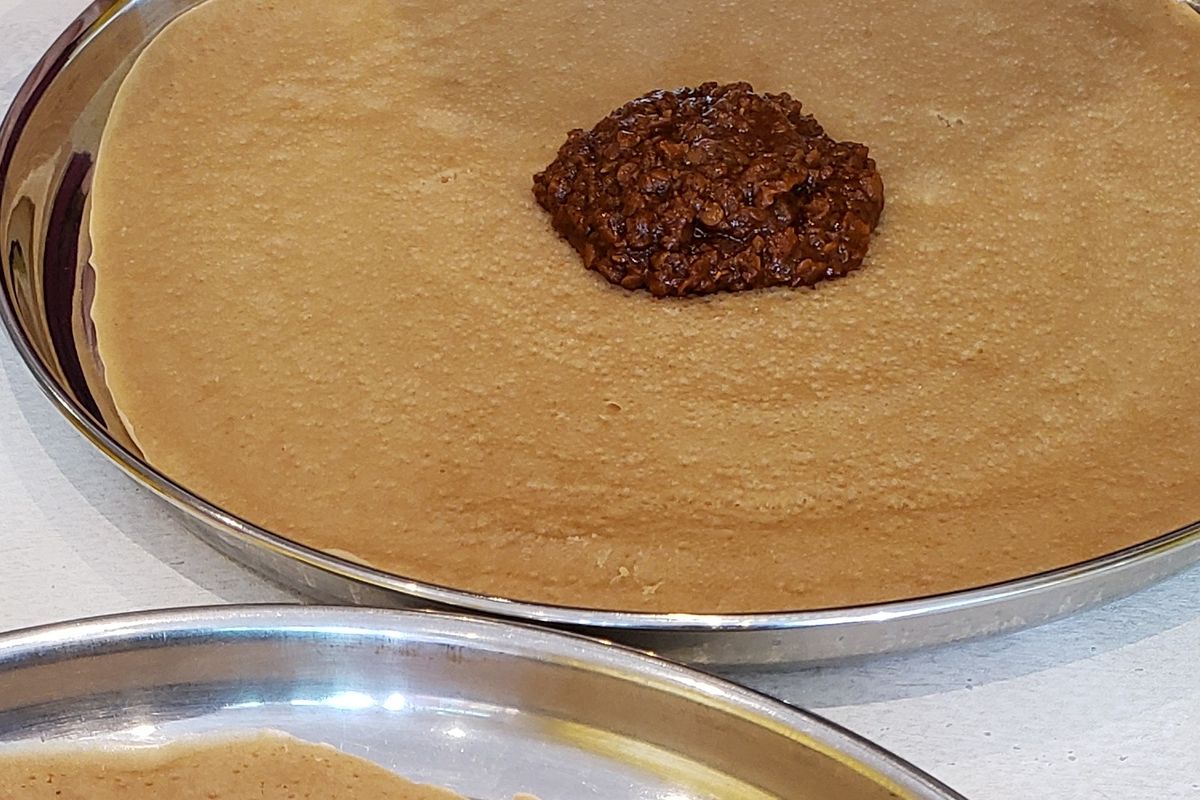
Wat is traditionally eaten with injera, a soft, sour, spongy flatbread. Wikipedia points to an account of a British embassy to Shewa in the early 1840s as the earliest written reference to wat served with injera. It describes injera served with "a stimulating pottage of onions, red pepper, and salt." This recipe is written for a home kitchen. It uses one pot, split red lentils that need no soaking, and a store-bought berbere blend, with notes on heat, fat and bread at each step. The sources are listed at the end of the page.
Ingredients and substitutions
Quantities are for 4 servings.
For the stew
- 2 large (560 g) red onions, very finely chopped
- 3 tablespoons (45 ml) niter kibbeh, or ghee, or a neutral oil such as sunflower
- 5 cloves garlic, minced
- 1 tablespoon (6 g) fresh ginger, peeled and finely grated
- 3 tablespoons (20 g) berbere, store-bought is fine; use 2 tablespoons for a milder stew
- 2 tablespoons (30 g) tomato paste
- 1½ cups (300 g) split red lentils, rinsed and drained
- 3½ cups (840 ml) water, plus a little more as needed
- 1 teaspoon (6 g) fine salt, less if your berbere is salted
- 1 tablespoon (15 ml) lemon juice, optional, to finish
- freshly ground black pepper, to taste
To serve
- injera, store-bought, or warm flatbread such as pita or naan
- plain yogurt or cottage cheese, optional, to cool the heat
Choosing your ingredients
Berbere is the heart of the dish. In simple terms, it is a red, spicy blend of ground chili peppers with other spices. Wikipedia lists chili peppers, coriander, garlic, ginger, Ethiopian holy basil seeds, korarima, rue, ajwain, nigella and fenugreek among its usual parts. Some of those are hard to find outside Ethiopia, so a jar from an African grocery, a spice shop or an online seller is the practical choice. Brands differ a lot in heat, salt and age, so open the jar and taste a pinch on your fingertip before you cook. A good blend smells warm and slightly sweet, not dusty.
To control the heat, start with the lower amount of berbere and add more near the end. Berbere blooms in fat early in the recipe, which gives the stew its deep red color, but the heat keeps building as the stew simmers and thickens. A spoonful of yogurt or a squeeze of lemon on the plate calms a pot that came out too hot. If the stew is too mild, stir in a pinch of cayenne for the last few minutes rather than more berbere, so the flavor does not turn bitter.
Niter kibbeh is clarified butter simmered with spices before it is strained. Wikipedia names besobela, koseret, fenugreek, cumin, coriander, turmeric, korarima, cinnamon and nutmeg among them. The oil version is called yeqimem zeyet. Most home cooks will not have either one on hand. Ghee is the closest easy swap: it has the same nutty, buttery depth but none of the spice aroma. A neutral oil gives a cleaner, plainer stew and keeps it dairy-free. In every case, the fat should be added only after the onions are dry.
Split red lentils, sometimes sold as masoor dal or red lentils, cook in about 25 minutes and fall apart into a thick base, which is exactly what this stew wants. Rinse them until the water runs mostly clear. Use a heavy, wide pot with a thick bottom, such as a Dutch oven, because the thick stew sticks easily and a thin pot will scorch it. Injera is almost always bought or made separately. It needs days of fermentation, so look for it at an Ethiopian or Eritrean market or restaurant, or at a well-stocked grocery. Read the label if you avoid gluten, because some injera is made with wheat or a mix of flours.
Possible substitutions
- Berbere: A rough stand-in is 2 tablespoons sweet paprika, 1 teaspoon cayenne, and 1/2 teaspoon each of ground ginger and coriander, with a pinch of ground fenugreek, cardamom and cinnamon. It will taste close, but not the same, because the Ethiopian seeds are missing.
- Niter kibbeh: Ghee gives a similar buttery richness without the spice notes. For a dairy-free stew, use a neutral oil. Add a pinch of ground cumin and cardamom to either one if you want a hint of the spiced flavor.
- Red onions: Yellow onions work well. Use the same weight, since the onions are the base of the sauce.
- Split red lentils: Brown or green lentils will keep their shape and make a looser stew. Cook them 15 to 20 minutes longer and mash some against the side of the pot.
- Injera: Warm pita, naan, lavash or any soft flatbread. They lack the sour tang of injera but work for scooping. A squeeze of lemon on the stew brings a little of that sourness back.
- Fresh ginger: 1/2 teaspoon ground ginger, added with the berbere.
Step-by-step method
- Chop and rinse. Chop the onions very finely, about the size of a grain of rice, or pulse them in a food processor until coarse and slightly damp. Small pieces melt into the stew later. Rinse the lentils in a fine sieve under cold water for about a minute, until the water runs mostly clear. Mince the garlic and grate the ginger.
- Cook the onions dry. Put the chopped onions in a wide, heavy pot over medium-low heat with no oil. Stir every minute or two for 15 to 20 minutes. At first they release water; later they shrink to about half their volume and look dry and pale gold, with a few light brown flecks. If they stick, add a splash of water and lower the heat. Do not brown them deeply.
- Add the fat, garlic and ginger. Stir in the niter kibbeh, ghee or oil, then the garlic and ginger. Cook for 3 to 4 minutes, stirring often, until the onions look glossy and soft and the garlic smells sweet and fragrant. Keep the heat at medium-low. Garlic that turns brown at this point will make the whole stew taste bitter.
- Bloom the berbere and tomato paste. Add the berbere and tomato paste. Stir constantly over medium-low heat for 2 to 3 minutes, until the mixture darkens to a deep brick red, the fat turns red around the edges and the spices smell toasted. If it sticks to the pot, add a spoonful of the water and scrape. Ground chili burns fast, so stay at the stove.
- Add the lentils and water. Stir in the lentils, then pour in the water and add the salt and pepper. Raise the heat to bring the pot to a boil, which takes about 4 to 6 minutes. Skim off any pale foam that rises. Reduce the heat to low so the stew bubbles gently, and set the lid slightly ajar.
- Simmer until soft. Cook for 20 to 25 minutes, stirring and scraping the bottom every 5 minutes. The lentils are done when they have collapsed into a thick purée with no firm center when you press one against the side of the pot. If the stew starts to catch on the bottom, add a splash of hot water and lower the heat.
- Thicken and season. Remove the lid and cook for 5 to 10 minutes more, stirring and mashing some of the lentils with the back of the spoon. The stew is ready when a spoon dragged across the bottom leaves a path that closes slowly and the stew holds a soft mound. Stir in the lemon juice, then taste and adjust the salt and heat.
- Rest and serve. Take the pot off the heat and let it sit for 5 minutes. It thickens as it cools, so serve it a little looser than you want it on the plate. Spoon the stew onto a round of injera, or into a bowl with the bread on the side. Tear the bread and use it to scoop. Serve while hot.
Variations
For a milder pot, use 2 tablespoons of berbere and add 1 tablespoon of sweet paprika for color. For a hotter one, finish with a pinch of cayenne or a minced fresh chile stirred in for the last 5 minutes. Cooks who want a richer stew can stir in a spoonful of extra niter kibbeh or ghee right before serving. For a smoother texture, use a whisk or an immersion blender for a few seconds, but keep the pot chunky enough to hold its shape on the bread.
Misir wat is often one part of a larger spread. A mild dish alongside it, such as steamed cabbage and carrots, sautéed collard greens or plain yogurt, balances the heat and gives the plate some contrast. If you cannot find injera, serve the stew over rice or with warm pita. It is also good as a filling for a wrap, with a few raw red onion slices and a squeeze of lemon.
Storage and reheating
Cool the stew quickly, within two hours of cooking, by spreading it in a shallow container. Refrigerate in an airtight container for 3 to 4 days. It can also be frozen for up to 3 months. Lentil stew keeps thickening in the refrigerator and may set almost like a paste.
To reheat, put it in a pot over medium-low heat with a few spoonfuls of water, stirring until it loosens. Heat leftovers until they are steaming hot all the way through, to 165°F (74°C). Reheat only the amount you plan to eat. Injera and other flatbreads dry out quickly, so wrap them in a clean towel or store them in a sealed bag, and warm them briefly before serving.
Common mistakes
- Skipping the dry onion step. Adding oil to raw onions makes them fry rather than melt, and the stew ends up thinner and sharper. Cook the onions dry, with patience, until most of their water is gone and they look matte and golden.
- Burning the berbere. Berbere is mostly ground chili and scorches in seconds, giving a bitter, acrid stew. Keep the heat medium-low, stir constantly and add a spoonful of water if the paste sticks.
- Adding too much water at the start. Lentils soften as they cook, but extra water only makes a soup. Start with the amount listed and add small splashes later if the pot gets too dry.
- Walking away from the pot. A thick lentil stew sticks to the bottom and can scorch under the surface. Stir and scrape every few minutes, especially in the last 10 minutes of cooking.
- Serving it undersalted or too hot to taste. Lentils soak up salt, and very hot food hides flavor. Let the stew rest for a few minutes, then taste and adjust the salt, lemon and heat before it goes on the injera.
Frequently asked questions
Is misir wat vegan?
It can be. Wikipedia describes it as a popular vegan dish, and it is in high demand during fasting periods for Orthodox Christians. Niter kibbeh is a clarified butter, so use oil if you want it dairy-free.
Do I need to soak the lentils?
No. Split red lentils cook quickly without soaking. Rinse them, then simmer until they are fully soft, which takes about 20 to 25 minutes in this recipe.
Why are the onions cooked without oil first?
Dry-cooking drives off the water in the onions, so they break down and thicken the stew. Wikipedia describes this as a distinguishing method of wat. The fat is added once the onions are dry.
Can I make it without injera?
Yes. Injera has a sour taste and spongy texture that are hard to match, but warm pita, naan, lavash or rice all work. Lemon juice in the stew adds a little brightness.
Can I use brown or green lentils?
You can, but they do not break down the way red lentils do, so the stew will be looser and more textured. Plan on an extra 15 to 20 minutes of cooking and mash some of them to thicken it.