Asia
Mapo Tofu: Silken Tofu in Spicy Sichuan Sauce
Soft tofu and ground pork in a red sauce of chile bean paste, fermented black beans and numbing Sichuan pepper, ready in about 40 minutes.
By Lavin Food Editorial · Published
- Prep
- 20 min
- Cook
- 20 min
- Total
- 40 min
- Yield
- 4 servings
About this dish
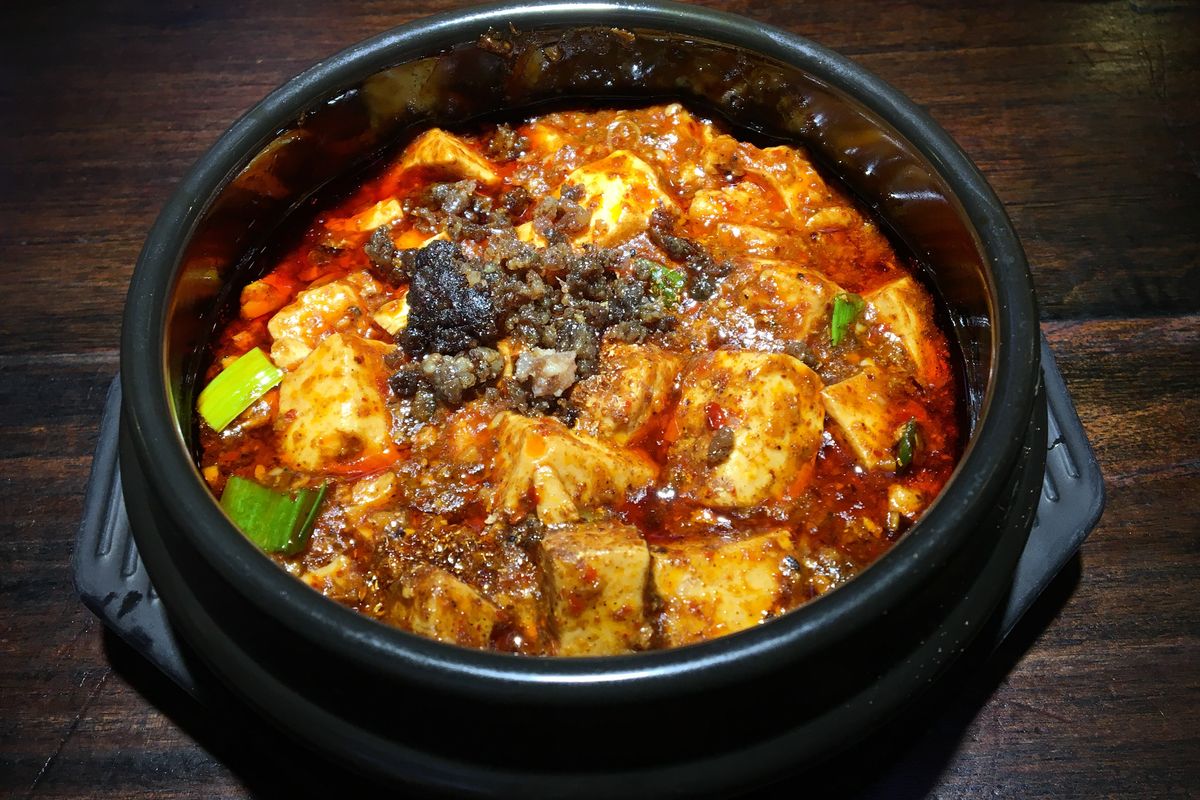
Mapo tofu (mápó dòufu) is a Sichuan dish of soft tofu in a spicy, oily, bright red sauce. Wikipedia describes the sauce as built on douban, a fermented broad bean and chili paste, and on douchi, fermented black beans, with minced meat added. Two kinds of spice define it. One is plain chili heat. The other is málà, the tingling, numbing quality that Sichuan peppercorns bring.
The name is usually translated as "pockmarked grandma's tofu". The dish is tied to Chen Mapo, a Chengdu restaurant run by a couple named Chen. Sources disagree on when it opened: 1862 and 1874 are both given. According to the writer Li Jieren, Mrs. Chen's first version was simple, made with chili, pork, tofu and Sichuan pepper. A later chef is credited with switching to beef and adding black beans. Wikipedia also notes that an early 1950s published recipe left out Pixian doubanjiang, so the paste-heavy version many cooks know is not the only historical one.
This version uses ground pork and one wide pan. The goal is tofu that holds its shape, a glossy sauce that clings, and a numbing finish from freshly ground peppercorns. Serve it over hot steamed rice, which soaks up the sauce and softens the heat.
Ingredients and substitutions
Quantities are for 4 servings.
For the tofu
- 1½ pounds (680 g) soft or silken tofu, drained, cut into 3/4-inch (2 cm) cubes
- 4 cups (960 ml) water, for blanching
- 2 teaspoons (12 g) fine salt, for the blanching water
For the sauce
- 3 tablespoons (45 ml) neutral oil, such as canola or peanut
- 8 oz (225 g) ground pork
- 2 tablespoons (35 g) doubanjiang, Sichuan chile bean paste, any large chunks chopped
- 1 tablespoon (9 g) fermented black beans, rinsed and roughly chopped
- 1 teaspoon (2 g) red pepper flakes, coarse, such as Korean gochugaru
- 4 cloves garlic, minced
- 1 tablespoon (6 g) fresh ginger, peeled and minced
- 1 cup (240 ml) chicken or vegetable stock, or water
- 1 tablespoon (15 ml) soy sauce
- 1 tablespoon (15 ml) Shaoxing wine, optional, or dry sherry
- ½ teaspoon (2 g) sugar
- 1½ tablespoons (12 g) cornstarch
- 3 tablespoons (45 ml) cold water, for the starch slurry
To finish
- 2 teaspoons (4 g) whole Sichuan peppercorns, toasted and ground
- 3 medium (45 g) scallions, sliced thin
- 1 teaspoon (5 ml) chili oil, optional
- hot steamed rice, for serving
Choosing your ingredients
Soft or silken tofu gives the classic quivering texture, and it is also the most fragile. Cut it gently and slide the cubes into the water. Medium-soft tofu is sturdier and a good choice for a first try. Extra-firm tofu holds together easily but eats like a different dish. Use a wok or a 12-inch (30 cm) skillet so you can push the cubes with the back of a spatula.
Doubanjiang is a salty paste made from fermented broad beans, chili peppers, soybeans, salt and flour. Wikipedia calls it "the soul of Sichuan cuisine". The best-known type comes from Pixian, near Chengdu, and is aged in the sun, often for more than three years. Look for a jar labeled "broad bean chili paste" or "Pixian doubanjiang" at Asian grocery stores. It is not chile-garlic sauce, sambal or sriracha, which are fresh chili sauces without fermented beans. The Chinese standard for Pixian paste allows 15 to 22 grams of salt per 100 grams, so taste before adding any salt.
Fermented black beans (douchi) are salted, aged soybeans. Rinse them briefly, then chop. Sichuan peppercorns are not related to black pepper or chili. They are the dried husks of a Zanthoxylum plant, with a citrus-like scent and a tingling, buzzing effect. Toast and grind them just before serving, since ground spice fades fast. Discard any hard black seeds, which taste gritty.
Possible substitutions
- Doubanjiang: No exact match. Korean gochujang is the closest easy swap, but it is sweeter, so leave out the sugar and add more red pepper flakes.
- Fermented black beans: Omit them and add 1 extra teaspoon of soy sauce. The sauce will be less deep.
- Sichuan peppercorns: Nothing else numbs the mouth the same way. Leave them out rather than use black pepper, and expect a spicy dish without the málà.
- Ground pork: Ground beef, which Wikipedia lists as the traditional meat, cooked to 160°F (71°C). For a meatless version, use 8 ounces (225 g) of finely chopped shiitake mushrooms.
Step-by-step method
- Toast and grind the peppercorns. Put the Sichuan peppercorns in a dry skillet over medium-low heat. Shake the pan for 2 to 3 minutes, until they smell citrusy and turn a shade darker. Do not let them smoke. Cool them on a plate, then grind fine. Set the powder aside; it goes on at the end, not into the pan.
- Blanch the tofu. Bring the water and salt to a bare simmer, with only small bubbles. Slide in the tofu cubes and leave them for 2 to 3 minutes, until they look slightly firmer. Turn off the heat and leave the tofu in the hot water. The salted water seasons the cubes and helps them hold together later.
- Brown the pork. Heat the oil in a wok or skillet over medium-high heat until it shimmers. Add the pork and break it up. Cook for 3 to 5 minutes, until it is browned with crisp edges and no pink remains. Ground pork must reach 160°F (71°C). Lower the heat to medium.
- Fry the paste and aromatics. Add the doubanjiang, black beans and pepper flakes. Stir for 1 to 2 minutes, until the oil turns deep red and smells rich and savory. Add the garlic and ginger and stir for 30 seconds more. Frying the paste in oil first gives the sauce its color. Lower the heat if anything sticks.
- Add the liquids. Pour in the stock, soy sauce and wine, then add the sugar. Scrape up any browned bits and simmer for about 2 minutes, until the sauce tastes savory and rounded. Taste it now. Add salt only if needed, since the paste is already salty.
- Simmer the tofu in the sauce. Lift the tofu out with a slotted spoon, let the water drain, and slide it into the sauce. Do not stir with a spatula. Push the cubes gently with the back of it and tilt the pan. Simmer over medium-low heat for 4 to 5 minutes, until the tofu is steaming hot and red at the edges.
- Thicken the sauce. Stir the cornstarch into the cold water until smooth. Pour in about half and nudge the tofu so it spreads. Wait 30 seconds. If the sauce still looks thin, add more slurry. Simmer 1 minute more, until it turns glossy and coats the back of a spoon.
- Finish and serve. Turn off the heat. Dust the top with the ground Sichuan pepper, scatter on the scallions and drizzle with the chili oil, if using. Spoon over hot rice and serve right away, while the sauce is bubbling. The first bite will tingle, and the heat builds on the second.
Variations
The meatless version is common. Wikipedia notes that cooks use shiitake or other mushrooms, or plant-based meat substitutes, and that pickled vegetables such as zha cai or ya cai can add flavor. Brown the chopped mushrooms in the oil until they lose their water and darken, then continue with the paste. Use vegetable stock, and check the labels of the paste and black beans.
For a milder dish, use half the doubanjiang and skip the pepper flakes. For a bolder one, add a second teaspoon of flakes and finish with more chili oil.
Storage and reheating
Mapo tofu is best fresh, because the tofu releases water as it sits and the sauce thins. Refrigerate leftovers within two hours of cooking, or within one hour if the room is hotter than 90°F (32°C). Store in an airtight container for 3 to 4 days.
Reheat gently in a saucepan over medium-low heat with a splash of water, stirring as little as possible, until steaming hot and 165°F (74°C) all the way through. Freezing is not recommended, since thawed tofu turns spongy. Add fresh ground peppercorns and scallions after reheating.
Common mistakes
- Stirring the tofu hard. Soft tofu breaks into crumbs under a spatula. Push the cubes with the back of it and tilt the pan.
- Skipping the blanch. Tofu added straight to the sauce is more likely to break and taste bland. A few minutes in hot salted water seasons and firms it.
- Adding salt too early. Doubanjiang and black beans are both salty. Taste the sauce before the tofu goes in.
- Burning the paste. Doubanjiang scorches fast and turns bitter. Fry it over medium heat and add a splash of stock if the pan looks dry.
Frequently asked questions
What does málà mean?
Má means numbing and là means spicy hot. Together they describe chili heat plus the tingling feel of Sichuan pepper. Both are needed for mapo tofu to taste like itself.
Can I skip the Sichuan peppercorns?
Yes, but the result will be spicy tofu without the numbing effect. Leave them out rather than swap in black pepper.
Why did my tofu fall apart?
Usually it was stirred too hard. Blanch it first, use a wide pan, and move the cubes by tilting the pan or pushing gently.
Is mapo tofu always made with pork?
No. Wikipedia says it is traditionally made with minced beef, and Li Jieren's account says the earliest version used pork. Many cooks use mushrooms or no meat.