Asia
Pad Thai: Stir-Fried Rice Noodles with Tamarind Sauce
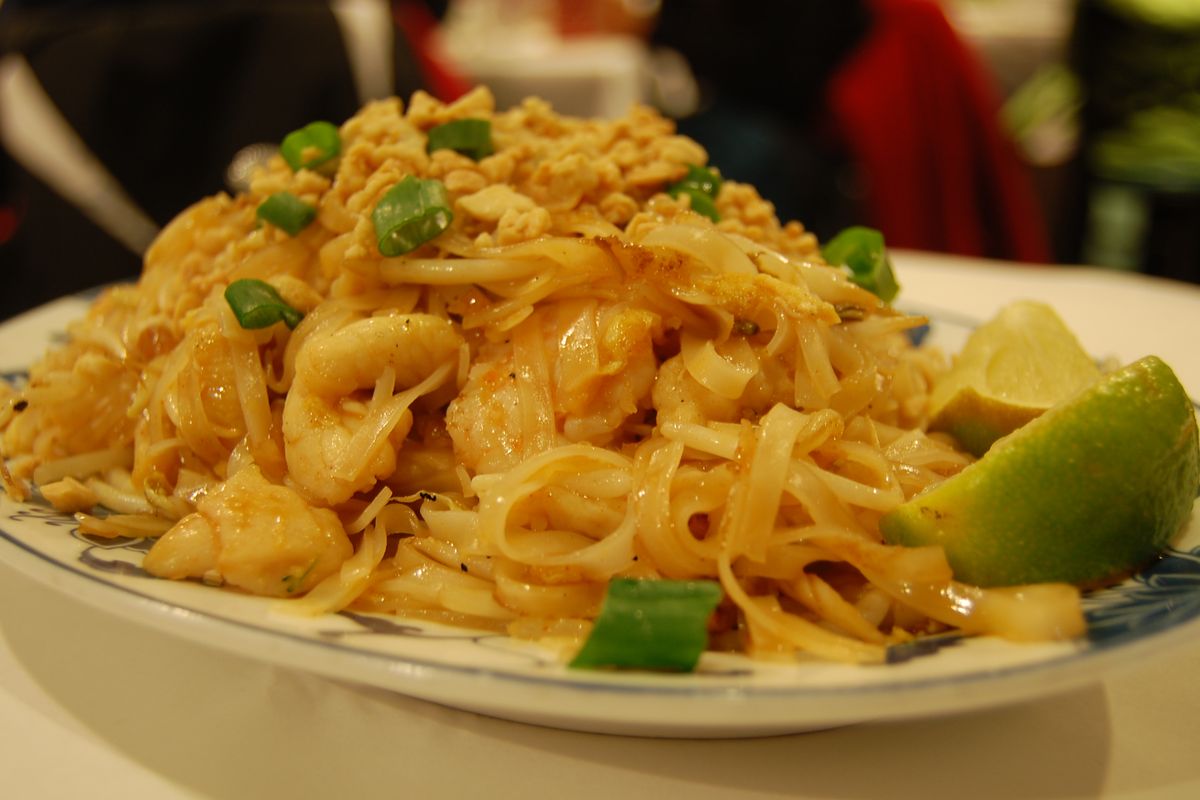
Rice noodles stir-fried with shrimp, tofu, egg and bean sprouts in a sweet, sour and salty tamarind sauce, finished with peanuts and lime.
By Lavin Food Editorial · Published
- Prep
- 30 min
- Cook
- 20 min
- Total
- 50 min
- Yield
- 4 servings
About this dish
Pad thai is a stir-fried rice noodle dish that Wikipedia describes as commonly served as street food in Thailand. It is typically made with rice noodles, shrimp, peanuts, green onions, scrambled egg, sugar and bean sprouts, all fried in a wok. Tamarind, fish sauce and palm sugar give the sauce its balance of sweet, sour and salty.
Where the dish came from is disputed. Stir-fried rice noodles reached Thailand from China centuries ago, but pad thai itself is described as a creation of the mid-20th century. The commonly told story says that during World War II a rice shortage led the government of Prime Minister Plaek Phibunsongkhram to promote noodles. The author Mark Padoongpatt places its creation in the 1930s and links it to nation-building. The food writer Kasma Loha-unchit suggests Thai Chinese immigrants invented it. The sources do not settle the question.
The noodles are a narrow, flat rice noodle called sen lek in Thailand, which Wikipedia lists as the type used in pad thai. Tamarind is the pulp of the fruit of Tamarindus indica, a tree native to tropical Africa and naturalized in Asia. The pulp tastes sweet and sour, which gives pad thai its tang. This version uses a large skillet, a sauce tasted ahead of time and two small batches, so the noodles fry instead of steam.
Ingredients and substitutions
Quantities are for 4 servings.
For the noodles and sauce
- 10 oz (280 g) dried flat rice noodles, narrow, about 1/8 to 1/4 inch (3 to 6 mm) wide
- 3 tablespoons (50 g) tamarind paste, seedless pulp or soft concentrate
- 3 tablespoons (45 ml) fish sauce
- 3 tablespoons (40 g) palm sugar or packed light brown sugar, palm sugar chopped fine
- 3 tablespoons (45 ml) water
- ½ teaspoon (1 g) red pepper flakes, or to taste
For the stir-fry
- 4 tablespoons (60 ml) neutral oil, such as peanut or canola
- 8 oz (225 g) firm tofu, pressed dry and cut in 1/2-inch (1.3 cm) cubes
- 8 oz (225 g) raw medium shrimp, peeled and deveined
- 2 medium (80 g) shallots, thinly sliced
- 3 cloves garlic, minced
- 2 large eggs
- 2 cups (180 g) fresh bean sprouts
- 1 cup (40 g) garlic chives or scallions, cut in 1-inch (2.5 cm) lengths
To serve
- ⅓ cup (50 g) roasted unsalted peanuts, coarsely crushed
- 2 medium limes, cut in wedges
Choosing your ingredients
Choose dried flat rice noodles that are narrow, roughly the width of linguine or a little thinner. The goal is a noodle that is pliable but still firm in the center, because it finishes cooking in the pan.
Tamarind is the heart of the sauce, and products differ a lot in strength. Concentrates range from thin to very intense. Start with the amount listed, then taste. If the sauce is flat, add more tamarind. If it makes your mouth pucker, add water and a touch of sugar.
Fish sauce supplies the salt and a deep savory note, so there is no separate salt. Palm sugar tastes mellow and slightly caramel, and light brown sugar is a fair stand-in. Aim for a sauce that tastes a little too strong, since the noodles and sprouts will soften it.
A 12-inch (30 cm) nonstick, carbon-steel or cast-iron skillet works, and so does a wok on a strong burner. Cook in two batches. A crowded pan loses heat, and the noodles steam into clumps.
Possible substitutions
- Tamarind paste: Tamarind concentrate, starting with 1 to 2 tablespoons and tasting, since strength varies. Lime juice with a little extra sugar is only a rough stand-in: brighter, without the fruity depth.
- Fish sauce: Soy sauce, for a vegetarian version. Use about 2 tablespoons (30 ml) and taste. It is less savory than fish sauce.
- Palm sugar: Packed light brown sugar in the same amount.
- Shrimp: Thin slices of chicken breast, cooked to 165°F (74°C), or all tofu, about 12 ounces (340 g) in total.
- Garlic chives: Sliced scallion greens, added at the very end.
- Roasted peanuts: Chopped roasted cashews, or no nuts if anyone at the table has a nut allergy.
Step-by-step method
- Soak the noodles. Cover the dried noodles with hot tap water in a large bowl. Do not use boiling water. Soak for 30 to 40 minutes, stirring once or twice. They are ready when they bend without snapping but still feel firm in the middle, like pasta that is not yet cooked. Drain well and toss with a few drops of oil so they do not stick.
- Mix and taste the sauce. Whisk the tamarind, fish sauce, sugar, water and pepper flakes in a small pan. Warm over low heat for 1 to 2 minutes, stirring, until the sugar dissolves and the sauce looks smooth. Taste it. It should be boldly sour, salty and sweet, because the noodles will dilute it. Adjust with water, a pinch of sugar or more tamarind.
- Prep everything before heating the pan. Pat the shrimp and tofu dry with paper towels, which helps them brown instead of steam. Slice the shallots, mince the garlic and cut the chives. Beat the eggs lightly in a small bowl. Crush the peanuts and cut the limes. Set it all within reach of the stove. The cooking leaves no time for chopping.
- Brown the tofu and cook the shrimp. Heat half of the oil in a 12-inch (30 cm) skillet over medium-high heat until it shimmers, about 1 minute. Add the tofu and cook for 3 to 4 minutes, turning, until golden. Add the shallots and garlic for 30 to 45 seconds, until fragrant. Add the shrimp and cook 1 to 2 minutes, until pink and opaque. Move everything to a plate.
- Fry the first batch of noodles. Add a little of the remaining oil, then half of the noodles and half of the sauce. Toss for 2 to 3 minutes, until the noodles absorb the sauce, look glossy and turn tender. If they are still stiff, add a tablespoon of water and cook 1 minute more. Push them aside, pour in one egg and scramble for 30 to 60 seconds, until fully set with no wet patches.
- Finish the batch and repeat. Return half of the tofu and shrimp to the pan with half of the sprouts and chives. Toss for 30 to 45 seconds, until the sprouts just begin to wilt but keep some crunch. Slide the noodles onto a platter. Wipe out any burnt bits, stir the sauce again, and repeat with the remaining noodles, sauce, egg and fillings.
- Serve with peanuts and lime. Check that the shrimp are opaque and the egg is cooked through. Scatter the crushed peanuts over the noodles and serve at once, with lime wedges on the side. Serve hot, because the noodles stiffen as they cool.
Variations
The Wikipedia article lists a broad set of possible additions: dried shrimp, preserved radish, crab, squid, banana flowers and other fish or meat.
For a vegetarian plate, leave out the shrimp, use 12 ounces (340 g) of tofu, and replace the fish sauce with soy sauce, as the article notes some cooks do. For chicken, slice 8 ounces (225 g) of boneless breast thinly and brown it first, until it reaches 165°F (74°C).
Storage and reheating
Cool leftovers quickly and refrigerate within two hours of cooking, or within one hour if the room is hotter than 90°F (32°C). Keep in a shallow airtight container for up to 3 or 4 days. Store the peanuts and lime separately, so the nuts stay crisp.
Reheat in a skillet over medium heat with a splash of water, tossing for 3 to 4 minutes, until steaming hot all the way through, to 165°F (74°C). The mixed sauce, without the noodles, keeps in a jar in the refrigerator for 3 to 4 days. Freezing the finished dish is not recommended, because the noodles turn mushy.
Common mistakes
- Soaking the noodles in boiling water. The outside turns soft long before the center is ready, and the noodles fall apart in the pan. Use hot tap water and stop when they bend but still feel firm.
- Skipping the sauce taste test. Tamarind strength varies, and the sauce cannot be fixed once it is on the noodles. Taste it in the small pan and balance it there.
- Crowding the skillet. Too many noodles lower the heat, so they steam and clump. Cook in two batches over medium-high heat.
- Undercooking the egg. A wet, runny egg coats the noodles and is a food safety risk. Scramble it until fully set before mixing it in.
- Overcooking the shrimp. Shrimp cook in 1 to 2 minutes and turn rubbery after that. Pull them when they are pink and opaque, and warm them only briefly at the end.
Frequently asked questions
Why did my noodles stick together?
They were probably soaked too long, left sitting after draining, or crowded in the pan. Toss drained noodles with a little oil and fry in two batches.
Can I make it vegetarian?
Yes. Leave out the shrimp, use more tofu, and swap the fish sauce for soy sauce.
What allergens does it contain?
Pad thai typically contains peanuts, shrimp, fish sauce, egg and soy. Tell guests what is in it, and leave off the peanuts and shrimp for anyone with an allergy.
Are the eggs safe?
When they are cooked until fully set, as in the recipe, the risk is low. Raw or runny eggs carry a small risk of foodborne illness, especially for young children, older adults, pregnant people and anyone with a weakened immune system.