Asia
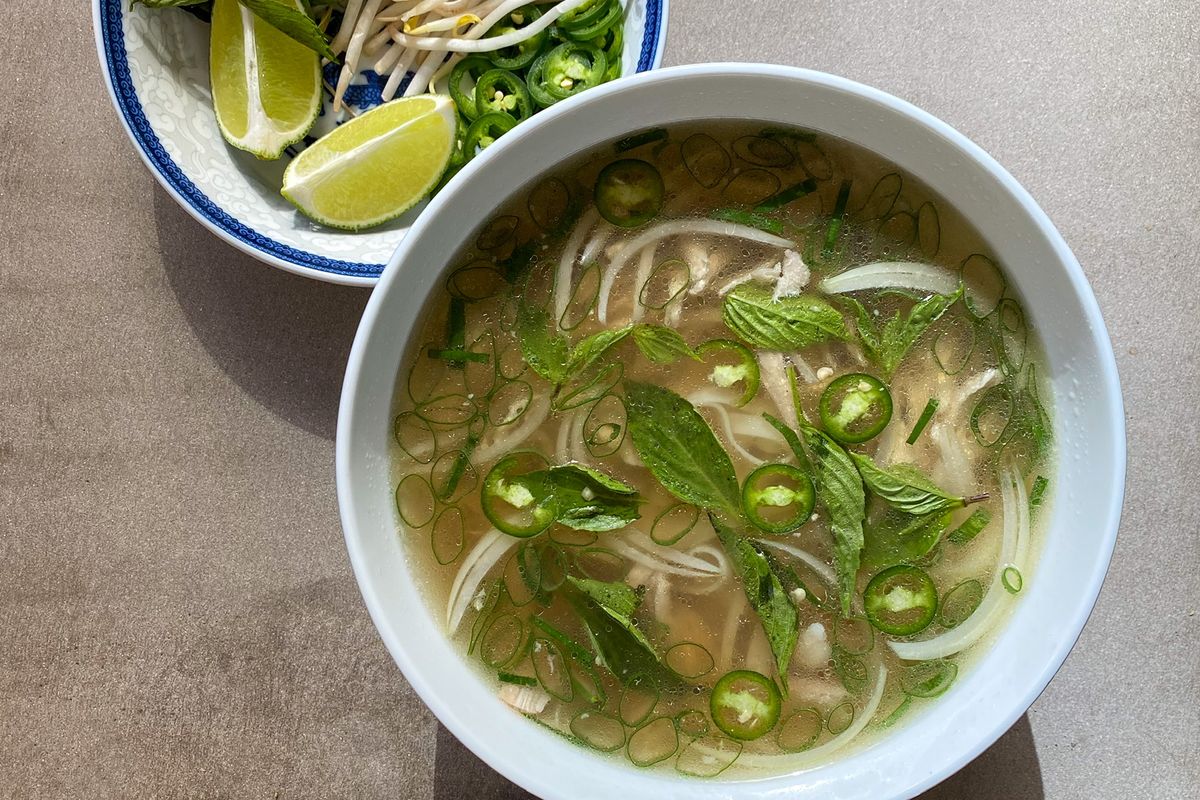
Chicken Pho (Phở Gà): Vietnamese Noodle Soup
Clear, spiced chicken broth with charred onion and ginger, poured over rice noodles, shredded chicken and fresh herbs. Mostly hands-off, about 3 hours.
By Lavin Food Editorial · Published
- Prep
- 30 min
- Cook
- 2 hr 30 min
- Total
- 3 hr
- Yield
- 4 servings
About this dish
Phở gà is Vietnamese chicken noodle soup: a clear, fragrant broth poured over flat rice noodles, pulled chicken and a plate of fresh herbs. Wikipedia describes phở as a Vietnamese soup of broth, rice noodles (bánh phở), herbs and meat, usually beef (phở bò) and sometimes chicken. It is served in homes, at street stalls and in restaurants across Vietnam, and refugees carried it to many other countries after the Vietnam War.
Where phở came from is still debated. The article calls it a fairly recent dish, first seen in written records in northern Vietnam in the early 20th century. Some writers point to French influence, such as the beef stew pot-au-feu. Others point to beef noodle soups sold by Chinese immigrants in Hanoi. Scholars dispute both ideas, and no source settles it. Chicken pho appears in the record in 1939, possibly because beef was not sold at the markets on Mondays and Fridays. Treat that as a guess.
Regional styles differ. Hanoi-style (northern) pho is described as a clear, savory broth with simple garnishes such as scallions and cilantro. Saigon-style (southern) pho has a sweeter, cloudier broth and more herbs, bean sprouts, hoisin and chili sauce. This version borrows the southern garnish plate but aims for a clear broth. Most of the 3 hours is hands-off simmering.
Ingredients and substitutions
Quantities are for 4 servings.
For the broth
- 3½ pounds (1.58 kg) whole chicken, or the same weight of bone-in thighs, drumsticks and wings
- 12 cups (2.88 L) cold water
- 2 medium (300 g) yellow onions, halved, skin on
- 3 ounces (85 g) fresh ginger, unpeeled, halved lengthwise
- 3 whole star anise
- 1 stick cassia cinnamon, about 3 inches (7.5 cm)
- ½ teaspoon (1 g) whole cloves
- 1 tablespoon (6 g) coriander seeds
- 1 teaspoon (2 g) fennel seeds
- 2 pods black cardamom, optional
- 2 teaspoons (11 g) fine salt
- 3 tablespoons (45 ml) fish sauce
- 1 tablespoon (12 g) rock sugar or granulated sugar
For the bowls
- 12 ounces (340 g) dried flat rice noodles (bánh phở)
- ½ cup (50 g) green onions, sliced thin
- ¼ cup (15 g) fresh cilantro, chopped
- 1 cup (25 g) Thai basil leaves
- 2 cups (190 g) mung bean sprouts
- 2 medium limes, cut into wedges
- 2 small red chiles, thinly sliced
- 2 tablespoons (30 ml) hoisin sauce, optional, for serving
- 2 tablespoons (30 ml) chili-garlic sauce, optional, for serving
Choosing your ingredients
A whole chicken makes the best broth because the bones, skin and meat all go into the pot. Wikipedia notes that chicken pho uses the chicken's meat and bones with the same spices as beef pho. If you buy parts, choose bone-in, skin-on thighs and drumsticks with a few wings. Boneless breast alone gives a thin, dull broth.
Charring gives pho its sweet, smoky depth. Wikipedia describes careful cooks roasting ginger and onion over an open flame before they go in the stock. The same article says the charred ginger can be left out of chicken pho, since in beef pho it tones down the beef smell. This recipe keeps a small piece for aroma, but you can drop it.
Buy whole spices and toast them. Ground spices turn the broth muddy. Star anise and cinnamon are strong, so measure them. A spice bag, tea ball or square of cheesecloth tied with string keeps them from floating and makes them easy to remove.
Bánh phở noodles come in several widths. Medium-wide is typical. Cook them in a separate pot so the broth stays clear. Fish sauce goes in near the end, as Wikipedia describes, so its flavor stays bright.
Possible substitutions
- Whole chicken: 3.5 pounds (1.6 kg) bone-in thighs, drumsticks and wings, skin on. Cook until the thickest piece reaches 165°F (74°C).
- Rock sugar: The same amount of granulated sugar. Add it in pinches and taste.
- Black cardamom: Leave it out. The broth is still good without it.
- Thai basil: Regular basil with a few mint leaves, or only cilantro and green onion for a plainer northern-style bowl.
- Dried rice noodles: About 1 pound (450 g) fresh flat rice noodles, loosened and dipped in boiling water for 15 to 30 seconds.
Step-by-step method
- Char the onion and ginger. Heat the broiler, or a gas burner on medium-high. Set the onion halves and ginger cut side up on a foil-lined pan under the broiler, or hold them with tongs over the flame. Cook for 8 to 12 minutes, turning once, until the skins blister and blacken in spots and the onion smells sweet and smoky. Rinse off loose char and peel the onion.
- Toast the spices. Put the star anise, cinnamon, cloves, coriander, fennel and cardamom in a dry skillet over medium-low heat. Stir for 2 to 3 minutes, until the seeds darken slightly and smell warm and sweet. Lift the pan off the heat if you see smoke, since burnt spice turns the broth bitter. Tie the spices in a spice bag or cheesecloth.
- Boil the chicken and skim. Put the chicken in an 8-quart (7.6 L) pot with the cold water and bring it to a boil over high heat, which takes 15 to 20 minutes. Gray foam will rise. Skim it off with a spoon for the first 10 minutes. Skimming is the main step that keeps the broth clear, so do not stir.
- Simmer the chicken until cooked. Add the onion, ginger, spice bag and salt, then lower the heat until only a few bubbles break the surface. A hard boil clouds the broth. Partly cover and cook for 45 to 60 minutes. The chicken is done when the thickest part of the thigh reads 165°F (74°C) and the juices run clear.
- Pull the meat and return the bones. Lift the chicken onto a board and cool it for 15 to 20 minutes. Pull the meat off in large pieces and cover it. Return the skin and bones to the pot and simmer on low for 60 to 90 minutes. The broth should turn pale gold and taste savory. Pull the spice bag early if the cinnamon begins to dominate.
- Strain and season. Lift out the bones and aromatics. Pour the broth through a fine-mesh strainer lined with cheesecloth into a clean pot, about 5 minutes. Skim most of the fat but leave a thin shimmer. Stir in the fish sauce and sugar, then add salt a pinch at a time until the broth tastes rounded. Keep it at a gentle simmer.
- Cook the noodles and set out the garnishes. Boil the noodles in a separate pot, following the package, usually 3 to 6 minutes. They are done when tender with a slight chew and no hard white core. Drain and rinse under warm water. Meanwhile, arrange the sprouts, basil, cilantro, green onion, lime and chiles on a plate, and shred the chicken.
- Assemble the bowls. Bring the broth to a full boil for 1 to 2 minutes until steaming hard. Divide the noodles among four deep bowls, top with chicken and green onion, and ladle about 2 cups (480 ml) of boiling broth into each. Serve at once, with the garnish plate, lime and sauces on the side. Take care, as the bowls are very hot.
Variations
For a northern-leaning bowl, skip the sprouts and basil, add more green onion and cilantro, and offer only chili sauce on the side. For a southern-leaning bowl, add a pinch more sugar to the broth and serve the full herb plate with hoisin.
For a quicker weeknight bowl, simmer 8 cups (1.9 L) of store-bought chicken stock for 30 minutes with the charred onion, ginger and toasted spices, then add shredded rotisserie chicken. It tastes lighter than the long version.
Storage and reheating
Cool the broth fast. Within two hours of cooking, or within one hour if the kitchen is above 90°F (32°C), pour it into shallow containers and refrigerate. Keep it for 3 to 4 days, or freeze it for about 3 months. Store the chicken separately for the same time.
Keep cooked noodles apart from the broth, since they turn soft and swollen in it. Cool them quickly and refrigerate for up to 3 days. Bring the broth to a full boil before serving, and heat leftover chicken to 165°F (74°C).
Common mistakes
- Boiling the broth hard. A rolling boil stirs fat and bits into the liquid and clouds it. After the first skim, keep the surface barely moving.
- Over-spicing the pot. Too much cinnamon, clove or star anise makes the broth taste like potpourri. Measure the spices and pull the bag if needed.
- Cooking the noodles in the broth. Noodle starch clouds the soup, and the noodles go soft while you wait. Cook them separately and rinse them.
- Serving lukewarm broth. Noodles and chicken cool the bowl fast. Bring the broth to a full boil just before ladling.
Frequently asked questions
How is chicken pho different from beef pho?
The spices are largely the same, but the broth comes from chicken bones and meat. It is lighter and finishes in a few hours.
Why is my broth cloudy?
Usual causes are a hard boil, skipped skimming or stirring while foam rises. It still tastes good. Strain it through cheesecloth to clear most of the haze.
Are raw bean sprouts safe?
Raw sprouts can carry bacteria. Young children, older adults, pregnant people and anyone with a weakened immune system should skip them or dip them in the hot broth first.
What noodles do I use?
Flat rice noodles called bánh phở, dried or fresh. Widths vary, so check the package for cook time.