Latin America
Pozole Rojo: Hominy and Pork Stew with Red Chiles
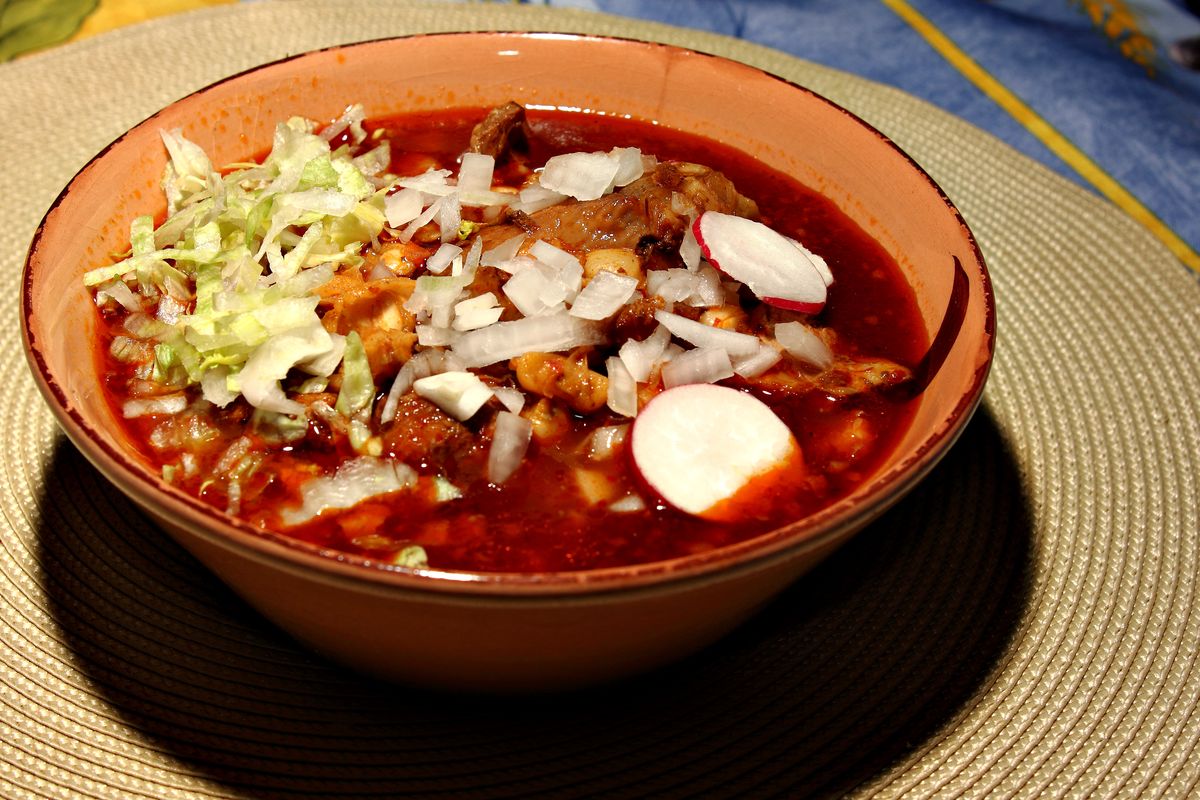
Pork shoulder and hominy simmered in a smooth sauce of toasted guajillo and ancho chiles, served with cabbage, radish, onion and lime.
By Lavin Food Editorial · Published
- Prep
- 40 min
- Cook
- 2 hr 50 min
- Total
- 3 hr 30 min
- Yield
- 8 servings
About this dish
Pozole is a traditional Mexican soup or stew made from hominy and meat, most often pork or chicken. The name comes from the Nahuatl word pozolli. Wikipedia describes the dish as known in Mesoamerica since before the arrival of Europeans, and as common across Mexico today, both as an everyday meal and as a festive one. It is served on New Year's Eve, on Mexican Independence Day, at birthdays and at Christmas.
Hominy is dried corn that has been treated with an alkali, usually limewater, in a process called nixtamalization. The treatment loosens the hulls and softens the kernels, which is why hominy is plump and chewy rather than hard. Pozole comes in three main types: blanco (white), verde (green) and rojo (red). The red version adds a sauce made from dried red chiles such as guajillo, piquin or ancho, and usually tomato. This recipe uses guajillo and ancho and leaves the tomato out. Regional versions differ, and sources do not settle on one standard.
This version is built for a home kitchen. It uses pork shoulder, which turns tender and rich after a long gentle simmer, and canned hominy, which saves a day of soaking. The chiles are toasted briefly, soaked, blended, strained and fried before they join the pot. The result is a deep red broth with a mild, fruity heat. The cold crunch of cabbage and radish and a squeeze of lime balance the rich stew.
Ingredients and substitutions
Quantities are for 8 servings.
For the pork and broth
- 3 pounds (1.35 kg) boneless pork shoulder, cut into 2-inch (5 cm) chunks, fat left on
- 1 medium (200 g) white onion, halved
- 6 cloves garlic, peeled, left whole
- 2 dried bay leaves
- 2 teaspoons (12 g) fine salt, plus more to taste
- 10 cups (2.4 L) water
For the red chile sauce
- 6 whole (40 g) dried guajillo chiles, stemmed and seeded
- 3 whole (40 g) dried ancho chiles, stemmed and seeded
- 4 cloves garlic, peeled
- 1 teaspoon (2 g) ground cumin
- 2 tablespoons (30 ml) lard or neutral oil
For the stew and garnishes
- 2 cans (1.4 kg) canned white hominy, 25 oz (700 g) each, drained and rinsed
- 1 tablespoon (3 g) dried oregano, Mexican oregano if you can find it
- 3 cups (210 g) green cabbage, thinly shredded
- 1 cup (115 g) radishes, thinly sliced
- ½ cup (80 g) white onion, finely chopped
- 2 medium limes, cut into wedges
- 2 medium avocado, sliced, optional
Choosing your ingredients
Pork shoulder, sold as Boston butt or picnic roast, is the right cut. It has enough fat and connective tissue to stay moist through two hours of simmering. Lean cuts such as loin turn dry and stringy. A bone-in shoulder adds body to the broth; buy about 3.5 pounds (1.6 kg) and cut the meat off the bone when it is done.
Guajillo chiles give the sauce its red color and a tangy, fruity flavor with moderate heat. Ancho chiles are dried poblanos, darker and sweeter. Look for pliable chiles that bend without cracking; brittle, dusty ones taste flat. Most of the heat sits in the seeds and pale veins, so removing them keeps the pot mild. Wash your hands after handling chiles and keep them away from your eyes.
Canned hominy is the practical choice, and it needs no soaking. Rinse it well, because the canning liquid tastes briny and starchy. Dried hominy gives a chewier kernel but needs an overnight soak and several more hours of cooking. Follow the package directions if you use it, and start it well before the pork is done.
Possible substitutions
- Guajillo chiles: Dried New Mexico chiles, which are similar in heat. The flavor is earthier and less tangy, but the color is just as red.
- Ancho chiles: Dried pasilla or mulato chiles, or use an extra guajillo or two. The sauce will be slightly less sweet.
- Pork shoulder: Bone-in chicken thighs and legs, simmered for 40 to 45 minutes. See the variations below.
- Canned hominy: Dried hominy, soaked overnight and cooked until tender, as the package directs. Allow several extra hours.
- Mexican oregano: Regular dried oregano, using a little less because it is stronger.
Step-by-step method
- Start the pork and broth. Put the pork chunks in a large pot with the halved onion, the six whole garlic cloves, the bay leaves, the salt and the water. Set it over high heat and bring to a boil, which takes 10 to 15 minutes. Gray foam will rise as the meat heats. Do not cover the pot yet.
- Skim and simmer until tender. Skim the foam off with a large spoon during the first 10 minutes of boiling, until the surface looks mostly clear. Lower the heat until the liquid barely bubbles and set the lid ajar. Cook for 1 1/2 to 2 hours. The pork is done when a fork slides in with no resistance and a chunk falls apart under light pressure. Add hot water if the liquid falls below the meat.
- Toast and soak the chiles. About 40 minutes before the pork is done, tear the stems off the chiles and shake out the seeds. Toast them in a dry skillet over medium heat for 20 to 30 seconds per side, pressing flat, until fragrant and slightly softer. Do not let them smoke or blacken, because scorched chiles turn bitter. Cover with just-boiled water, weigh them down with a plate, and soak for 20 minutes, until fully soft.
- Blend and strain the sauce. Lift the chiles out of the soaking water and discard the water, which can taste bitter. Put the chiles in a blender with the four garlic cloves, the cumin and about 1 cup (240 ml) of hot broth from the pot. Fill the jar no more than halfway, hold a towel over the vented lid and blend from low to high for 1 to 2 minutes, until smooth. Press through a fine sieve into a bowl.
- Fry the sauce. Heat the lard in a medium pot over medium heat. Pour in the chile puree, standing back because it spatters. Cook for 5 to 7 minutes, stirring often, until the sauce darkens a shade, thickens to the texture of tomato sauce and the raw chile smell is gone. Frying removes the sharp edge and deepens the flavor.
- Combine and add the hominy. Fish out the onion halves, garlic and bay leaves. Scrape the fried sauce into the pot with the pork and broth, then add the rinsed hominy. Rub the oregano between your palms as you add it. Simmer, partly covered, for 30 to 40 minutes, stirring now and then, until the broth is deep brick red and the hominy is plump and tender. Skim off excess fat and add salt to taste.
- Prepare the garnishes. While the stew simmers, shred the cabbage as thinly as you can, slice the radishes into thin rounds and chop the onion finely. Cut the limes into wedges and slice the avocado, if using. Put each garnish in its own bowl. This takes about 10 minutes.
- Serve. Check the pork one last time. It should break apart easily, with no firm center. Ladle the stew into wide bowls, with a few chunks of pork and a generous scoop of hominy in each. Bring the garnishes to the table and let everyone pile on cabbage, radish and onion, squeeze lime over the top and crumble more oregano over the bowl. Serve hot.
Variations
Chicken is as traditional as pork. Use 3 pounds (1.35 kg) of bone-in chicken thighs and drumsticks and simmer them for 40 to 45 minutes, until the meat reaches 165°F (74°C) and pulls easily from the bone. Shred the meat and return it to the pot with the hominy. Pozole blanco skips the chile sauce entirely, and pozole verde uses a green sauce built from tomatillos, cilantro and green chiles instead. Wikipedia also mentions vegetarian versions that use beans in place of meat.
For a hotter pot, toast 2 or 3 dried chiles de árbol with the other chiles. Serve tostadas, fried pork rind (chicharrón) or sliced fresh chiles on the side. In New Mexico the dish is called posole and uses a different corn, so the texture is firmer than the soft hominy used here.
Storage and reheating
Cool the stew quickly. Refrigerate leftovers within two hours of cooking, or within one hour if the room is hotter than 90°F (32°C). Divide the stew into shallow containers so it cools fast, and keep the garnishes separate. It keeps in the refrigerator for 3 to 4 days and tastes even better on day two. The flavors settle and the hominy absorbs more of the sauce.
For longer storage, freeze the stew in airtight containers for about 3 months for best quality. Thaw overnight in the refrigerator. Reheat in a pot over medium heat, with a splash of water if it has thickened, until it is steaming hot throughout, at least 165°F (74°C). Add fresh cabbage, radish and lime after reheating.
Common mistakes
- Burning the chiles. Chiles scorch in seconds and turn the whole sauce bitter. Toast them for 20 to 30 seconds a side, and throw out any that blacken.
- Boiling the pork hard. A rolling boil tightens the meat and clouds the broth. After the first foam is skimmed, keep the pot at a bare simmer.
- Skipping the strainer. Chile skins do not break down fully in a blender. Pressing the puree through a sieve gives a silky broth.
- Skipping the frying step. Raw chile puree stirred straight into the pot tastes sharp and flat. A few minutes in hot fat deepens the color and flavor.
- Garnishing too early. Cabbage and radish wilt in hot broth. Add the toppings at the table, bowl by bowl.
Frequently asked questions
What is hominy?
Hominy is dried corn that has been soaked and cooked in an alkaline solution, usually limewater, then washed and hulled. The process, called nixtamalization, softens the kernels and loosens the hulls. Canned hominy is already cooked and ready to heat.
How spicy is pozole rojo?
Guajillo and ancho chiles give more flavor than fire when the seeds and veins are removed. The broth is mild to medium. For more heat, add a few chiles de árbol, or serve hot salsa or sliced chiles at the table.
What temperature should the pork reach?
Whole cuts of pork are safe at 145°F (63°C) with a rest, and shoulder passes that long before it turns tender. For chunks that fall apart, cook until a fork slides in with no resistance. That usually happens at around 190 to 205°F (88 to 96°C).
Can I use a slow cooker or pressure cooker?
Yes. Simmer the pork with the onion, garlic and salt in either cooker until tender, following your appliance manual for times and liquid. Then stir in the fried chile sauce and hominy and heat for another 30 minutes.