Latin America
Cuban-Style Black Beans (Frijoles Negros) with Sofrito
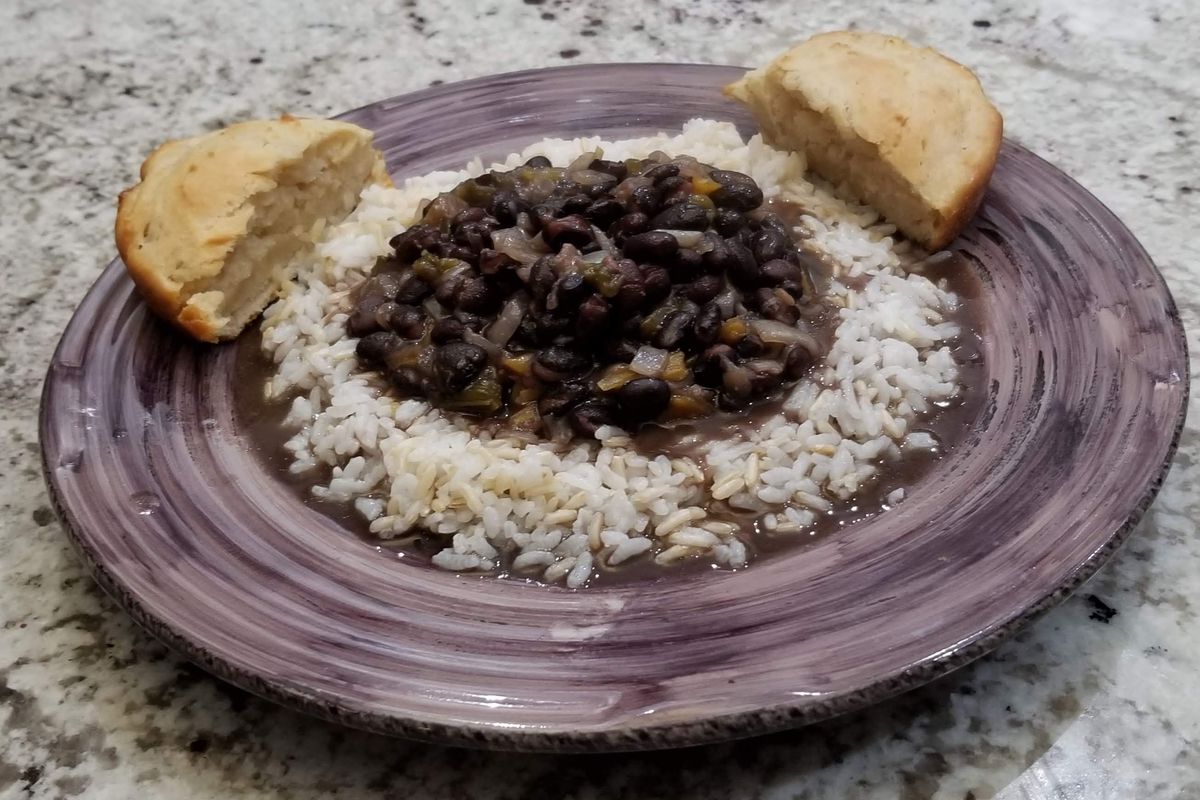
Dried black beans simmered until creamy with a sofrito of onion, green pepper and garlic, cumin, oregano and a splash of vinegar.
By Lavin Food Editorial · Published
- Prep
- 25 min
- Cook
- 2 hr
- Total
- 2 hr 25 min
- Yield
- 6 servings
About this dish
Frijoles negros means "black beans" in Spanish. Wikipedia describes it as a Latin American dish made with black beans and prepared in Guatemala, Cuba, Venezuela, Puerto Rico, Mexico and other countries. Its typical seasonings are salt, onions, garlic, cumin, oregano and vinegar, sometimes with tomatoes or a ham hock. Because so many countries cook it, there is no single correct recipe, and this page follows the Cuban style.
In Cuban cooking, the base of the pot is a sofrito. The word comes from the Spanish verb sofreir, "to stir-fry". According to Wikipedia, the main parts of Cuban sofrito are onions, garlic and green or red bell peppers, and it is used as a base for beans, stews and rice dishes. Cumin, bay leaf and cilantro are listed as optional extras. Wikipedia's article on Cuban cuisine says a typical Cuban meal includes rice and black beans, either cooked together (called congri or Moros y Cristianos) or served separately as arroz con frijoles.
The beans themselves are black turtle beans, a small, shiny variety of the common bean that is native to the Americas. This recipe cooks them from dry, so the pot liquid turns dark and slightly thick and the beans end up creamy. The sources read for this page give no date or inventor for the dish, so no claim is made about who first cooked it.
Ingredients and substitutions
Quantities are for 6 servings.
For the beans
- 1 pound (450 g) dried black beans, sorted and rinsed
- 7 cups (1.68 L) water, for simmering, plus more if needed
- 2 whole bay leaves
For the sofrito
- 3 tablespoons (45 ml) olive oil
- 1 large (280 g) yellow onion, finely chopped
- 1 medium (150 g) green bell pepper, seeded and finely chopped
- 6 cloves garlic, minced
- 2 teaspoons (4 g) ground cumin
- 1 teaspoon (1 g) dried oregano
- 2 teaspoons (12 g) fine salt
- freshly ground black pepper, to taste
To finish and serve
- 1 tablespoon (15 ml) white vinegar or red wine vinegar
- 1 teaspoon (4 g) sugar, optional, only to round off the vinegar
- 4 cups (630 g) cooked long-grain white rice, hot, for serving
- ¼ cup (40 g) red onion, finely chopped, optional, for sprinkling
Choosing your ingredients
Buy dried black beans from a store with fast turnover. Very old beans can stay firm after hours of simmering, however long you soak them. Pick out any stones or shriveled beans, then rinse. One pound (450 g) of dry beans gives about 6 cups cooked, enough for six servings over rice.
Do not throw away the cooking liquid. As the beans simmer, the water turns dark and thickens slightly, and that liquid becomes the sauce. This is why the recipe uses a measured amount of water and tops up only if the pot runs low. Too much water leaves a thin, pale broth.
Chop the onion and pepper small and even, about the size of a pea, so they melt into the beans. Add the garlic late, because it browns fast and turns bitter. Green bell pepper is the usual choice, and its slightly grassy edge balances the sweetness of the onion.
Salt and acid change how beans cook, so the order matters. Salt goes in with the sofrito, once the beans have started to soften. Vinegar goes in at the very end, after the beans are completely tender, because acid in the pot can keep bean skins firm. Taste before you add it, then add it in two stages.
Possible substitutions
- Dried black beans: Three 15-ounce (425 g) cans of black beans, drained. Skip the soaking and the first simmer. Make the sofrito, add the beans and 1 cup (240 ml) of water, and simmer for 30 minutes.
- Green bell pepper: Red bell pepper for a sweeter pot, or a cubanelle pepper if you can find one.
- White or red wine vinegar: Apple cider vinegar or fresh lime juice, added at the end in the same amount.
- Olive oil: Any neutral cooking oil.
- Dried oregano: Dried marjoram, or a little less dried thyme.
Step-by-step method
- Sort, rinse and soak the beans. Pick over the beans for stones, then rinse them in a colander. For an overnight soak, cover with water by 2 inches (5 cm) and leave for 8 to 12 hours. For a quick soak, bring them to a boil for 2 minutes, turn off the heat, cover and wait 1 hour. Drain either way and discard the soaking water.
- Start the beans simmering. Put the drained beans in a large heavy pot with the measured water and the bay leaves. Bring to a boil over high heat, skimming off the gray foam. Lower the heat until the liquid barely bubbles, set the lid ajar, and cook for 45 to 60 minutes, stirring now and then. The beans should be softening but still firm in the center.
- Cook the sofrito. While the beans simmer, warm the olive oil in a skillet over medium heat. Add the onion and green pepper with a pinch of salt. Cook for 8 to 10 minutes, stirring often, until both are soft and translucent but not browned. Stir in the garlic, cumin and oregano and cook for 30 to 60 seconds, until you can smell them. Pull the pan off the heat if anything starts to stick.
- Combine and finish cooking the beans. Scrape the sofrito into the pot, add the salt and some black pepper, and stir well. Keep the liquid at a gentle simmer with the lid ajar for 30 to 45 minutes. If the liquid drops below the beans, add hot water, a half cup at a time. Check the beans every 10 minutes toward the end of this time.
- Test for doneness. Scoop out a few beans from different parts of the pot and let them cool for a moment. Squeeze one between your fingers or bite into it. A finished bean is creamy all the way through, with no chalky or grainy center and no firm core. Skins should be tender, not tough. If any bean fails the test, keep simmering and test again every 10 minutes.
- Thicken the pot. Scoop out about a cup of beans with some liquid and mash them with a fork into a rough paste. Stir the paste back into the pot. Simmer uncovered for 10 to 15 minutes, until the liquid coats the back of a spoon like a loose gravy. If it is too thick, add a splash of hot water. If too thin, simmer a few minutes longer.
- Add the vinegar and serve. Turn off the heat and fish out the bay leaves. Stir in the vinegar, and the sugar if you want it. Taste, then add salt or a bit more vinegar if needed. Let the pot rest, covered, for 10 minutes; it will thicken a little more. Spoon the beans and their sauce over hot white rice and top with chopped red onion.
Variations
Regional versions differ from cook to cook. Wikipedia notes that Cuban sofrito can include ají cachucha, a chili pepper, in place of or alongside bell pepper, and that chorizo, salt pork or ham are added to beans in some recipes. Others add tomato or white wine. Try one change at a time so you can taste what it does.
For a meaty pot, add a smoked ham hock to the beans at the start of step 2, then remove it before serving and pick off the meat. For a soup, add 2 to 3 cups (480 to 720 ml) of water or stock after step 5, purée about half the pot with a stick blender, and finish with the vinegar. Rice cooked together with the beans is a different dish, known as congri or Moros y Cristianos, with its own timings.
Storage and reheating
Cool the beans quickly and refrigerate them within 2 hours of cooking, or within 1 hour if the room is above 90°F (32°C). Store them in shallow, airtight containers for 3 to 4 days. Keep cooked rice in a separate container, and cool it fast as well. The beans thicken as they sit, so they will look much firmer when cold.
To freeze, portion the beans with their liquid into containers, leaving room for expansion, and use them within about 3 months for the best quality. Thaw overnight in the refrigerator. Reheat in a pot over medium-low heat with a splash of water, stirring until steaming hot throughout, to 165°F (74°C).
Common mistakes
- Stopping before the beans are fully cooked. Dried beans must be cooked until completely tender. A firm or chalky center means they are not done. Keep simmering and test several beans from different parts of the pot.
- Adding the vinegar too early. Acid slows the softening of bean skins. Stir the vinegar in after the beans are tender and the heat is off.
- Boiling hard. A rolling boil splits the skins and turns the beans to mush while the centers stay firm. Keep the surface barely moving.
- Adding too much water. A thin broth tastes pale and takes long to reduce. Top up only if the beans are no longer covered.
- Scorching the garlic and spices. Garlic, cumin and oregano burn in seconds. Add them after the onion and pepper are soft, and stir for less than a minute.
Frequently asked questions
Do I have to soak black beans?
No, but soaking shortens the simmer and gives more even results. Unsoaked beans can take 2 to 3 hours or more, depending on their age, and need more water along the way. The quick soak in step 1 needs about 1 hour of waiting.
Why are my beans still hard after hours of cooking?
The most common cause is old dried beans. Hard water and early acid can also slow softening. Keep simmering gently, add hot water as needed, and wait to add vinegar until the beans are tender.
Can I make it in a slow cooker or pressure cooker?
Yes. Cook the sofrito on the stove first. For a pressure cooker, follow the manufacturer's bean timing. For a slow cooker, boil the soaked beans hard for 10 minutes on the stove, then cook them on high for 4 to 6 hours, until fully soft, and add the vinegar at the end.
Is frijoles negros the same as Moros y Cristianos?
No. Frijoles negros is the black bean dish served on its own or over rice. According to Wikipedia, when black beans and white rice are cooked together in Cuba, the dish is called congri or Moros y Cristianos.