Latin America
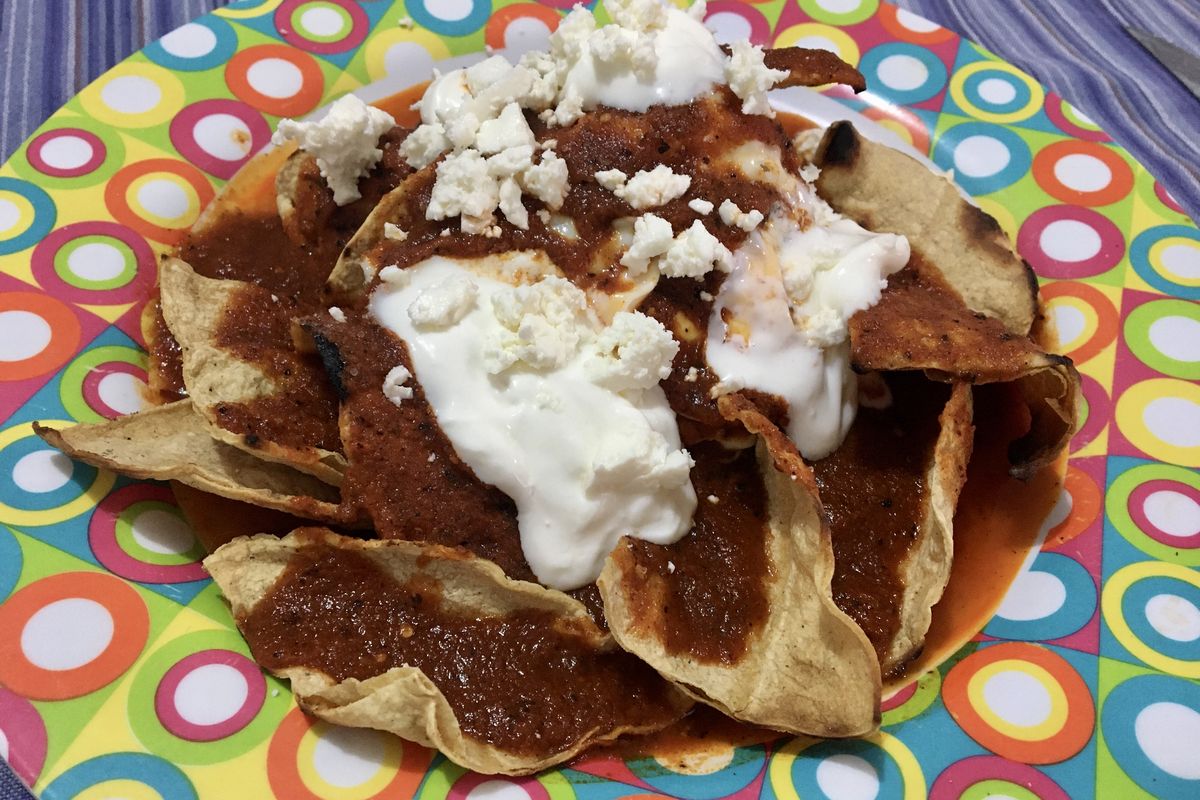
Chilaquiles Rojos: Tortilla Chips Simmered in Red Chile Sauce
Crisp tortilla chips tossed in a smoky guajillo and ancho red sauce, finished with crema, queso fresco and onion in about an hour.
By Lavin Food Editorial · Published
- Prep
- 25 min
- Cook
- 35 min
- Total
- 1 hr
- Yield
- 4 servings
About this dish
Chilaquiles are a traditional Mexican breakfast dish made with tortillas. According to Wikipedia, leftover tortillas are the usual base: crisp triangles are covered with green or red salsa and simmered until the tortilla starts to soften. The dish is commonly garnished with crema, crumbled queso fresco, sliced onion and avocado, and it is served with refried beans, scrambled or fried eggs, or guacamole. It is mostly a breakfast or brunch dish.
Regional versions are many. In central Mexico the chips often stay crisp, because the salsa is poured at the last moment. In Guadalajara, cazuelas of chilaquiles are kept simmering until they turn thick, like polenta. Sinaloa sometimes adds cream, and Tamaulipas commonly uses a red tomato sauce. Encarnación Pinedo's cookbook El cocinero español, printed in California in 1898, already included chilaquiles recipes, one of them with dried shrimp. The article gives no date or inventor for the dish and no explanation of its name, so this page makes no such claim.
This version is a red one. The sauce is built from dried guajillo and ancho chiles, charred tomato, garlic and onion. Guajillo is described as sweet and somewhat fruity, with mild to medium heat, so the sauce is deep in flavor without being fiery. The chips are fried first, the sauce is cooked until it thickens, and the two meet in the pan for a short time. The clock controls the texture.
Ingredients and substitutions
Quantities are for 4 servings.
For the chips
- 12 6-inch (340 g) corn tortillas, day-old if possible, cut into 6 wedges each
- 1 cup (240 ml) neutral oil, such as canola or sunflower, for frying
- ½ teaspoon (3 g) fine salt
For the red sauce
- 5 large (30 g) dried guajillo chiles, stemmed and seeded
- 2 medium (25 g) dried ancho chiles, stemmed and seeded
- 4 medium (360 g) Roma tomatoes
- ½ medium (75 g) white onion, roughly chopped
- 3 cloves garlic, unpeeled
- 1½ cups (360 ml) low-sodium chicken stock, or water
- ½ teaspoon (0.5 g) dried oregano
- 2 tablespoons (30 ml) neutral oil
- 1 teaspoon (6 g) fine salt, to taste
To finish
- ½ cup (120 ml) Mexican crema, or thinned sour cream
- ¾ cup (85 g) queso fresco, crumbled
- ½ cup (55 g) white onion, sliced thin
- ¼ cup (15 g) fresh cilantro, chopped
- 4 large eggs, optional, for frying
- 1 tablespoon (15 ml) neutral oil, for the eggs
- 1 medium (150 g) ripe avocado, sliced, optional
Choosing your ingredients
Corn tortillas that are a day or two old are the best base. They have lost some moisture, so they soak up less oil and fry into sturdy chips that hold their shape in sauce. If yours are fresh, leave the wedges out in a single layer for an hour or two before frying. Flour tortillas turn doughy in sauce.
Dried guajillo and ancho chiles give the sauce its color and body. Choose chiles that are flexible, not brittle. Guajillo brings a fruity, mild-to-medium heat, and ancho adds a darker, slightly sweet note. Remove the stems and shake out the seeds, since the seeds add bitterness.
Chicken stock makes a richer sauce, but water works with a little more salt. Taste the sauce before the chips go in and let it be a little bold, because the chips will dilute it.
Use a wide, deep skillet, about 12 inches (30 cm), for the final toss. A narrow pot crowds the chips and breaks them. For frying, oil about 1 inch (2.5 cm) deep in a heavy skillet is enough.
Possible substitutions
- Ancho chiles: Pasilla chiles, or 2 more guajillo chiles. The sauce will be a little less sweet.
- Fried chips: Thick, plain, lightly salted store-bought tortilla chips. Cook the sauce for the same time, then use only about half a teaspoon of salt in it.
- Mexican crema: Sour cream thinned with a spoonful of milk, or heavy cream drizzled on top.
- Queso fresco: Crumbled feta, which is saltier, or mild cotija. Taste first and skip extra salt on the plate.
- Chicken stock: Water plus an extra pinch of salt, or vegetable stock for a vegetarian plate.
- Fried eggs: 2 cups (about 225 g) shredded cooked chicken, folded in with the chips. The chicken must have been cooked to 165°F (74°C).
Step-by-step method
- Cut and fry the tortilla chips. Stack the tortillas and cut each stack into 6 wedges. Heat the frying oil in a heavy skillet to 350°F (175°C); a wedge dropped in should bubble at once. Fry in 3 or 4 batches for 1 to 2 minutes each, turning once, until golden and stiff. Drain on a rack or paper towels and sprinkle with the salt. Never leave hot oil unattended, and keep a lid nearby.
- Toast and soak the chiles. Wipe out a dry skillet and set it over medium heat. Press the chiles flat for 15 to 30 seconds per side, until they smell sweet and toasty and look slightly puffed. Pull them off before they blacken, because scorched chiles taste bitter. Put them in a bowl, cover with hot water and let them soak for 15 minutes, until soft and pliable.
- Char the tomatoes, onion and garlic. In the same dry skillet over medium-high heat, cook the tomatoes, chopped onion and garlic cloves for 8 to 10 minutes, turning now and then. The tomato skins should blister and darken in spots, the onion should soften and brown at the edges, and the garlic should feel soft when squeezed. Peel the garlic when cool.
- Blend the sauce. Drain the chiles. Put them in a blender with the tomatoes, onion, peeled garlic, oregano and 1 cup (240 ml) of the stock. Fill the jar no more than half, remove the center cap of the lid and cover the opening with a folded towel, since warm contents can push the lid off. Blend for 1 to 2 minutes until smooth, then strain.
- Cook the sauce until thick. Heat the 2 tablespoons of oil in a 12-inch (30 cm) skillet over medium heat. Pour in the strained sauce; it will spatter, so stand back. Simmer for 8 to 10 minutes, stirring often, until it darkens a shade and coats the back of a spoon. Thin with the remaining stock if needed, then add salt to taste.
- Toss the chips with the sauce. Lower the heat to medium-low and add the chips. Fold them gently with a spatula for 30 to 90 seconds for chips that stay crunchy at the center, or 3 to 4 minutes for a softer, more saucy plate. Every piece should be coated, with edges that bend slightly and a firm middle.
- Fry the eggs. If you are serving eggs, heat the tablespoon of oil in a nonstick skillet over medium heat. Crack in the eggs and cook for 2 to 3 minutes, until the whites are fully opaque. For firm yolks, cover the pan and cook 2 minutes more. Let the chilaquiles rest for a minute while the eggs cook, so everything is hot together.
- Top and serve right away. Drizzle on the crema, scatter the queso fresco, sliced onion and cilantro, then add an egg and avocado slices. Serve immediately, with refried beans on the side if you like.
Variations
For chilaquiles verdes, replace the red sauce with a green one made from simmered tomatillos, fresh chiles such as serrano, onion, garlic and cilantro, blended and cooked briefly in oil. For a thick plate like the Guadalajara style, add more stock and simmer the chips 6 to 8 minutes, until the pan looks like soft polenta.
For a heartier pan, fold in 2 cups (about 225 g) of shredded cooked chicken with the chips. Cook the chicken to 165°F (74°C) before shredding it. A little chipotle in adobo blended into the sauce adds smoke and heat.
Storage and reheating
Chilaquiles are best eaten at once, because the chips keep softening. Refrigerate leftovers within two hours of cooking, in a shallow airtight container, and eat them within 3 to 4 days. Reheat in a skillet with a splash of stock to 165°F (74°C). The chips will be very soft.
To plan ahead, store the parts separately. Cool the sauce quickly and keep it in the refrigerator for 3 to 4 days, or freeze it for about 3 months. Keep the cooled fried chips in an airtight container at room temperature for a day or two. Reheat the sauce until it simmers, toss in the chips and cook the eggs fresh. Do not freeze assembled chilaquiles.
Common mistakes
- Burning the chiles. Dried chiles go from toasty to bitter in seconds. Press them on the pan for 15 to 30 seconds per side only, and throw out any that blacken.
- Using wet or thin sauce. A watery sauce turns the chips to paste. Cook it until it coats a spoon.
- Cooking the chips too long. Chips keep absorbing sauce even off the heat. Pull the pan as soon as the pieces are coated and plate right away.
- Crowding the frying pan. Too many wedges at once lower the oil temperature and the chips come out greasy and chewy. Fry in small batches.
- Blending hot liquid in a sealed jar. Warm contents can blow the lid off. Fill the blender only halfway, vent the cap and hold a towel over the lid.
Frequently asked questions
Can I bake the chips instead of frying them?
Yes. Brush the wedges lightly with oil, spread them in one layer on baking sheets and bake at 375°F (190°C) for 12 to 15 minutes, flipping once, until they are golden and stiff.
How do I keep the chips from going soggy?
Use sturdy, well-fried chips, a thick sauce and a short toss. You can also plate the chips with the toppings and pour the hot sauce over them just before eating, which keeps the top layer crisp for several minutes.
Are runny yolks safe on chilaquiles?
A soft yolk carries a small risk of foodborne illness. Young children, older adults, pregnant people and anyone with a weakened immune system should eat eggs cooked until both the white and the yolk are firm. Cover the pan and cook the eggs a few minutes longer for them.
How spicy is this sauce?
Mild to medium. Removing the seeds keeps it gentler. For more heat, blend in one or two dried chiles de árbol.
What is the difference between red and green chilaquiles?
The sauce. Red chilaquiles use dried red chiles, often with tomato, and taste deeper and slightly sweet. Green ones use tomatillos and fresh green chiles and taste brighter and tangier.