Latin America
Guacamole: Mashed Avocado with Lime, Onion and Cilantro
Chunky guacamole from ripe avocados, lime, onion, jalapeño and cilantro, made in 15 minutes with no cooking and a few tricks to slow browning.
By Lavin Food Editorial · Published
- Prep
- 15 min
- Cook
- 0 min
- Total
- 15 min
- Yield
- 4 servings
About this dish
Guacamole is an avocado-based dip, spread or salad that Wikipedia describes as first developed in Mexico. The name comes from the Classical Nahuatl word āhuacamōlli, which translates literally as "avocado sauce". Today it is eaten far beyond Mexico, as a dip for chips, a topping for tacos and grilled meat, and a spread in sandwiches.
The traditional method is to mash peeled, ripe avocados with salt in a molcajete, a mortar, using a pestle called a tejolote. Recipes often add lime juice, cilantro, onion and jalapeño. Wikipedia lists sour cream, tomatoes, basil and peas as non-traditional additions. The earliest known description of something like a guacamole recipe, it says, is from 1697, when the privateer William Dampier noted a preparation of ground avocado, sugar and lime juice in Central America. Sources do not settle exactly when the modern salty version took shape.
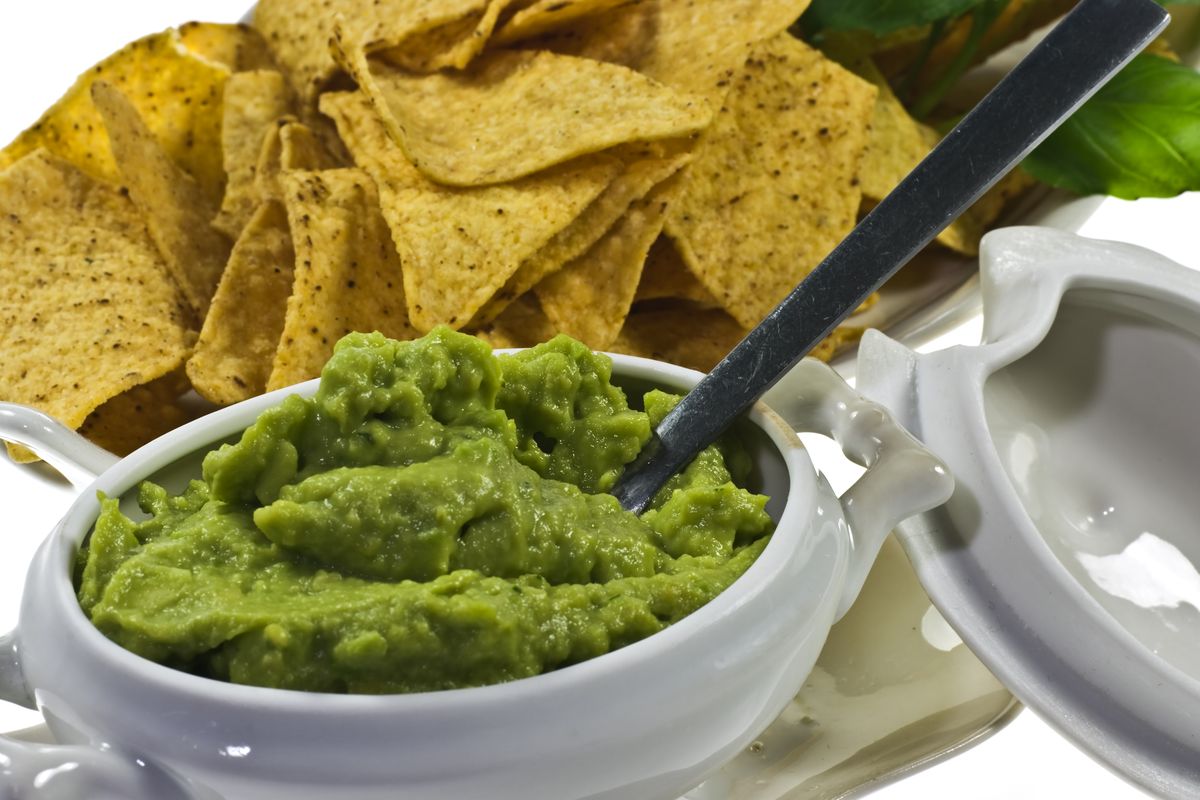
This version keeps the list short on purpose. It uses ripe Hass avocados, lime, salt, white onion, one jalapeño and cilantro, with an optional tomato. The texture stays chunky, so you can still see pieces of avocado. Everything takes about 15 minutes, and the only tool you need is a bowl and a fork.
Ingredients and substitutions
Quantities are for 4 servings.
For the guacamole
- 3 medium (600 g) ripe Hass avocados, halved and pitted
- 2 tablespoons (30 ml) fresh lime juice, from 1 to 2 limes
- ¾ teaspoon (4 g) fine salt
- ¼ cup (40 g) white onion, finely chopped
- 1 medium (20 g) jalapeño chile, stemmed and minced, seeds removed for less heat
- 3 tablespoons (10 g) fresh cilantro, leaves and tender stems, chopped
- 1 small (60 g) plum tomato, optional, seeded and diced small
For serving
- tortilla chips, or warm tortillas, for serving
- lime wedges, optional, for serving
Choosing your ingredients
Ripeness decides the whole result. A good avocado gives slightly when you press the whole fruit gently in your palm, and does not feel mushy or leave a dent. Do not poke it with a fingertip, because that bruises the flesh. Another check is the small stem cap: flick it off, and if the spot underneath is green the fruit is ready, while brown means overripe. If the avocados are hard, leave them on the counter for a few days. Avocados for sale are usually picked unripe and ripen after harvest.
Hass avocados, the small dark pebbly ones, are creamy and rich, and they are what this recipe is written for. Three medium fruits give about 1 pound (450 g) of flesh. Smooth-skinned green varieties are often more watery and milder, so use a little less lime and taste before adding more.
Use fresh lime juice, not the bottled kind, which tastes flat and a little bitter. Salt goes in early, because it pulls out the flavor of the onion and chile and seasons the avocado evenly. Taste with a chip, not a spoon, since the chip adds its own salt.
Raw onion and chile are sharp. White onion is the usual choice and has a clean bite. If you find it too strong, put the chopped onion in a small strainer, rinse it under cold water for 20 to 30 seconds, and shake it dry. Rinsing tames the bite but also washes away some flavor, so keep it unrinsed if you like a firm kick. Most of the heat in a jalapeño sits in the white ribs and seeds.
Possible substitutions
- Jalapeño chile: One serrano chile for more heat, or a pinch of crushed red pepper flakes. Leave it out for a mild dip.
- White onion: Red onion or the white parts of 2 scallions. A quick rinse softens the bite of red onion.
- Cilantro: Flat-leaf parsley gives a different but pleasant green note. People who find cilantro soapy can leave herbs out.
- Lime juice: Lemon juice in the same amount. The flavor is a little softer and less floral.
- Plum tomato: Leave it out for a purer avocado flavor. If used, seed it, or the dip turns watery.
- Hass avocados: Other ripe, creamy avocados, about 1 pound (450 g) of flesh. Taste and adjust the salt and lime.
Step-by-step method
- Prepare the aromatics. Finely chop the onion, mince the jalapeño and chop the cilantro. Seed the chile if you want less heat, and wash your hands and the board afterward, because chile oils sting if you touch your eyes. Keep the pieces small, about 1/8 inch (3 mm), so every bite has a little of each.
- Season the base first. Put the onion, jalapeño, half the cilantro, the salt and the lime juice in a medium bowl. Mash them together with the back of a fork, or grind them in a molcajete, for 30 to 60 seconds until the mixture looks wet and fragrant. This step spreads the flavor before the avocado goes in, and the acid is ready to coat the fruit.
- Cut and add the avocados. Halve the avocados and remove the pits. Score the flesh in a grid with a knife while it is still in the skin, then scoop it into the bowl with a spoon. Add it right away, so the cut surfaces meet the lime juice quickly. Work in under 5 minutes, since the cut flesh begins to darken.
- Mash to the texture you want. Press and fold the avocado into the base with a fork or the pestle. For a chunky guacamole, stop when you still see pieces about the size of a marble, in a creamy matrix. This takes 1 to 2 minutes. Mashing past that point makes a smooth, pasty dip that loses its bite, so stop sooner than you think you should.
- Taste and adjust. Taste with a tortilla chip. If it tastes flat, add salt a pinch at a time. If it tastes heavy or dull, add lime juice a teaspoon at a time. Fold in the tomato, if using, and the remaining cilantro. Stir gently, only 3 or 4 turns, so the tomato stays in pieces and does not thin the dip.
- Serve right away. Spoon the guacamole into a bowl and serve within 30 minutes, at cool room temperature, with chips and lime wedges. The color is brightest right after mashing. If you must wait, press plastic wrap straight onto the surface so no air touches it, and refrigerate until just before serving. Do not let it sit out for more than 2 hours.
Variations
Common additions include diced tomato, minced garlic, a pinch of ground cumin, diced mango or pomegranate seeds. Some cooks add a spoonful of chopped roasted chile for a smoky heat. Wikipedia notes that sour cream, basil and peas show up in non-traditional versions, so treat those as personal choices rather than the classic. Add one change at a time.
For a smoother, thinner sauce to spoon over tacos, mash the avocado fully, then stir in 2 tablespoons (30 ml) of water. For a loaded dip, spread the guacamole in a shallow dish and top it with crumbled queso fresco and extra cilantro. For a sandwich or toast spread, skip the tomato, which makes bread soggy.
Storage and reheating
Guacamole is best the day it is made. Once an avocado is cut, an enzyme in the flesh reacts with oxygen and turns it brown. The brown layer looks unappealing, and the reaction can only be slowed, not stopped. The best defense is to keep air away: press plastic wrap directly onto the surface, with no gaps, or use a container just big enough for the dip, with a tight lid. Lime juice in the recipe helps a little, but it does not prevent browning.
Refrigerate guacamole within 2 hours of making it, or within 1 hour if the room is above 90°F (32°C). It keeps safely for 3 to 4 days in the refrigerator, but the flavor and color fade, so plan to eat it within 1 to 2 days. If the top turns brown, scrape off that thin layer and stir the green below. Freezing is not recommended, since the texture turns watery when thawed.
Common mistakes
- Using underripe or overripe avocados. Hard fruit will not mash and tastes bland. Fruit that is soft, stringy or has brown streaks tastes off. Choose avocados that yield gently to a palm squeeze and check the stem cap.
- Mashing it to a paste. A fully smooth guacamole has little texture and tastes heavier. Stop while small pieces remain, then fold gently.
- Skipping the salt and lime. Avocado is mild and needs both. Season in stages and taste with a chip, because underseasoned guacamole tastes like plain butter.
- Leaving it uncovered. Air browns the surface within minutes. Press plastic wrap directly onto the dip, or use a small, tight container.
- Adding mayonnaise or sour cream to stretch it. Dairy and mayonnaise dull the avocado and shorten its life in the refrigerator. If you need more volume, use more avocado or a bit of diced tomato.
Frequently asked questions
How do I keep guacamole from turning brown?
Slow the browning instead of trying to stop it. Press plastic wrap straight onto the surface, use a small container, keep it cold and eat it the same day. Lime juice helps only a little.
Does leaving the pit in the bowl help?
The pit only shields the small area it touches. It does not protect the rest of the dip. Plastic wrap pressed onto the surface works better.
Do I need a molcajete?
No. A bowl and a fork make a very good guacamole. A molcajete is the traditional tool, and its rough stone grinds onion and chile into a paste well, but the result is similar.
Can I make it ahead for a party?
Make it up to a few hours ahead, wrap it tightly and keep it refrigerated. Stir in the cilantro and tomato and check the salt just before serving. Do not leave it out for more than 2 hours.
How much heat should it have?
That is a matter of taste. Keep the seeds and white ribs of the jalapeño for more heat, or remove them for a mild dip. Start with one chile, taste, then add more minced chile in small amounts.