Mediterranean
Gambas al Ajillo: Spanish Garlic Shrimp in Olive Oil
Shrimp sizzled in olive oil with sliced garlic, dried chili and a splash of sherry, ready in about 30 minutes and served in the pan with bread.
By Lavin Food Editorial · Published
- Prep
- 20 min
- Cook
- 8 min
- Total
- 28 min
- Yield
- 4 servings
About this dish
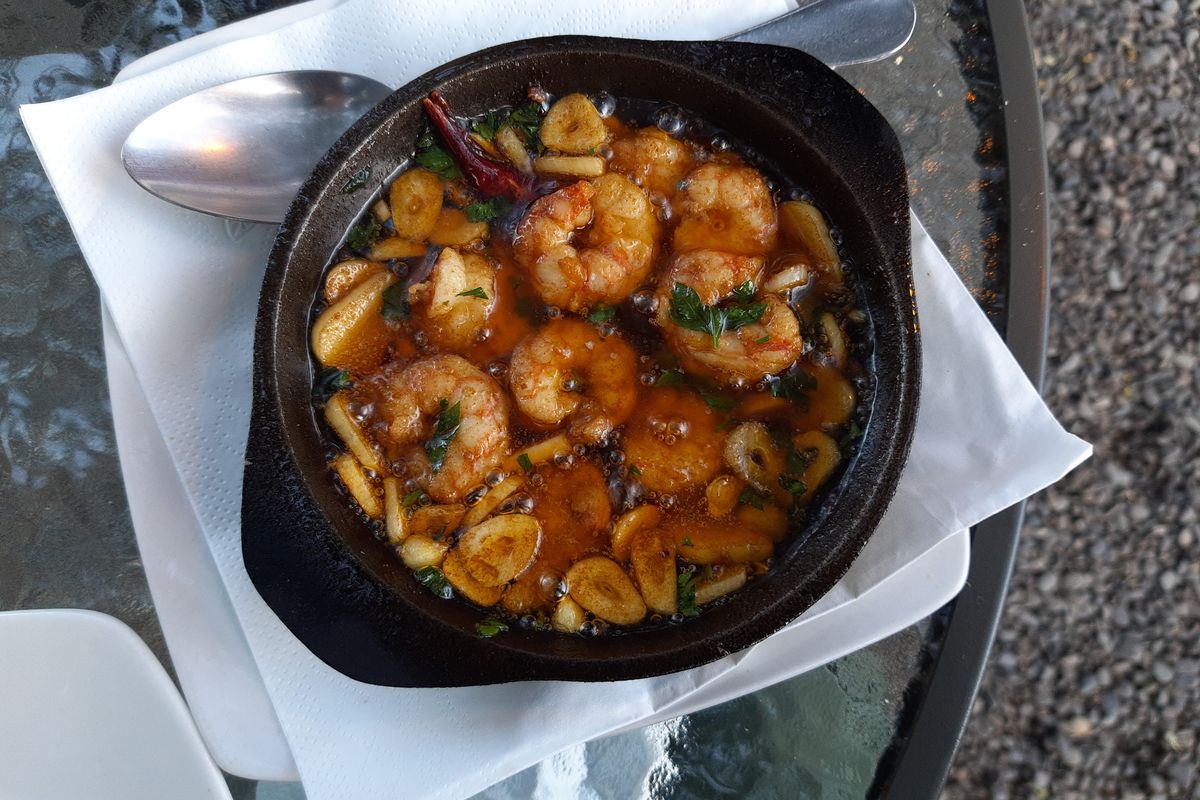
Gambas al ajillo means "prawns with garlic" in Spanish. Wikipedia describes it as a popular Spanish dish that began in Madrid and is most often found in the central and northern parts of the country. The core is short: peeled shrimp, garlic and olive oil. In bars it is typically served as a ración, a shareable portion, and it is called a staple of Spanish bar culture.
Traditionally the dish is cooked in a clay dish known as a cazuela. The garlic and parsley are fried in olive oil first, and the shrimp are added at the last moment. Some cooks add slices of dried chili for a little heat, and some finish with a splash of sherry. It is usually served straight from the heat while the oil still sizzles. The sources give no date or inventor, so this page makes no claim about when it began.
This version is written for a home stove and an ordinary skillet. The goal is tender shrimp, pale golden garlic and a fragrant oil that is worth mopping up with bread. Serve it as a tapa with a glass of wine, or as a light main for two.
Ingredients and substitutions
Quantities are for 4 servings.
For the shrimp
- 1 pound (450 g) raw shrimp, large, 16 to 20 per pound, peeled and deveined
- ½ teaspoon (3 g) fine salt
- ⅓ cup (80 ml) extra-virgin olive oil
- 6 cloves garlic, sliced thin
- 2 small dried red chili peppers, or 1/2 teaspoon red pepper flakes
- 2 tablespoons (30 ml) dry sherry, fino, or dry white wine
To finish
- 2 tablespoons (8 g) fresh flat-leaf parsley, chopped
- ½ teaspoon (1 g) smoked paprika, optional
- lemon wedges, optional, for serving
- crusty bread, sliced, for serving
Choosing your ingredients
Large shrimp, about 16 to 20 to the pound (450 g), stay juicy in the short cooking time. Most shrimp in stores were frozen already, so a bag from the freezer case is fine. Thaw them overnight in the refrigerator, or in a sealed bag in cold water for 20 to 30 minutes. Never thaw on the counter or in warm water. Pat them very dry before cooking.
Peeled shrimp are the classic choice, and the garlic oil coats the flesh directly. Shell-on shrimp keep more flavor, but everyone must peel at the table. If you leave the shells on, snip along the back, remove the dark vein and add about a minute.
Slice the garlic instead of mincing it. Thin slices, about 1/16 inch (2 mm), turn into soft golden chips, while minced garlic burns before the shrimp are done. Garlic scorches fast above roughly 300°F (150°C), so aim for oil at 250 to 275°F (120 to 135°C), or watch for small, lazy bubbles around each slice.
The oil looks generous because it is also the sauce. For the pan, a 10-inch (25 cm) stainless steel or cast-iron skillet is reliable. A cazuela, the shallow clay dish used in Spain, keeps the oil hot at the table, but many can crack if heated too fast or set on a cold surface. Follow the maker's instructions, or use a skillet.
Possible substitutions
- Large shrimp: Medium shrimp, cooked about a minute less. Shell-on shrimp also work; add about a minute.
- Dry sherry: The same amount of dry white wine, or skip it and finish with a squeeze of lemon.
- Dried red chili peppers: 1/2 teaspoon red pepper flakes, added with the garlic.
- Smoked paprika: Sweet paprika, or leave it out.
- Flat-leaf parsley: Curly parsley or chopped chives, added at the end.
Step-by-step method
- Thaw and dry the shrimp. If the shrimp are frozen, thaw them in cold water for 20 to 30 minutes, or overnight in the refrigerator. They are ready when they feel cold and flexible with no ice in the center. Peel and devein them, then pat very dry with paper towels and toss with the salt. Let them rest while you prep the rest.
- Slice the garlic and chop the parsley. Slice the garlic as thin as you can, about 1/16 inch (2 mm), so the slices cook at the same speed. You should almost see light through them. Chop the parsley and set out the bread, lemon and a trivet for the table. This takes about 5 minutes. Once the pan is hot, the cooking moves fast.
- Warm the garlic and chili in the oil. Pour the oil into a 10-inch (25 cm) skillet and add the garlic and dried chilies. Cook over medium-low heat for 3 to 5 minutes, stirring now and then, until small bubbles rise around the garlic and the edges turn pale gold. The oil should smell sweet and nutty. If the garlic darkens or the oil smokes, lift the pan off the heat.
- Add the shrimp. Raise the heat to medium-high. Lay the shrimp in a single layer in the oil, working quickly so they all start together. Do not stir. Cook for 1 to 2 minutes, until the underside of each shrimp turns pink and the edges look opaque. The oil will sizzle loudly, so keep your face back from any splatter.
- Flip and add the sherry. Turn the shrimp with tongs and cook for 1 minute more. Standing back, pour in the sherry; it will bubble and spit. Let it cook for 20 to 30 seconds, until the sharp smell of alcohol fades. Shake the pan so the sherry blends into the oil.
- Check that the shrimp are done. Total time for the shrimp is 2 to 4 minutes. Done shrimp are pink outside and opaque white inside, with no gray, see-through center. Each should curl into a loose C; a tight O means overcooked. Cut the thickest one in half if unsure. Take the pan off the heat right away, since the hot oil keeps cooking them.
- Finish and serve in the pan. Scatter on the parsley and the paprika, if using. Set the pan on the trivet and serve at once, while the oil still sizzles. Offer lemon wedges and plenty of bread for dipping. Eat within a few minutes, since the shrimp turn firm as the oil cools.
Variations
Common additions are parsley fried with the garlic, slices of dried chili and a splash of sherry. Some cooks also add a squeeze of lemon at the end, or use brandy in place of sherry. Add one change at a time and taste.
For a meal, toss the shrimp and pan oil with 8 ounces (225 g) of cooked spaghetti and about 1/4 cup (60 ml) of the pasta water. The same method works with sliced mushrooms: cook them first in the garlic oil until golden, then add the sherry.
Storage and reheating
Gambas al ajillo is best eaten right away. Refrigerate leftovers within two hours of cooking. Do not leave the pan on the counter, because garlic stored in oil at room temperature can grow harmful bacteria. Keep the shrimp and oil in a shallow, airtight container in the refrigerator for up to 3 or 4 days.
Reheat gently in a skillet over medium-low heat for 1 to 2 minutes, just until steaming hot. More heat makes the shrimp rubbery. Freezing is not recommended, since the shrimp turn tough after a second cooking.
Common mistakes
- Burning the garlic. Garlic browns in minutes and turns bitter. Start it in cool oil over medium-low heat, and lift the pan off the burner if it smokes.
- Overcooking the shrimp. Shrimp need only 2 to 4 minutes. A tight O means too far and tough. Pull the pan when each one forms a loose C.
- Cooking wet shrimp. Water lowers the oil temperature and causes violent spitting. Pat the shrimp dry with paper towels.
- Crowding the pan. A pile of shrimp steams instead of sizzling. Keep them in one layer, using a larger skillet or two batches.
- Letting it sit. The dish is meant to be eaten while the oil still sizzles. Have the bread ready before the shrimp go in.
Frequently asked questions
Do I need a cazuela to make it?
No. A skillet is easier to control and works well. A cazuela is traditional, but it needs gentle heat, and some can crack from sudden temperature changes.
How do I know when the shrimp are cooked?
Look for pink color outside and opaque white flesh inside. A loose C means done; a tight O means overcooked. Large shrimp need only 2 to 4 minutes in total.
Can I cook shrimp straight from frozen?
Thaw them first. Frozen shrimp release water in the hot oil, which causes splatter and uneven cooking. Use the refrigerator overnight, or cold water for 20 to 30 minutes.
What should I serve with it?
Crusty bread is essential, for soaking up the oil. It is a tapa often enjoyed with wine, and a green salad or olives makes it a light meal.
Is this dish safe for people with a shellfish allergy?
No. Shrimp is a shellfish, and a shellfish allergy can be serious. The oil and any bread dipped in it carry shrimp too.