Mediterranean
Spaghetti Aglio e Olio: Garlic, Olive Oil and Chile
Spaghetti tossed in olive oil with pale gold garlic, chile flakes and parsley, with starchy pasta water for a light sauce. About 25 minutes.
By Lavin Food Editorial · Published
- Prep
- 10 min
- Cook
- 15 min
- Total
- 25 min
- Yield
- 4 servings
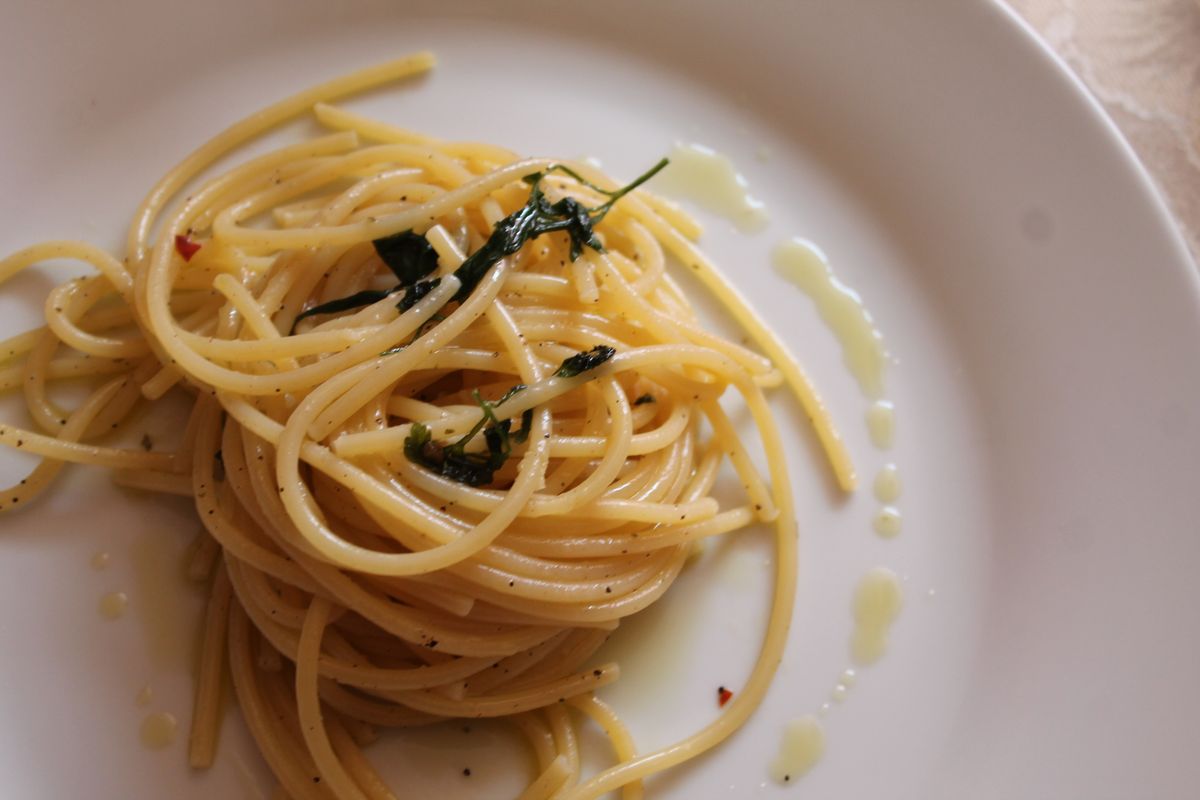
About this dish
Spaghetti aglio e olio means spaghetti with garlic and oil. It is described as a pasta dish typical of Naples, Italy, and it is popular because it is quick and uses cheap pantry staples that keep for a long time: dried pasta, garlic and olive oil. One older name for it, vermicelli alla Borbonica, is also on record.
The method is short. Garlic is lightly sautéed in olive oil, often with red pepper flakes, then tossed with spaghetti cooked in salted water. Chopped Italian parsley is the usual garnish. Cheese is left out of most traditional recipes, although grated Parmesan or pecorino is sometimes added. Recipes differ on the sauce itself: some add a little pasta cooking water to the oil, while others simply stir the oil into the drained pasta.
This version takes the pasta water route, because a few spoonfuls of starchy water turn a pool of oil into a light sauce that coats each strand. With only a handful of ingredients, nothing can hide. The pasta must be salted well, the garlic must stay pale gold, and the noodles must finish cooking in the pan. Get those three things right and the dish needs little else.
Ingredients and substitutions
Quantities are for 4 servings.
For the pasta
- 1 pound (450 g) spaghetti
- 4 quarts (3.84 L) water, for boiling
- 2 tablespoons (30 g) kosher salt, for the water
- 1 cup (240 ml) starchy pasta cooking water, reserved before draining
For the sauce
- 6 tablespoons (90 ml) extra-virgin olive oil
- 6 cloves garlic, peeled and sliced paper-thin
- 1 teaspoon (2 g) red pepper flakes, to taste
- ½ cup (30 g) fresh flat-leaf parsley, finely chopped
- freshly ground black pepper, to taste
- 1 tablespoon (15 ml) lemon juice, optional
- ½ cup (45 g) Pecorino Romano or Parmesan, finely grated, optional
Choosing your ingredients
Salt the water well. The pasta is the only part of the dish seasoned from the inside, and there is no heavy sauce to cover for bland noodles. The water should taste clearly salty, like a light broth, before the spaghetti goes in. Most of the salt stays in the pot, so the pasta ends up seasoned, not salty.
Pasta water is the key ingredient that is not on the shopping list. As spaghetti boils, it releases starch into the water. Oil and water do not mix on their own, but starch helps them hold together as a loose, creamy-looking sauce. Scoop it out at the end of cooking, when it is cloudiest. Tipping all of it down the sink is the most common reason for a greasy, separated result.
Use a fruity extra-virgin olive oil that you enjoy tasting plain, since it carries the whole dish. Slice the garlic instead of mincing it, because thin slices cook gently and flavor the oil without burning as fast as tiny pieces. Red pepper flakes vary a lot in heat, so start with the amount listed and add more at the end.
Possible substitutions
- Spaghetti: Linguine or spaghettini. Spaghettini cooks about a minute faster, so start checking it early.
- Red pepper flakes: 1 or 2 small dried whole chiles, crumbled, or 1 fresh red chile sliced thin and added with the garlic.
- Fresh garlic: No good substitute. Garlic powder and jarred minced garlic will not give the same sweet, toasty flavor.
- Flat-leaf parsley: Curly parsley, finely chopped, or leave it out and finish with an extra pinch of pepper flakes.
- Pecorino or Parmesan: Leave it out for the classic version, or scatter toasted breadcrumbs on top for crunch.
Step-by-step method
- Prep everything first. Slice the garlic as thin as you can, about 1/16 inch (2 mm), so the slices cook evenly and turn gold together. Chop the parsley and measure the pepper flakes. Set a heatproof cup near the stove for the pasta water. Once the garlic is in the pan, there is no time to chop.
- Boil and salt the water. Bring the water to a full, rolling boil in a large pot. This takes about 8 to 12 minutes, depending on your stove. Add the salt and stir. Taste a spoonful of the water: it should be clearly salty. A wide pot keeps the temperature up when the pasta goes in.
- Cook the spaghetti until nearly done. Add the spaghetti and stir for the first 30 seconds so it does not clump. Set a timer for 2 minutes less than the package time, usually 7 to 9 minutes. Fish out a strand at that point and bite it. It should be firm and still show a thin, pale chalky core in the center. It will finish cooking in the pan.
- Gently warm the garlic. When the pasta has about 5 minutes left, put the olive oil and sliced garlic in a cold 12-inch (30 cm) skillet and set it over medium-low heat. Cook for 3 to 5 minutes, stirring, until the garlic sizzles softly, smells sweet and turns pale gold at the edges. Add the pepper flakes for the last 30 seconds. If any slice turns brown, start over. Brown garlic tastes bitter.
- Save the pasta water. Before you drain anything, scoop out 1 cup (240 ml) of the cloudy pasta water. Carefully pour about 1/2 cup (120 ml) of it into the garlic oil. It will bubble and spit, so stand back. This stops the garlic from cooking further and starts the sauce.
- Finish the pasta in the pan. Lift the spaghetti straight from the pot into the skillet with tongs. Cook over medium heat for 1 to 2 minutes, tossing constantly, until the liquid thickens into a glossy, slightly cloudy sauce that clings to the strands. This step is called mantecare in Italian. If the pan looks dry, add a splash of the remaining water.
- Season and serve. Take the pan off the heat. Add the parsley, a few grinds of black pepper and the lemon juice or cheese if using them. Toss for 20 seconds, taste, and adjust the salt with a splash of pasta water, not more salt. Serve right away in warm bowls, because the sauce tightens as it cools.
Variations
Common additions are a few anchovy fillets melted into the oil with the garlic, or a handful of halved cherry tomatoes added to the pan for the last minute. Wikipedia also notes a version with mushrooms, called spaghetti aglio, olio e funghi. A squeeze of lemon brightens the oil, and toasted breadcrumbs add crunch.
For a more filling dinner, toss in a few handfuls of baby spinach or arugula at the end and let it wilt in the heat. Shrimp also work: sauté peeled shrimp in the oil until they turn opaque, usually 2 to 3 minutes, set them aside, and add them back at the end.
Storage and reheating
Aglio e olio is best eaten right away, since the pasta soaks up the sauce as it sits. Refrigerate leftovers within 2 hours, in a shallow airtight container, for 3 to 4 days. Reheat to 165°F (74°C), the temperature the USDA advises for leftovers.
Reheat in a skillet over medium-low heat with a splash of water, tossing until the sauce loosens and the pasta is hot all the way through. Do not keep homemade garlic oil at room temperature. Garlic stored in oil can support the bacteria that cause botulism, so refrigerate any extra and use it within a few days.
Common mistakes
- Browning the garlic. Garlic goes from gold to bitter in seconds. Start in cold oil over medium-low heat, stir often, and pull the pan off the heat if the slices color too fast.
- Under-salting the water. Without a sauce to hide behind, unseasoned pasta tastes flat. Salt the boiling water until it tastes clearly salty.
- Draining away the pasta water. The starchy water makes the sauce hold together. Scoop out a cup before draining, or move the spaghetti directly with tongs.
- Cooking the pasta fully in the pot. Pasta that is already soft turns mushy in the pan. Pull it 2 minutes early, while it still has a firm center.
- Adding too much water at once. A flood of water makes a thin, soupy sauce. Add a splash at a time and keep tossing over heat until it turns glossy.
Frequently asked questions
Does aglio e olio have cheese?
Not usually. Wikipedia notes that cheese is left out of most traditional recipes, though grated Parmesan or pecorino can be added. Try it plain first.
Why does my garlic taste bitter?
It was cooked too hot or too long. Garlic should be pale gold, never brown. Start in cold oil, use medium-low heat and add the pasta water as soon as the slices turn gold.
Can I use garlic powder or jarred garlic?
It will work in a pinch, but the flavor is flatter and less sweet. Fresh sliced garlic is the heart of this dish.
How do I keep the pasta from turning oily?
Use the pasta water and keep tossing. If the sauce looks greasy, add a splash of hot pasta water and toss over heat for another 30 seconds.