Mediterranean
Panzanella: Tuscan Tomato and Bread Salad
A Tuscan salad of oven-dried bread, salted ripe tomatoes, cucumber, red onion and basil, tossed in a tomato-juice dressing and rested 20 to 30 minutes.
By Lavin Food Editorial · Published
- Prep
- 30 min
- Cook
- 20 min
- Total
- 50 min
- Yield
- 4 servings
About this dish
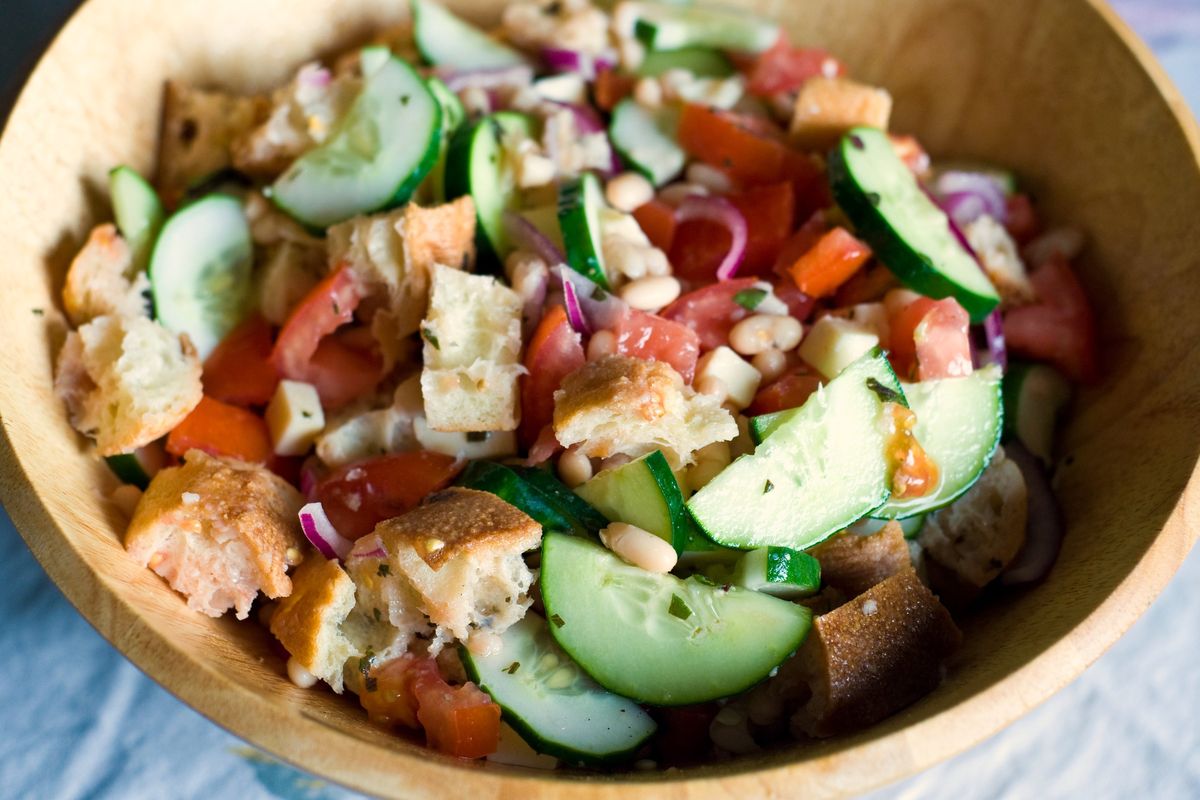
Panzanella is a Tuscan and Umbrian chopped salad of stale bread, tomatoes and onions, dressed with olive oil and vinegar. It is popular in summer and is also eaten in other parts of central Italy. Cucumbers and basil are common additions. Day-old bread soaks up tomato juice and oil, so nothing is wasted.
The history is only partly clear. According to Wikipedia, the 16th-century artist and poet Bronzino praised onions with oil and vinegar served with toast, and later wrote about a salad of onions, purslane and cucumbers. This is often read as a description of panzanella. The same article says the name is believed to join pane, the Italian word for bread, with zanella, a deep plate, and that panzanella was based on onions, not tomatoes, until the 20th century. Treat the older stories as likely, not proven.
The traditional version is bread-based: stale bread soaked in water and squeezed dry, then mixed with red onion, tomatoes, oil, vinegar, salt and pepper. This recipe keeps those parts but dries the bread in the oven instead of soaking it, which gives more bite and more control over texture. A soaked version is in the variations. Ripe, in-season tomatoes matter more than anything else here. The sources used are listed at the end of this page.
Ingredients and substitutions
Quantities are for 4 servings.
For the bread
- 6 cups (240 g) day-old crusty bread, cut or torn into 1-inch (2.5 cm) pieces
- 2 tablespoons (30 ml) extra-virgin olive oil
- ¼ teaspoon (1.5 g) fine salt, for the bread
For the salad
- 2 pounds (900 g) ripe tomatoes, cored and cut into 3/4-inch (2 cm) pieces
- 1 teaspoon (6 g) fine salt, for the tomatoes
- 1 medium (300 g) English cucumber, peeled in stripes, seeded and sliced
- 1 small (100 g) red onion, sliced very thin
- 3 tablespoons (45 ml) red wine vinegar
- 6 tablespoons (90 ml) extra-virgin olive oil, for the dressing, plus more to finish
- 1 clove garlic, grated, optional
- 1 cup (20 g) fresh basil leaves, loosely packed, torn
- freshly ground black pepper, to taste
Choosing your ingredients
Choose a crusty loaf with an open crumb, such as a country loaf, ciabatta or sourdough. Soft sandwich bread turns to paste in the dressing. Cubes pack differently, so weigh them if you can: six cups come to about 240 g (8.5 oz).
Ripe tomatoes do most of the work. Pick ones that smell sweet at the stem and give a little under your thumb, and keep them on the counter, not in the refrigerator, because cold dulls their flavor. Salt draws out their juice, and that juice becomes the base of the dressing.
Be honest about the season. In winter, large tomatoes are often pale, watery and mealy, and no technique fixes that. Cherry or grape tomatoes are the safer choice then. Expect a pleasant salad, not a memorable one.
Use a fruity extra-virgin olive oil, since it is not cooked and you will taste it. Red wine vinegar is sharp, so add the listed amount first and adjust at the end. Seed the cucumber so its watery centers do not thin the salad.
Possible substitutions
- Day-old crusty bread: Any sturdy loaf with a thick crust. Gluten-free crusty bread can work, but it softens fast, so check it early.
- Red wine vinegar: Sherry vinegar or white wine vinegar, in the same amount. Balsamic is sweeter and stains the bread dark, so use half as much.
- Red onion: One shallot, or the white parts of 3 scallions. Both are milder.
- Large ripe tomatoes (off-season): 2 pounds (900 g) cherry or grape tomatoes, halved. Add a small pinch of sugar to the dressing if they taste flat.
- English cucumber: Leave it out and add a little more tomato. Many versions skip it.
Step-by-step method
- Dry the bread. Heat the oven to 300°F (150°C) with a rack in the middle. Toss the bread pieces on a rimmed baking sheet with the oil and salt listed for the bread. Bake for 15 to 20 minutes, stirring once, until the pieces feel dry and hard and the edges are pale gold. Cool for 10 minutes.
- Salt and drain the tomatoes. Put the cut tomatoes in a colander set over a large bowl. Sprinkle with the salt listed for the tomatoes, toss, and let them drain for 15 to 20 minutes, stirring once. You are done when a pool of pink, seedy juice has collected in the bowl and the tomato pieces look slightly softened. Keep that juice, because it is the base of the dressing.
- Mellow the onion and prepare the cucumber. Slice the red onion as thin as you can and put it in a large serving bowl with the vinegar. Leave it for 10 minutes, until the slices turn bright pink and lose their sharp raw smell. Meanwhile, peel the cucumber in alternating stripes, halve it lengthwise, scrape out the seeds with a spoon and cut it into quarter-inch (6 mm) half-moons.
- Make the dressing. Pour the tomato juice into the bowl with the onion and vinegar. Grate in the garlic if using it and add several grinds of pepper. Whisk in the oil in a thin stream until the dressing looks cloudy and slightly thick. It should taste bright and a little salty. Add vinegar if it is flat, or a pinch of salt if it is dull.
- Toss everything together. Add the drained tomatoes, cucumber and cooled bread to the bowl. Toss with clean hands or two large spoons for about 1 minute, until every piece of bread looks glossy and stained pink at the edges. Hold the basil back for now.
- Rest the salad. Leave the bowl at room temperature for 20 to 30 minutes, tossing once halfway. The bread should soften and turn rosy on the outside while the center of each piece keeps a slight chew. If the pieces are soggy all the way through, dry the bread longer next time. In a kitchen above 90°F (32°C), rest the bowl in the refrigerator instead.
- Finish and serve. Tear the basil over the salad and fold it in. Taste a piece of bread with a piece of tomato, then adjust with salt, pepper, a splash of vinegar or a drizzle of olive oil. Spoon it into wide bowls with plenty of juice. Serve within 30 minutes. Cut tomatoes should not sit out for more than 2 hours in total, or 1 hour above 90°F (32°C).
Variations
For the traditional soaked method, skip the oven. Tear stale bread into chunks, dip them in cold water for 1 to 2 minutes, then squeeze each handful until damp but not dripping. Crumble the bread into the dressing and tomatoes and rest it for 10 to 15 minutes. The result is softer and closer to a bread-and-tomato mash.
Wikipedia lists many optional additions, including olives, capers, anchovies, mozzarella, boiled egg and tuna, and notes that Florentine traditionalists disapprove of them. For a more filling bowl, add a drained, rinsed can of white beans (15 oz, or 425 g) or torn fresh mozzarella just before serving.
Storage and reheating
Dried bread pieces keep in an airtight container at room temperature for up to 2 days, so you can prepare them ahead. Combine everything only 20 to 30 minutes before you plan to eat.
Panzanella is best the same day. Refrigerate leftovers within 2 hours, or within 1 hour if the room is above 90°F (32°C). USDA guidance allows refrigerated leftovers for 3 to 4 days, but the bread turns very soft after about a day, so eat it within 1 day. Do not freeze it, because tomato and cucumber turn watery when thawed.
Common mistakes
- Using soft sandwich bread. Soft crumb collapses into paste. Use a crusty loaf with an open crumb, and dry it until the pieces feel hard when tapped.
- Skipping the salting step. Without salt and draining, the tomatoes release water later and the dressing tastes thin. Salt first, drain for 15 to 20 minutes and use the juice.
- Making it with pale tomatoes. Out-of-season tomatoes taste of little, and the vinegar will dominate. Wait for ripe ones, or use cherry or grape tomatoes in colder months.
- Adding basil too early. Torn basil darkens when it sits in vinegar for half an hour. Fold it in just before serving.
- Letting the salad sit too long. After about 30 minutes the bread loses all chew. Serve it on time, and refrigerate it if it must wait.
Frequently asked questions
Is panzanella supposed to be soggy?
The traditional version uses bread soaked in water and squeezed dry, so it is soft. Many modern versions use toasted or oven-dried bread for more chew. This recipe aims for a soft outside and a slightly chewy center.
Can I make it ahead?
Prepare the dried bread up to 2 days ahead and keep it airtight. Salt and drain the tomatoes and make the dressing earlier on the day, then combine everything 20 to 30 minutes before serving.
Can I make it with winter tomatoes?
You can, but the result will be flatter. Cherry or grape tomatoes taste better in cold months, and a small pinch of sugar in the dressing can balance any sharpness.
Do I need to peel the tomatoes?
No. The skin is thin on ripe tomatoes and softens in the dressing. If the skins feel tough, peel them first.