Mediterranean
Greek Lemon Chicken and Roasted Potatoes
Bone-in chicken and potato wedges roasted together in one pan with lemon, garlic, oregano and olive oil, ready in about 1 hour 25 minutes.
By Lavin Food Editorial · Published
- Prep
- 25 min
- Cook
- 1 hr
- Total
- 1 hr 25 min
- Yield
- 4 servings
About this dish
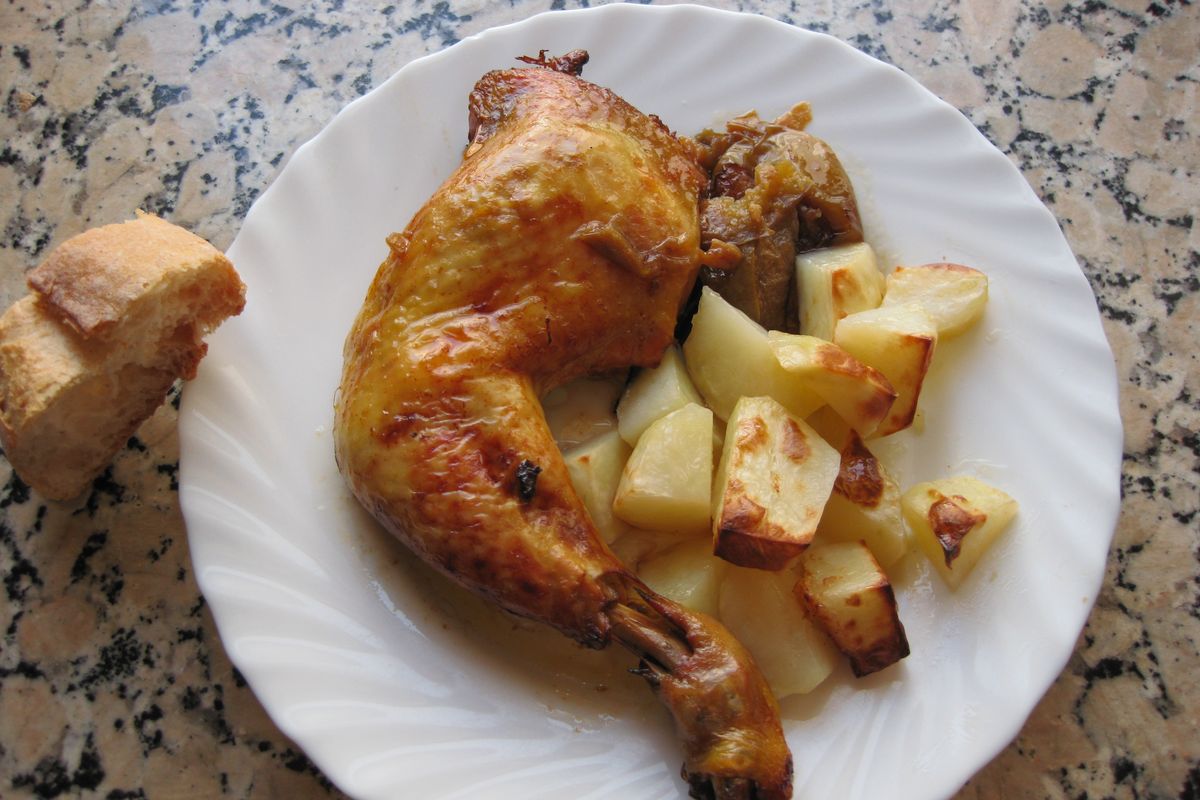
Greek lemon chicken and potatoes is a one-pan roast. Bone-in chicken pieces sit on potato wedges, with olive oil, lemon juice, garlic, oregano and a little stock. The skin turns golden, and the potatoes underneath soak up the juices. The Greek name, kotopoulo lemonato me patates, simply means lemon chicken with potatoes.
No source we read traces this exact dish to one place or date, so this page makes no claim about where it began. It is a home-style dish with many local versions. Wikipedia's article on Greek cuisine lists lemon juice, olive oil and potatoes among common ingredients, and it says oregano and garlic are used more often in Greek cooking than in other Mediterranean cuisines. That fits the flavors here, but it does not settle the dish's history.
This version uses chicken thighs and drumsticks, which stay juicy through a long roast, and waxy potatoes that hold their shape. The aim is crisp, golden skin on top and soft, lemony potatoes underneath, with a little savory pan sauce.
Ingredients and substitutions
Quantities are for 4 servings.
For the chicken and potatoes
- 3 pounds (1.36 kg) bone-in, skin-on chicken thighs and drumsticks
- 2 pounds (900 g) Yukon Gold potatoes, scrubbed, cut into wedges
- 4 tablespoons (60 ml) extra-virgin olive oil
- 3 tablespoons (45 ml) fresh lemon juice, from about 1 1/2 lemons
- 6 cloves garlic, minced
- 2 teaspoons (2 g) dried oregano
- 1½ teaspoons (9 g) fine salt
- ½ teaspoon (1 g) freshly ground black pepper
- ¾ cup (180 ml) low-sodium chicken stock
To finish
- 1 medium lemon, cut into wedges
- 2 tablespoons (8 g) fresh parsley, chopped
Choosing your ingredients
Bone-in, skin-on thighs and drumsticks are the best fit. The bone and fat protect the meat during a long roast, and the skin crisps above the potatoes. Breast meat dries out long before the potatoes are tender, so if you use it, take the breast pieces out earlier than the rest.
Yukon Gold or other waxy potatoes keep their shape and turn creamy inside. Russets work too, but their edges break down. Cut wedges about 1 1/2 inches (4 cm) thick so they finish with the chicken. Leave the skins on.
Lemon needs a light hand. Juice that roasts for an hour can turn sharp and a little bitter. The recipe puts only part of the lemon in the pan and saves the wedges for the end, so you add fresh brightness at the table. Bottled juice tastes flat, so squeeze real lemons.
Dried oregano is the usual choice. It holds up to the heat, while fresh oregano fades in a long roast. Use a roasting pan or rimmed baking sheet about 13 by 18 inches (33 by 46 cm), so the pieces sit in a single layer.
Possible substitutions
- Yukon Gold potatoes: Red potatoes, or russets cut a little larger. Russets give a softer, starchier result.
- Chicken thighs and drumsticks: A whole chicken cut into 8 pieces. Add the breast pieces about 15 minutes later.
- Chicken stock: Water with an extra pinch of salt, or half water and half dry white wine.
- Dried oregano: Dried thyme or marjoram, in the same amount.
- Fresh lemon juice: No good swap. Use fresh lemons, or leave out the wedges for a milder dish.
- Fresh parsley: Chopped fresh dill.
Step-by-step method
- Heat the oven and prepare the chicken. Set a rack in the middle of the oven and heat it to 425°F (220°C). Pat the chicken very dry with paper towels, because dry skin crisps and wet skin steams. Season both sides with half of the salt and all of the pepper. Do not rinse the chicken, and wash your hands and board afterward.
- Make the lemon marinade. In a large bowl, whisk the olive oil, lemon juice, garlic, oregano and the rest of the salt. Add the potato wedges and toss until every piece is coated and smells strongly of garlic. Spread the potatoes in the roasting pan, leaving the leftover marinade in the bowl.
- Coat the chicken and let it rest. Put the chicken in the same bowl and turn the pieces in the leftover marinade until lightly coated. Let it sit for 15 to 30 minutes while the oven heats. Much longer in the lemon can leave the meat surface dull and chalky, so keep it short.
- Assemble the pan. Lay the chicken skin side up on top of the potatoes, with a little space between pieces. Pour the stock into the pan around the edges, not over the chicken, so the skin stays dry and can crisp. The liquid should come about a third of the way up the potatoes.
- Roast and turn the potatoes. Roast for 25 to 30 minutes, until the skin is lightly golden and the juices bubble. Carefully turn the potatoes and spoon some pan juices over them, not over the skin. If the pan looks dry, add a splash of stock or water. Return it to the oven.
- Roast until the skin is crisp. Roast for another 20 to 30 minutes. The skin should be deep golden and crackly, the potato edges browned and the sauce thick and glossy. Push an instant-read thermometer into the thickest part of a thigh without touching bone. It must read at least 165°F (74°C). Dark meat is more tender at 175°F to 185°F (80°C to 85°C), so give it more time.
- Rest and finish with lemon. Take the pan out and rest the chicken in it for 10 minutes, while the potatoes keep soaking up sauce. Squeeze 1 or 2 lemon wedges over the pan, taste a potato and add salt if needed, then scatter the parsley on top. If the skin looks pale, broil for 2 to 3 minutes, watching closely.
- Serve from the pan. Bring the pan to the table and spoon potatoes and pan juices onto warm plates, with a piece of chicken on each. Offer the remaining lemon wedges on the side. A tomato and cucumber salad or some bread for mopping the sauce goes well. Serve while the skin is still crisp.
Variations
Versions differ from kitchen to kitchen. Some cooks stir a spoonful of mustard into the marinade, tuck sliced onion under the chicken, or crumble a little feta over the potatoes at the end. A pinch of smoked paprika or red pepper flakes adds gentle warmth.
For more vegetables, add a sliced onion, a few carrots or a handful of whole olives to the potatoes for the last 20 minutes. Keep them under the chicken, not on top, so the skin stays dry.
Storage and reheating
Cool leftovers quickly and refrigerate them within 2 hours of cooking. Keep chicken and potatoes, with some pan juices, in a shallow airtight container in the refrigerator for 3 to 4 days, as the USDA advises for cooked leftovers. The crisp skin will soften.
To reheat, spread the pieces on a baking sheet and warm them in a 400°F (200°C) oven for 15 to 20 minutes, until steaming hot all the way through, at 165°F (74°C). This also helps the skin crisp again. A microwave is faster but leaves the skin soft. Do not leave the pan on the counter overnight.
Common mistakes
- Using too much lemon juice. Lemon that roasts for an hour can turn sharp and bitter. Keep the juice in the pan to the amount listed and add fresh lemon at the end instead.
- Pouring liquid over the skin. Wet skin steams instead of crisping. Pour the stock around the chicken and spoon pan juices onto the potatoes only.
- Crowding the pan. Packed pieces release steam and brown poorly. Use a pan big enough for one layer with small gaps, or use two pans.
- Trusting the clock, not a thermometer. Oven times shift with the pan and the size of the pieces. Check the thickest part of a thigh for at least 165°F (74°C).
- Washing the raw chicken. Rinsing raw chicken splashes bacteria around the sink. Pat it dry with paper towels, then wash your hands, board and knife.
Frequently asked questions
Can I make this with boneless chicken?
Yes, but the result changes. Boneless thighs cook in about 30 to 35 minutes at 425°F (220°C), so add them after the potatoes have roasted for about 20 minutes. They give the potatoes less flavor, and the skinless meat will not crisp.
Why are my potatoes still hard?
Wedges that are too thick, or a pan with too little liquid, are the usual cause. Cut them about 1 1/2 inches (4 cm) thick, turn them halfway and add a splash of stock if the pan dries out.
Can I prepare it ahead?
Partly. Coat the potatoes in the marinade and refrigerate them, covered, for up to 8 hours. Season the chicken only shortly before roasting, because long contact with lemon changes the meat's texture.
Is the chicken done at 165°F (74°C)?
That is the safe minimum for poultry, measured in the thickest part without touching bone. Thighs and drumsticks have more connective tissue, so they are often more tender at 175°F to 185°F (80°C to 85°C).