European Classics & Core Techniques
Mushroom Risotto: Creamy Italian Rice, Step by Step
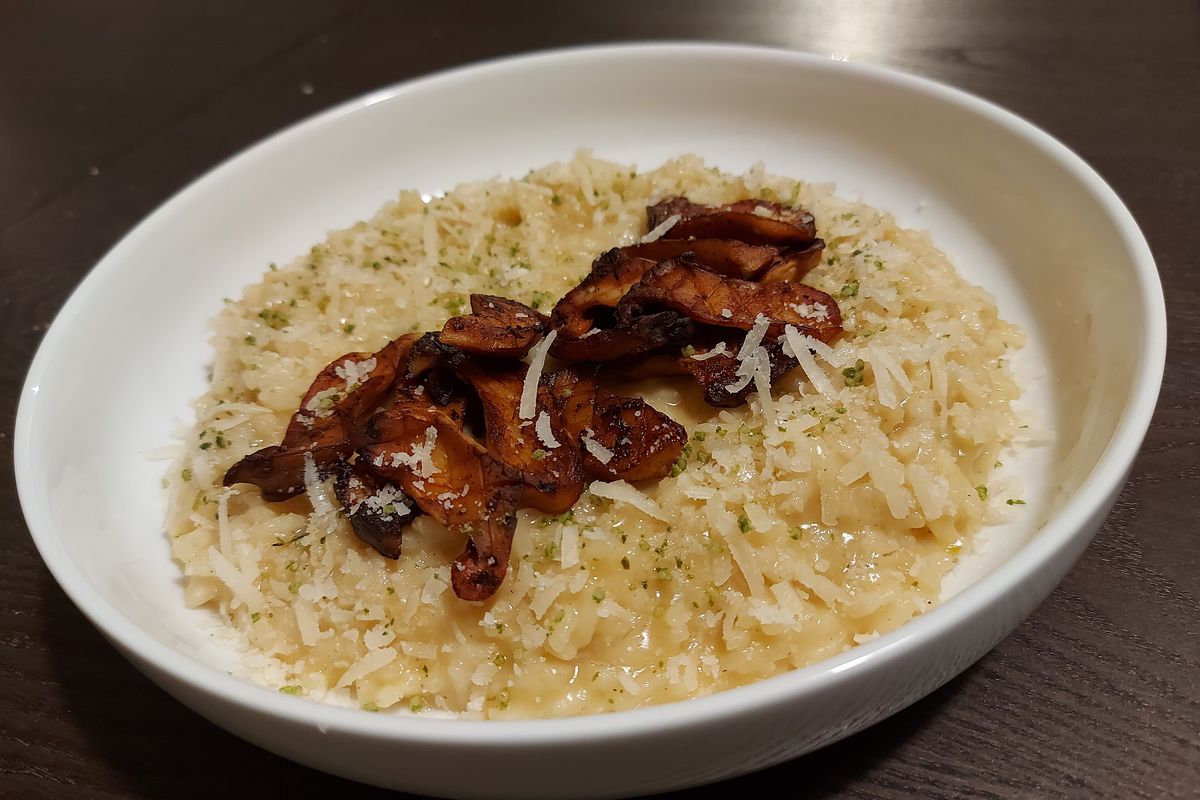
Arborio rice stirred with hot stock, white wine and well-browned mushrooms, then finished with cold butter and Parmesan. Ready in about 50 minutes.
By Lavin Food Editorial · Published
- Prep
- 15 min
- Cook
- 35 min
- Total
- 50 min
- Yield
- 4 servings
About this dish
Risotto is an Italian rice dish cooked with broth until it turns creamy. Wikipedia notes that the broth can come from meat, fish or vegetables, and that many risottos contain butter, onion, white wine and Parmesan. In Italy it is usually a first course, the primo. The creaminess comes from the starch in the rice, so a well-made risotto is rich even with no cream in it.
The origin is only partly known. Wikipedia says risotto is believed to have started in what is now Lombardy, and that the first recipe identifiable as risotto dates from 1809. It adds that who invented it in Milan cannot be said with certainty. The sources we read give no date or place for the mushroom version, so this page makes none.
This version browns cremini mushrooms in a separate pan and stirs them in at the end, so they keep their color and chew. The goal is tender rice with a slight bite in the center, in a sauce loose enough to spread on the plate.
Ingredients and substitutions
Quantities are for 4 servings.
For the mushrooms
- 1 pound (450 g) cremini mushrooms, wiped clean and sliced about 1/4 inch (6 mm) thick
- 2 tablespoons (30 ml) olive oil
- ½ oz (14 g) dried porcini mushrooms, optional, soaked in 1 cup (240 ml) hot water
- 1 teaspoon (1 g) fresh thyme leaves
For the risotto
- 5 cups (1.2 L) vegetable or chicken stock, kept hot in a separate pot
- 2 tablespoons (28 g) unsalted butter, for the onion
- 1 medium (150 g) yellow onion, very finely chopped
- 2 cloves garlic, minced
- 1½ cups (300 g) Arborio or Carnaroli rice, do not rinse
- ½ cup (120 ml) dry white wine
- ½ teaspoon (3 g) fine salt, plus more to taste
To finish
- 2 tablespoons (28 g) unsalted butter, cold, cut into small cubes
- ¾ cup (75 g) Parmesan cheese, finely grated, plus more for the table
- 2 tablespoons (8 g) fresh parsley, chopped
- freshly ground black pepper, to taste
Choosing your ingredients
Risotto needs a round, medium-grain rice with plenty of starch. Wikipedia lists Arborio, Carnaroli and Vialone Nano among the main varieties used in Italy. It says Carnaroli has more starch, a firmer texture and a longer grain than Arborio, and holds its shape better. Vialone Nano is smaller and cooks faster. Arborio is the easiest to find in most stores. Do not rinse the rice, because rinsing removes the surface starch that makes the sauce creamy.
Cremini have more flavor than white button mushrooms and brown well. Wipe them with a damp towel instead of soaking them, since wet mushrooms steam. If you use dried porcini, soak them in hot water for 20 minutes and strain the liquid through a coffee filter into the stock to catch grit.
Use a stock you would enjoy on its own, and keep it hot, because cold stock stops the cooking each time it goes in. Choose low-sodium stock and season at the end. The wine should be dry and crisp, not sweet.
A wide, heavy pot, such as a 3- to 4-quart (3 to 4 L) Dutch oven, heats the rice evenly. Traditional Parmesan is made with animal rennet, so strict vegetarians should look for a cheese labeled vegetarian.
Possible substitutions
- Arborio rice: Carnaroli or Vialone Nano, same weight. Long-grain or basmati rice will not turn creamy.
- Cremini mushrooms: Button, shiitake (stems removed), oyster or portobello. A mix gives more flavor than one kind.
- Dry white wine: Dry vermouth, or an extra 1/2 cup (120 ml) of stock with 1 teaspoon of lemon juice stirred in at the end.
- Chicken stock: Vegetable stock, which keeps the dish vegetarian.
- Parmesan cheese: Grana Padano or pecorino Romano. Pecorino is saltier, so taste before adding more salt.
Step-by-step method
- Heat the stock and soak the porcini. Bring the stock to a bare simmer in a saucepan over low heat and keep it there until the risotto is done. If using dried porcini, cover them with the hot water for 20 minutes, then lift them out, chop them and strain the liquid into the stock. Wipe and slice the fresh mushrooms while you wait.
- Brown the mushrooms separately. Heat a 12-inch (30 cm) skillet over medium-high heat until very hot, then add half the oil and half the mushrooms in one layer. Leave them alone for 2 to 3 minutes, until the undersides are deep golden, then stir and cook 2 minutes more. Move to a bowl and repeat. Return all of them to the pan with the thyme and porcini, cook 30 seconds, and set aside.
- Soften the onion. Melt the first measure of butter in the risotto pot over medium heat. Add the onion and the salt and cook for 4 to 5 minutes, stirring often, until soft and translucent with no brown edges. Stir in the garlic and cook for 30 seconds, until fragrant. Lower the heat if anything starts to color.
- Toast the rice. Add the dry rice and stir for 2 to 3 minutes. This step is called tostatura. Each grain gets coated in fat, and the edges turn translucent while the center stays white. The rice should smell lightly nutty and look dry and sandy. Do not let it brown.
- Add the wine. Pour in the wine and stir. It will hiss and steam. Keep stirring for 1 to 2 minutes, until the liquid is absorbed and a spoon dragged across the bottom leaves a clear trail. The sharp smell of alcohol should fade into something sweeter.
- Add the stock a ladle at a time. Add one ladle of hot stock and stir slowly and often. When the liquid is almost gone and the rice looks creamy rather than soupy, add the next ladle. Keep a gentle simmer and repeat for 16 to 20 minutes. Stirring rubs the grains together and releases their starch. Lower the heat if the rice sticks.
- Test the rice and fold in the mushrooms. After about 16 minutes, taste a few grains. They should be tender outside with a small firm point in the center, a texture called al dente. The mixture should be thick but flowing. Add stock a splash at a time until it is right, then take the pot off the heat while the rice is still slightly underdone, and fold in the mushrooms.
- Finish with butter and Parmesan. With the pot off the heat, beat in the cold butter and the Parmesan with a wooden spoon for 30 to 60 seconds. This finish is called mantecatura. The risotto turns glossy and loose. Rest for 1 to 2 minutes. It should spread slowly when you tilt the pot, a look called all'onda, meaning wave-like. Loosen with stock if stiff, season, add the parsley and serve at once.
Variations
For a Milanese note, steep a pinch of saffron threads in a few spoonfuls of the hot stock and stir it in with the wine. Wikipedia notes that saffron was originally used in risotto for flavor and its yellow color. Stir in 5 ounces (140 g) of baby spinach in the last minute so it wilts into the rice.
For a dairy-free version, use olive oil in place of both measures of butter and leave out the Parmesan, adding extra salt and a squeeze of lemon to taste.
Storage and reheating
Risotto is best served right away, since it keeps thickening as it stands. Cooked rice needs careful handling. Refrigerate leftovers within 2 hours of cooking, or within 1 hour if the room is above 90°F (32°C), and spread them in a shallow container so they cool quickly. Eat within 1 day to be safe; the general limit for refrigerated leftovers is 3 to 4 days.
Reheat in a pan over medium heat with a splash of stock or water, stirring, until steaming hot all the way through, to 165°F (74°C). Freezing works for about 3 months, but the rice turns soft.
Common mistakes
- Crowding the mushrooms. Too many in one pan release water and steam instead of browning. Use a hot, wide skillet, cook in two batches and salt only at the end.
- Adding cold stock. Cold stock drops the temperature of the pot and cooks the rice unevenly. Keep the stock at a bare simmer the whole time.
- Rinsing the rice. Washing removes the surface starch that makes the sauce creamy. Use the rice straight from the bag.
- Pouring in all the stock at once. The rice boils instead of building starch through stirring. Add one ladle at a time, when the last one is almost absorbed.
- Cooking until fully soft. Rice that is soft in the pot turns mushy on the plate. Stop while a firm point still shows in the grain.
Frequently asked questions
Do I have to stir constantly?
Often, not without a break. Stirring rubs the grains together and releases starch. Stir steadily after each stock addition. Short pauses to add stock or taste are fine.
Why is my risotto gluey?
Usually the rice cooked too long or sat after finishing. Stop while the center still has a slight bite, serve right away, and loosen with a splash of hot stock if needed.
Can I make it ahead for guests?
Not well. Risotto is best made and served at once, and rice that is partly cooked and cooled needs careful chilling. Prepare the mushrooms, stock and onion ahead, then cook the rice just before the meal.
Is this recipe vegetarian?
Yes, if you use vegetable stock and a cheese made without animal rennet. Traditional Parmesan uses animal rennet, so check the label.