European Classics & Core Techniques
Ratatouille: Provençal Vegetable Stew with Eggplant and Zucchini
A Provençal stew of eggplant, zucchini, peppers, onion and tomatoes, each cooked on its own first, then simmered together with thyme and basil.
By Lavin Food Editorial · Published
- Prep
- 30 min
- Cook
- 1 hr 5 min
- Total
- 1 hr 35 min
- Yield
- 6 servings
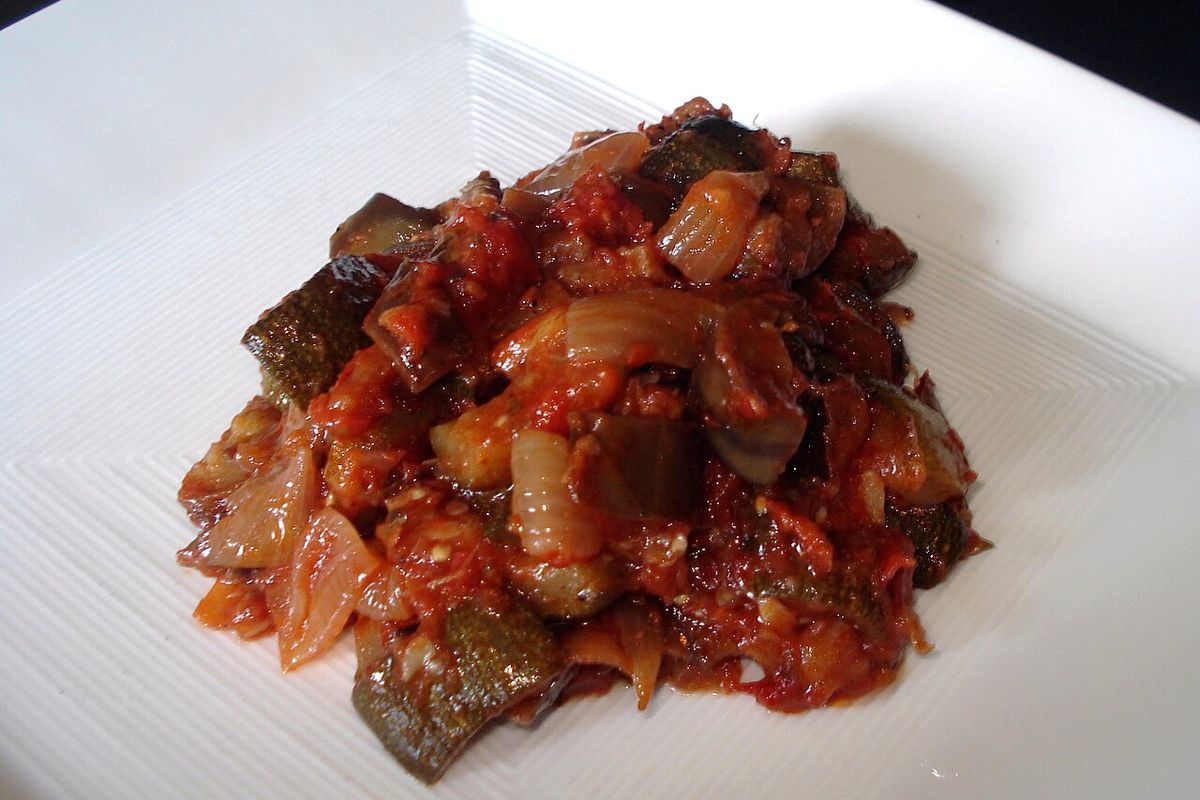
About this dish
Ratatouille is a vegetable dish from Provence, in southern France, and it is especially linked with Nice and the area around it. It is a stew, or a sauté, of summer vegetables cooked in olive oil: tomatoes, onions, garlic, zucchini, eggplant and bell peppers, with herbs of the region such as thyme, bay and basil. Wikipedia describes it as a rural dish, a practical way to use a surplus of summer produce. That fits Provençal cooking in general, which rests on fresh local produce, garlic and olive oil.
The dish is younger than many people assume. The name comes from the Occitan word ratatolha, related to French verbs meaning to stir or to toss, and in the early 1800s it could describe any coarse mixed stew. Tomatoes, peppers and squash reached France only after contact with the Americas and were not widely accepted as food until the 18th and 19th centuries. Wikipedia says a modern version does not appear in print until about 1930.
Cooks still disagree on method. Wikipedia quotes Larousse Gastronomique as saying that, according to purists, the vegetables should be cooked separately, then combined and cooked slowly together. Many home recipes use one pot instead. This recipe follows the separate-pan route. It takes more time, but each vegetable keeps its own texture, and the stew tastes layered instead of muddy. Do not confuse it with confit byaldi, a later restaurant dish of thin baked slices, credited to the chef Michel Guérard.
Ingredients and substitutions
Quantities are for 6 servings.
For the vegetables
- 1 pound (450 g) eggplant, 1 large, cut into 3/4-inch (2 cm) cubes
- 1 teaspoon (6 g) fine salt, for salting the eggplant
- 2 medium (400 g) zucchini, cut into 3/4-inch (2 cm) pieces
- 4 tablespoons (60 ml) olive oil, for browning the eggplant and zucchini
- 1 large (280 g) yellow onion, cut into 1/2-inch (1 cm) dice
- 2 medium (350 g) red or yellow bell peppers, seeded and cut into 3/4-inch (2 cm) pieces
- 2 tablespoons (30 ml) olive oil, for the onion and peppers
- 4 cloves garlic, thinly sliced
For the sauce and finish
- 1½ pounds (680 g) ripe tomatoes, cored and chopped, with their juices
- 4 sprigs fresh thyme sprigs
- 1 whole bay leaf
- 1 teaspoon (6 g) fine salt, for the stew, to taste
- freshly ground black pepper, to taste
- ¼ cup (10 g) fresh basil leaves, torn
- 1 tablespoon (15 ml) extra-virgin olive oil, for drizzling at the end
Choosing your ingredients
Tomatoes carry the sauce, so use the ripest ones you can find. In late summer, deep-colored plum or round tomatoes work well, and there is no need to peel them. Out of season, use one 28-ounce (800 g) can of whole peeled tomatoes, crushed by hand. Pale, hard winter tomatoes give a sharp, watery result.
Salting eggplant is a habit from the days when many varieties tasted noticeably bitter. Most eggplant sold today is milder, so the bitterness argument is weaker than it used to be. The salt still draws out some water, so the cubes brown instead of steaming, and it seasons the flesh. If you are short on time you can skip it.
Choose firm, shiny eggplant and medium zucchini, since very large ones have watery centers and big seeds. Use a wide skillet for browning, because crowded vegetables steam and turn gray.
Possible substitutions
- Fresh tomatoes: One 28-ounce (800 g) can of whole peeled tomatoes, crushed by hand. Simmer a few minutes longer.
- Fresh thyme sprigs: 1 teaspoon dried thyme or herbes de Provence, added with the tomatoes.
- Fresh basil: Fresh flat-leaf parsley or a little fresh marjoram. Dried basil tastes flat here.
- Red or yellow bell peppers: Green peppers, which taste more grassy, or a mix of colors.
- Olive oil: A mild olive oil browns better than a peppery one. Save the best bottle for the final drizzle.
Step-by-step method
- Salt the eggplant. Toss the eggplant cubes with the 1 teaspoon of salt in a colander set over a bowl. Let them stand for 30 minutes. Beads of liquid will form on the surface. Press the cubes between clean towels until dry. Dry cubes brown instead of steaming.
- Cut the other vegetables. While the eggplant rests, cut the zucchini, onion and peppers, slice the garlic and chop the tomatoes. Keep each vegetable in its own pile, because they go into the pan at different times. Cut pieces of similar size so they cook at the same pace.
- Brown the eggplant. Heat a large skillet over medium-high heat and add some of the browning oil. Cook the eggplant in two batches, stirring every minute or so, for 7 to 9 minutes per batch. The cubes should be golden on several sides and creamy when pressed. Move each batch to a plate, adding a little oil between batches.
- Brown the zucchini. Add the rest of the browning oil to the same skillet and heat it until it shimmers. Cook the zucchini in a single layer, in two batches if needed, for 4 to 6 minutes, turning once or twice, until the edges are golden and the centers still firm. Add them to the plate with the eggplant.
- Soften the onion and peppers. Heat the oil for the onion and peppers in a 5-quart (4.7 L) pot over medium heat. Add the onion and a pinch of salt and cook for 6 to 8 minutes, until translucent. Add the peppers and cook 8 to 10 minutes more, until soft. Stir in the garlic for the last minute, until fragrant but not browned.
- Cook the tomatoes into a sauce. Add the tomatoes with their juices, the thyme, the bay leaf, the salt and a few grinds of pepper. Bring to a simmer, then cook over medium heat for 10 to 15 minutes, stirring now and then. The sauce is ready when it is thick and jammy and a spoon leaves a trail on the pot bottom.
- Combine and simmer. Fold the browned eggplant and zucchini into the sauce. Cover the pot partly, lower the heat, and simmer gently for 15 to 20 minutes, stirring once or twice with a light hand. The stew is ready when the eggplant crushes easily against the pot but the zucchini still holds its shape. If it looks watery, uncover it for the last 5 minutes.
- Rest and finish. Remove the thyme stems and the bay leaf, take the pot off the heat and let it stand for at least 10 minutes. Taste and adjust the salt and pepper. Stir in the torn basil, drizzle with the extra-virgin olive oil and serve warm or at room temperature.
Variations
For a one-pot version, skip the separate browning. Cook the onion and peppers, add the eggplant and soften it for about 10 minutes, then add the zucchini and tomatoes and simmer, covered, for 30 to 40 minutes. The vegetables come out softer and more blended.
Serve ratatouille over polenta, rice or pasta, on toasted bread, or beside roast chicken or grilled fish. Crumbled goat cheese or a spoonful of olive tapenade goes well on top. Wikipedia lists many relatives, among them piperade in France, pisto in Spain and caponata in Italy.
Storage and reheating
Cool the ratatouille quickly and refrigerate it within 2 hours of cooking, or within 1 hour if the room is above 90°F (32°C). Store it covered in the refrigerator for 3 to 4 days. Many cooks find it tastes better the next day, once the flavors have blended.
It freezes for about 3 months, though the zucchini and eggplant will be softer after thawing. Thaw it overnight in the refrigerator, then reheat it gently with a splash of water until steaming hot, to 165°F (74°C). If you serve it at room temperature, do not leave it out for more than 2 hours.
Common mistakes
- Crowding the skillet. Too many cubes release steam, and the vegetables turn gray and limp. Cook the eggplant and zucchini in batches, in a single layer, until golden.
- Skipping the drying step. Wet eggplant spatters in hot oil and will not brown well. Pat the salted cubes dry before they go into the pan.
- Cooking the zucchini until soft. Zucchini keeps cooking in the stew, so browning it fully turns it to mush. Take it off the heat while the center is still firm.
- Rushing the tomato sauce. If the tomatoes are not cooked down before the other vegetables return, the stew stays thin and tastes raw. Wait until the sauce is thick and jammy.
Frequently asked questions
Do I have to salt the eggplant?
No. Modern eggplant is usually less bitter than older varieties, so salting is mostly about texture. It removes some water and helps the cubes brown. If you skip it, pat the cubes dry.
Why cook each vegetable separately?
Each vegetable needs a different time. Browning them one at a time keeps the eggplant creamy and the zucchini intact. One-pot versions are also common.
Is ratatouille served hot or cold?
Both are common. It is good warm and good at room temperature. Many people prefer it the next day.
Is this the dish from the animated film?
Not exactly. According to Wikipedia, the film's version was built on confit byaldi, a layered, sliced and baked dish. This recipe is the rustic stew cooked in a pot.