European Classics & Core Techniques
Classic Roast Chicken with Pan Gravy
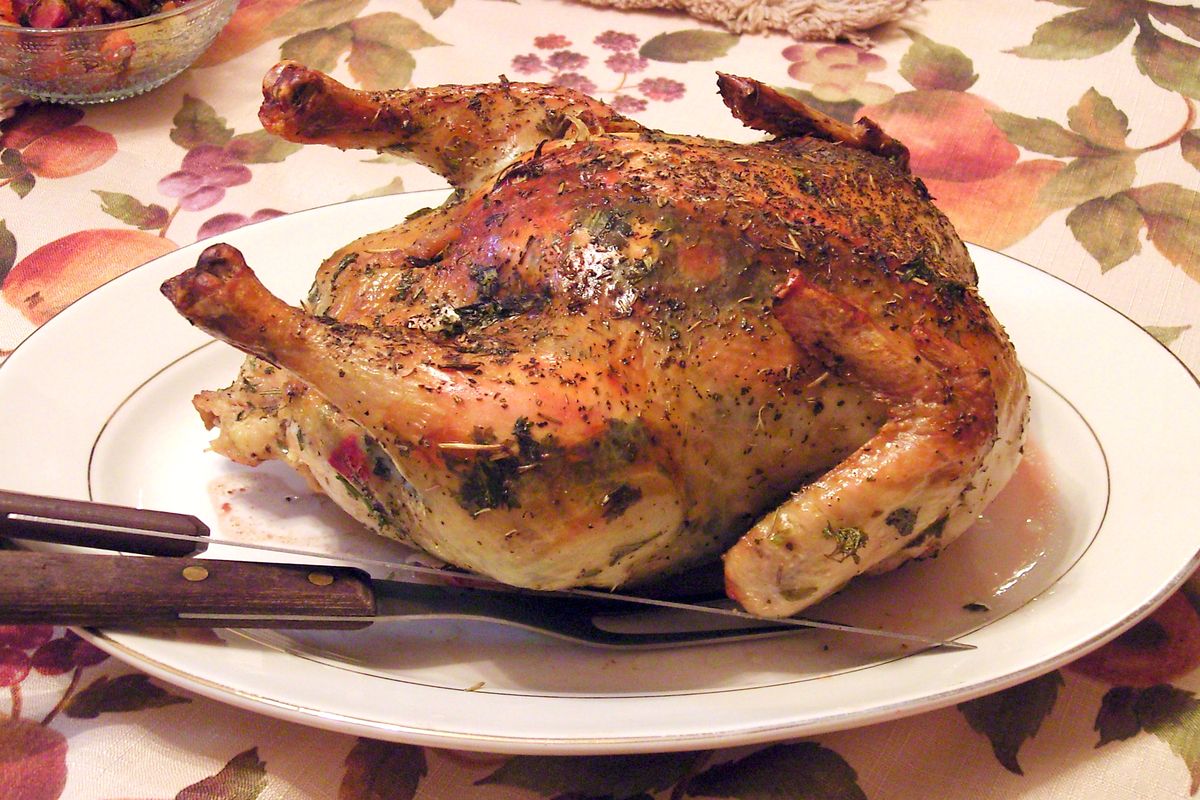
A 4-pound whole chicken, salted ahead and roasted at 425°F until the skin is golden, then rested and served with gravy made in the same pan.
By Lavin Food Editorial · Published
- Prep
- 25 min
- Cook
- 1 hr 30 min
- Total
- 1 hr 55 min
- Yield
- 4 servings
About this dish
Roast chicken is a whole bird cooked by dry heat, in an oven, over a fire or on a rotating spit. Wikipedia notes that the dish appears in a wide variety of cuisines worldwide, from the Austro-Bavarian Hendl to Peruvian pollo a la brasa and tandoori chicken.
Roasting uses hot, dry air at about 300°F (150°C) or higher, which browns the surface through caramelization and the Maillard reaction. The pan also collects the juices, and Wikipedia says they can be kept for gravy. The word gravy is traced to Old French, and one of its earliest recorded mentions is in a 14th-century cookbook, The Forme of Cury.
This recipe sticks to the basic method. The chicken is salted ahead so the skin dries out and the meat is seasoned through. It roasts at one steady high temperature, rests while you make a gravy from the drippings, and is carved at the table. A thermometer, not the clock, tells you when it is done.
Ingredients and substitutions
Quantities are for 4 servings.
For the chicken
- 4 pounds (1.8 kg) whole chicken, about 4 pounds, giblets removed
- 2½ teaspoons (15 g) fine salt, for the dry brine
- 1 teaspoon (2 g) freshly ground black pepper
- 2 tablespoons (28 g) unsalted butter, softened
- 1 medium lemon, halved, optional
- 1 head garlic, halved across the middle, optional
- 4 sprigs fresh thyme, optional
- 1 medium (200 g) yellow onion, cut into thick wedges, for the pan
For the pan gravy
- 2 tablespoons (30 ml) chicken drippings and fat, from the roasting pan
- 2 tablespoons (15 g) all-purpose flour
- ¼ cup (60 ml) dry white wine, optional
- 1½ cups (360 ml) chicken stock, low-sodium, warm
- salt and black pepper, to taste
Choosing your ingredients
A 4-pound (1.8 kg) bird feeds four people with a little left over, and the timing below is written for that size. A bigger chicken needs more time, not a hotter oven. Thaw a frozen bird in the refrigerator, about a day for every 4 to 5 pounds.
Salt does two jobs here. Rubbed on a day ahead and left uncovered in the refrigerator, it seasons the meat deeply and dries the skin so it crisps. Twelve to 24 hours is ideal, and even 1 hour helps. The amount given is for fine salt. Coarse kosher salt is lighter by volume, so measure it by weight.
Butter or oil helps the skin brown, but the dry surface does most of the work. Lemon, garlic and thyme in the cavity are optional. Do not pack the cavity tight, because air needs to move through it.
Use a heavy roasting pan or a 12-inch (30 cm) oven-safe skillet with low sides. The onion wedges act as a natural rack and flavor the drippings. Kitchen twine and an instant-read thermometer are the two tools worth having.
Possible substitutions
- Unsalted butter: The same amount of olive oil or another neutral oil.
- Dry white wine: Extra stock plus 1 teaspoon of lemon juice, or skip it.
- All-purpose flour: 1 tablespoon (8 g) cornstarch stirred into 2 tablespoons cold stock, whisked in and simmered until clear and thick.
- Chicken stock: Vegetable stock, or water with a pinch of salt. The gravy tastes lighter, so season carefully.
- Thyme: Rosemary, sage or parsley stems. Use less rosemary and sage, since both are strong.
- Whole chicken: Bone-in thighs and drumsticks, roasted at 425°F (220°C) for about 40 to 50 minutes, until they reach 165°F (74°C).
Step-by-step method
- Dry-brine the chicken. Remove the giblets and neck from the cavity. Pat the chicken very dry inside and out with paper towels. Rub the salt over the skin and inside the cavity, set the bird on a rack or plate and leave it uncovered in the refrigerator for 12 to 24 hours. The skin is ready when it looks tight and matte.
- Heat the oven and prepare the bird. Set a rack in the lower third of the oven and heat it to 425°F (220°C), about 20 minutes. Meanwhile, pat the skin dry again, rub on the butter and pepper, and add the lemon, garlic and thyme to the cavity if using. Tie the legs together with twine and tuck the wing tips under.
- Start roasting. Scatter the onion in the roasting pan and set the chicken on it, breast up. Roast for 45 minutes without opening the door. Skip the basting, because opening the oven drops the heat and wet skin turns soft. By now the skin should be golden and the drippings sizzling.
- Check the temperature. Start checking at about 1 hour. Slide an instant-read thermometer into the thickest part of the thigh without touching bone, then into the thickest part of the breast. Both must read at least 165°F (74°C). A 4-pound bird usually needs 1 hour 10 minutes to 1 hour 25 minutes in all. If the skin darkens too early, lay loose foil on top.
- Rest the chicken. Tilt the bird so the juices in the cavity run into the pan, then move it to a cutting board. Tent it loosely with foil and rest it for 15 minutes. The temperature climbs a few degrees, and the juices settle back into the meat.
- Make the pan gravy. Pour the pan contents into a heatproof cup and let the fat rise for a minute. Return 2 tablespoons of fat to the pan over medium heat. Add the wine, if using, and scrape up the browned bits for 1 to 2 minutes. Whisk in the flour and cook about 1 minute, until it smells nutty. Add the warm stock slowly, whisking. Simmer 5 to 8 minutes, until it coats the back of a spoon.
- Carve and serve. Cut the twine. Slice through the skin between the leg and body, bend the leg back until the joint pops, and cut it free. Separate drumstick from thigh. Cut along each side of the breastbone to lift off the breasts, then slice them across the grain. Pour any carving juices into the gravy and serve.
Variations
For a spiced bird, mix 1 teaspoon of paprika and 1/2 teaspoon of garlic powder into the salt before the dry brine, or rub the skin with butter, chopped rosemary and lemon zest. For a one-pan dinner, toss 1 pound (450 g) of halved baby potatoes with oil and salt and spread them around the chicken for the last 45 minutes.
Wikipedia notes that roast chicken is often stuffed. A stuffed bird must reach 165°F (74°C) in the center of the stuffing too, so it takes longer, and baking the stuffing in a separate dish is easier to time. To spatchcock instead, cut out the backbone and flatten the bird. At the same oven temperature it roasts in roughly 40 to 50 minutes.
Storage and reheating
Refrigerate leftovers within 2 hours of cooking, or within 1 hour if the room is above 90°F (32°C). Carve the meat off the bones first, then store it in shallow airtight containers for 3 to 4 days, with the gravy in a separate jar. For longer storage, freeze sliced meat for about 3 months for best quality.
Reheat meat and gravy until steaming hot all the way through, to 165°F (74°C). Save the carcass: simmer it with an onion, a carrot and a celery stalk, covered with water, for 2 to 3 hours. Strain, cool quickly and use the stock for soup, rice or the next gravy.
Common mistakes
- Skipping the thermometer. Cooking time varies with the oven and the bird. Clear juices are not a reliable test. Check both the thigh and the breast against 165°F (74°C).
- Starting with a wet bird. Moisture on the skin turns to steam and stops it from crisping. Pat the chicken dry twice.
- Washing the raw chicken. Rinsing raw poultry splashes bacteria around the sink and counter, and it does not make the meat safer. Cooking to 165°F (74°C) does that. Wash hands and surfaces with hot soapy water.
- Carving straight out of the oven. Cutting into a piping-hot bird sends the juices onto the board. Give it the full 15 minutes of rest.
- Crowding the pan. Too many vegetables create steam and soften the skin. Leave space around the bird.
Frequently asked questions
Should I cover the chicken with foil while it roasts?
No. Covering traps steam and softens the skin. Use a loose foil tent only if the breast browns much faster than the rest.
Can I roast it at a higher or lower temperature?
Yes, as long as the thigh and breast reach 165°F (74°C). Wikipedia notes that high heat browns the outside faster, while lower heat keeps more moisture. A steady 425°F (220°C) is a good middle path.
Why is the meat near the bone still pink?
Fully cooked chicken can keep a pink tint near the bone, especially in young birds. Trust the thermometer. At 165°F (74°C) or more the meat is safe.
Do I need to truss the chicken?
Not strictly. Tying the legs keeps the bird compact, so it cooks more evenly.
How do I fix gravy that is too thin or too thick?
Simmer thin gravy a few more minutes to reduce it. If it is too thick, whisk in warm stock a splash at a time.